Aker BP launched a pilot project on the Fenris platform to assess the use of a robot for offshore inspections, observations, and data collection.
The initiative aims to address the future operational needs of an unmanned facility, where access will be via gangway from a service operation vessel.
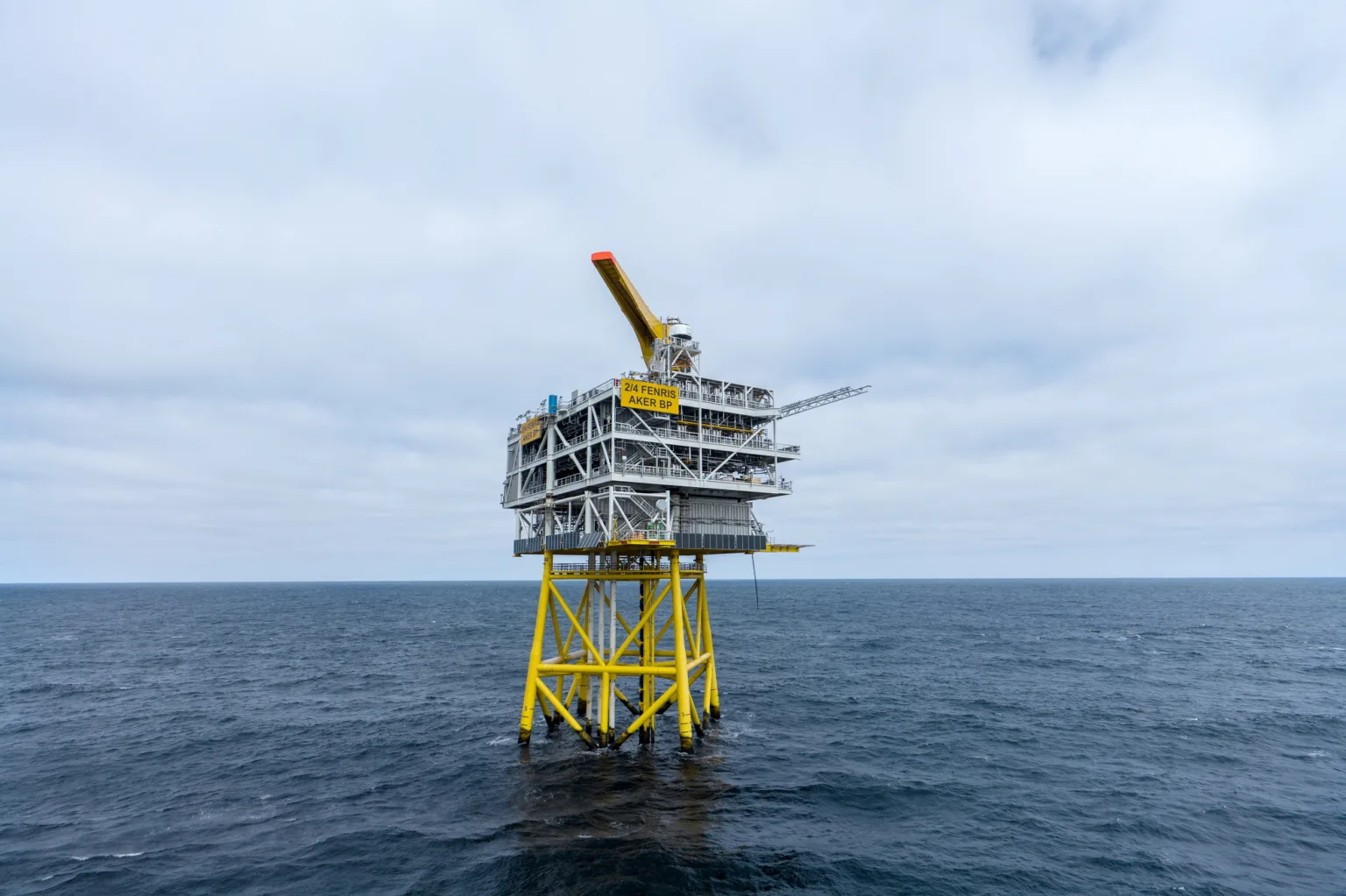
Fenris is part of the Valhall PWP-Fenris project, developed to ensure stable production from the Valhall field over the coming years. The platform was recently installed offshore and is expected to start production in the third quarter of 2027.
Taurob will carry out inspections at Fenris
The solution uses a Taurob robot, designed to support inspection tasks and data capture in demanding industrial environments. With this technology, Aker BP can carry out observations on the platform without requiring continuous physical presence of personnel.
The objective is not to introduce robotics for its own sake, but to identify solutions that add operational value, improve safety, and integrate with existing work processes.
The company will assess how the robot performs under variable weather conditions, communication availability, and real offshore operational demands.
Fenris will operate as an unmanned facility
Fenris will be an unmanned facility, with full access from a Service Operation Vessel via gangway.
This model increases safety by reducing the time personnel spend on the platform, but it also limits flexibility and increases the costs associated with each offshore mobilization.
Robotics makes it possible to address these conditions through remote inspections, faster response to deviations, and less need to send human teams to the facility.
Aker BP notes that the robot directly reflects how Fenris was designed and how it is expected to operate: with greater autonomy, fewer physical interventions, and greater smart monitoring capability.
Data for remote operations
During the pilot, Aker BP will analyze the interaction between people, technology, and workflows. The company aims to verify whether the solution can be integrated with both onshore operations and offshore activities.
Over time, the robot may be used for routine inspections, condition monitoring, and support during incidents. Early detection of anomalies will be particularly relevant, as Fenris will produce from a high-pressure, high-temperature reservoir.
The experience could also be transferred to other unmanned facilities, such as the Munin platform in the Yggdrasil development, and to new working models based on remote assistance and onshore operational functions.
Digitalization applied offshore
The company aims to test new solutions in real operations, with controlled risks and clear evaluation criteria.
The project’s success will be measured based on reliability, availability, ease of use in marine and onshore environments, impact on safety, health and the environment, and cost-benefit ratio.
Aker BP will also assess what does not work and what needs to be adjusted before a possible implementation during the operational phase. The lessons learned at Fenris will help strengthen future remote inspection models for offshore platforms.
Source and photo: https://akerbp.com/