Tank foundations: how to avoid structural failures
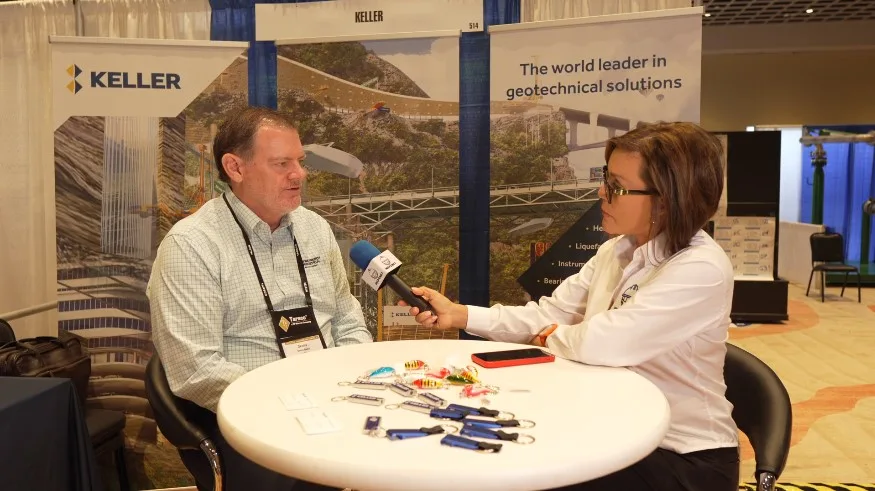
During NISTM 2026, one of the leading events in the industrial storage sector, Keller presented its expertise in geotechnical solutions for tanks. Dennis Boehm, the company's Senior Vice President, explained how tank foundations have become a crucial factor in ensuring the safety and operational reliability of these structures.
Keller, a globally recognized specialist in geotechnical engineering, has participated in more than 500 tank projects in the southern United States. This experience allows him to tackle one of the industry's greatest challenges: building and maintaining tanks on soils with unfavorable conditions.
On the other hand, the structural challenges of tanks
Storage tanks are usually located on land with complex characteristics; in many cases, these soils have low bearing capacity or consolidation processes that result in settlements over time.
Dennis Boehm points out that, although tanks are flexible structures, they are not designed to withstand excessive deformation. When settlement is not uniform, stresses arise that directly affect the integrity of the system.
One of the main consequences is the deformation of the tank's geometry , where the originally circular structure can take on an elliptical shape. This alteration reduces its capacity to distribute loads properly and creates critical stress points.
Likewise, what happens under the tank defines its behavior
Soil behavior is crucial to tank stability. When settlement is greater in the center than at the edges, a phenomenon known as "dishing" occurs. This generates stresses at the bottom of the tank and causes deformations in the side walls.
Furthermore, if the tank tilts, the stored product exerts greater pressure on one of the walls. This imbalance increases the risk of structural failure and compromises operations.
For this reason, tank foundations must be precisely designed, taking into account both soil characteristics and operational loads. Ignoring these factors can lead to problems from the earliest stages of the project.
In this sense, geotechnical solutions make all the difference.
To address these challenges, Keller applies different solutions depending on the ground conditions. Dennis Boehm explains that there are three main approaches to tank foundations.
First, deep foundations are used in extremely poor soils. Through piles or boreholes , the load is transferred to stronger layers. Although an effective solution, it involves a high cost.
Secondly, ground improvement is a more efficient alternative in many cases. Techniques such as gravel columns, soil mixing, or rigid inclusions allow for the reinforcement of existing soil. These solutions are combined with load transfer platforms that distribute stresses evenly.
Third, when time permits, drainage systems using vertical wicks can be used. This process reduces the soil's water content and increases its resistance. It is a more economical option, although it requires planning.
Therefore, early detection is essential
The industry has control mechanisms in place to assess the condition of the tanks. Inspections under API standards are carried out every ten years and allow for the identification of settling problems.
During these inspections, aspects such as tank geometry, bottom leveling, and seal condition are analyzed. This data allows for the detection of deviations and action to be taken before they worsen.
However, not all tanks reach that period without incident. In some cases, problems appear even before commissioning, during initial testing. This highlights the importance of proper foundation work from the outset.
In fact, the biggest mistake is not acting in time.
One of the most common problems in the industry is ignoring the first signs of settling. According to Dennis Boehm, these processes don't correct themselves.
When a tank begins to tilt or warp, the situation tends to worsen. Failure to intervene can lead to more complex and costly repairs.
Corrective solutions, such as injecting material under the tank, can stabilize the structure. However, their effectiveness depends largely on how quickly they are implemented.
Finally, the operational challenge directly impacts the business.
Beyond the technical aspects, tank foundations have a direct impact on profitability. Each intervention involves taking the tank out of service, which affects revenue stream.
Customers are looking to minimize these downtimes, which forces specialized companies like Keller to implement solutions within tight deadlines. Depending on the tank size and the complexity of the problem, interventions can last from weeks to several months.
This balance between speed and accuracy is one of the main challenges in the sector. Ensuring an effective solution without prolonging asset downtime is crucial for maintaining competitiveness.
For more content about NISTM 2026, visit our LinkedIn profile.
Source: Inspenet.