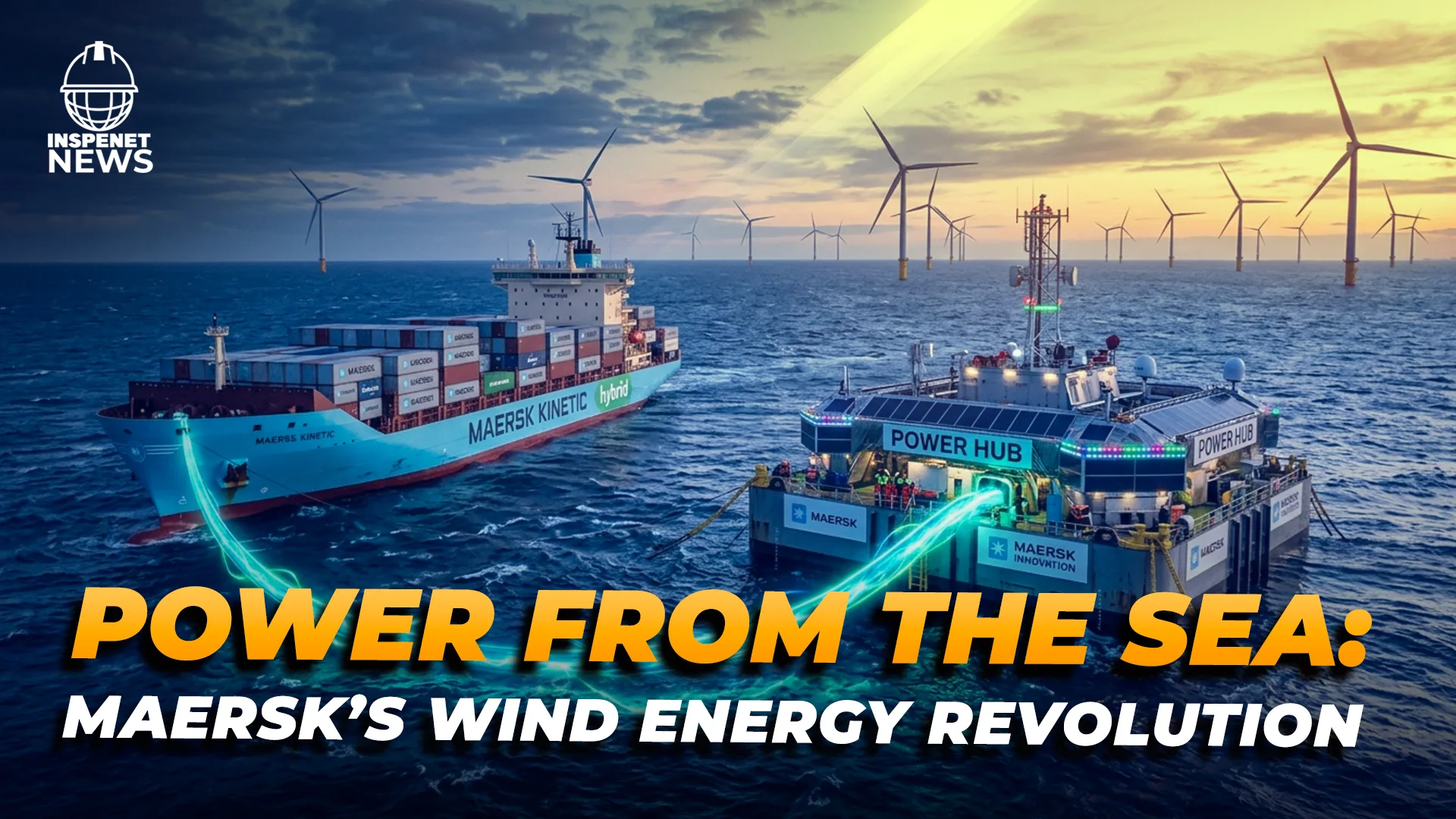
Stillstrom strengthens offshore charging with new autonomous solutions
In a context where offshore wind energy is growing in both scale and complexity, Stillstrom, a subsidiary of Maersk, is taking a step forward in offshore charging with the launch of two autonomous systems designed for service vessels. The company aims to solve a persistent challenge: ensuring reliable power supply at sea.
The Challenge of Offshore Electrification
Currently, the electrification of offshore vessels is advancing more slowly than the development of offshore wind farms. This gap limits emissions reduction, as vessels still rely heavily on traditional fuels during installation and maintenance operations.
Additionally, increasing distances from shore and the growing size of wind farms reinforce the need for efficient energy solutions directly at sea.
New Autonomous Offshore Charging Solutions
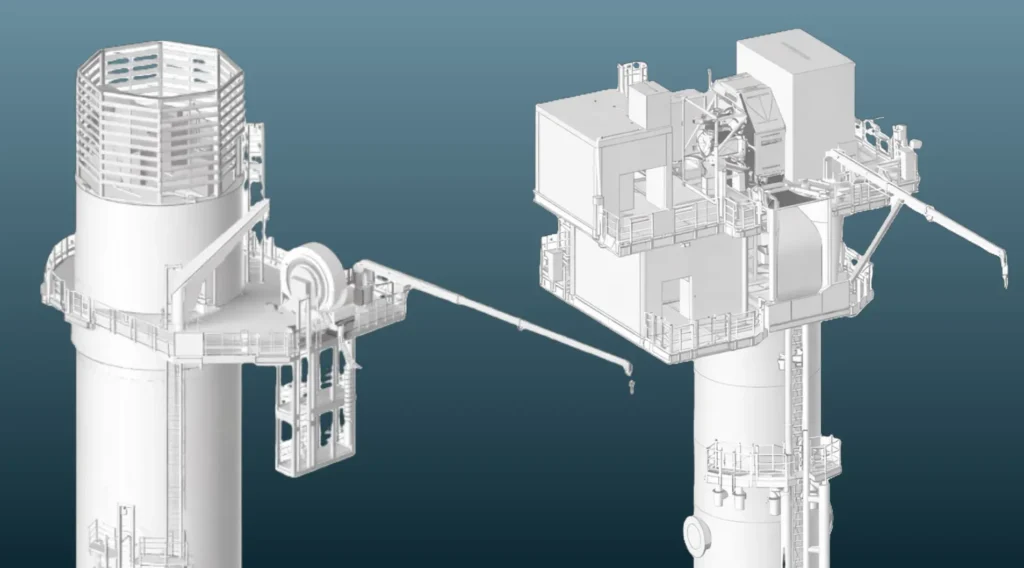
In response, Stillstrom introduces two monopile-based systems that operate independently of turbines:
Power hub for existing wind farms
On one hand, the Power Hub is designed as a compact structure installed in already operational offshore wind farms. Its function is to add offshore charging capacity without altering existing infrastructure, facilitating deployment and improving vessel operations.
Power tower for new developments
On the other hand, the Power Tower is intended for greenfield projects. Its design replicates a turbine foundation, allowing the use of standard processes and equipment during installation. This makes it easier to integrate autonomous offshore charging from the early stages of wind farm development.
Impact on offshore vessel electrification
Thanks to these solutions, offshore vessel electrification becomes more operationally viable. The availability of energy at sea reduces reliance on fossil fuels, improves operational efficiency, and supports emissions reduction efforts.
As a result, developers gain greater flexibility to implement decarbonization strategies in their projects.
Advantages of using monopiles
The use of monopiles represents a key technical element. This type of foundation is widely used in offshore wind farms, enabling these systems to be integrated into processes already familiar to the industry.
Moreover, this compatibility reduces costs, simplifies logistics, and accelerates the deployment of offshore charging infrastructure.
Stillstrom’s strategy and maersk’s backing
In line with its strategy, Stillstrom is expanding its portfolio to address various needs within the offshore wind sector. The company aims to position itself as a key player in the electrification of maritime operations.
It is worth noting that the development of these technologies is supported by Maersk, along with progress in intellectual property and recognition of its engineering team.
Implications for offshore wind farms
With these new solutions, offshore charging is emerging as a key component for the future of offshore wind farms. The ability to deploy infrastructure independent of turbines opens new possibilities for developers and operators.
In this way, the industry is moving toward more sustainable models, where offshore vessel electrification becomes an integral part of the energy ecosystem.
Additional news of interest
New LNG terminal strengthens energy in Senegal
GasEntec signed an agreement with ELTON Logistics & Services to develop a liquefied natural gas regasification terminal in Dakar, which will become the main LNG import facility in West Africa. The project includes a jetty-mounted unit along with associated onshore infrastructure, aimed at supplying a 300 MW power plant in Cap des Biches and meeting demand from other industrial and energy sectors in the country.
The terminal is designed to address Senegal’s growing energy needs, supporting diversification of energy sources and strengthening supply capacity. It is expected to begin operations in the first half of 2027, with a focus on rapid deployment through modular technology. The initiative is also part of a broader strategy to drive economic growth and improve national energy infrastructure.
Nauticus tests underwater robots for offshore operations
Nauticus Robotics successfully completed a series of simulated intervention tests to prepare for upcoming operations off the U.S. East Coast. The tests were conducted in a controlled environment in Louisiana, where tools, processes, and systems were evaluated before real-world deployment. The goal was to validate that the technology and methods are suitable for complex subsea operations.
During the program, the company used a combination of remotely operated vehicles and drones to monitor and execute tasks, improving team coordination and operational efficiency. This approach also helped reduce risks and costs by enabling rapid adjustments before offshore deployment. The integration of multiple technologies demonstrated the company’s capability to handle high-level operations.
Kursk-2 moves closer to nuclear startup
Unit 1 of the Kursk-2 nuclear power plant successfully completed all pre-commissioning tests, confirming that its systems and equipment meet design parameters. The facility incorporates the VVER-TOI reactor, an advanced technology that has already demonstrated its capabilities during the pilot phase, generating more than one billion kWh of electricity.
The project is part of Russia’s plan to modernize its energy infrastructure by replacing older reactors and increasing generation capacity. The new units offer higher output, longer service life, and enhanced safety systems. Final approval for operation will depend on regulatory authorization after verifying compliance with all technical and safety requirements.
Glaston launches service to prevent industrial failures
Glaston introduced a new maintenance service focused on cooling blowers, aimed at preventing unexpected downtime and improving equipment performance. The offering combines periodic inspections, continuous monitoring, and non-destructive testing, enabling early detection of issues and on-site correction.
The service includes semiannual inspections carried out by certified technicians, as well as access to critical spare parts and diagnostic tools. This helps reduce vibrations, optimize system performance, and lower energy consumption, resulting in reduced operating costs and greater operational stability.