PipeSense transforms pipeline inspection with Artificial Intelligence
During the 2026 API Summit, PipeSense presented one of the most significant technological innovations for the pipeline industry: a Leak Detection Pig capable of detecting and locating leaks in real time while traveling inside the pipe. The solution was presented by Stuart Mitchell, President and Chief Technology Officer of PipeSense, who explained how this technology aims to transform the way operators identify incidents and manage the integrity of their infrastructure.
The proposal represents a significant shift from traditional methods used during pigging operations. Until now, locating a leak using an instrumented pig required retrieving the device at the end of the run to download and analyze the collected data. With the new technology developed by PipeSense, this process changes completely, as the system communicates the existence of a leak and its location almost the moment the device passes over it.
In this way, operators can access critical information during the operation itself, reducing response times and facilitating much faster decision-making when an anomaly is detected.
Leak Detection Pig for real-time leak detection
As Stuart Mitchell explained, the new development incorporates onboard electronics capable of identifying a leak's signature as the pig moves through the pipe. When the system detects the event, it emits a signal that allows for the immediate identification of the location where the incident occurred.
This capability eliminates the need to wait until the end of the inspection to analyze the collected data and represents an operational improvement for companies managing extensive hydrocarbon transport networks, refined products, or any other fluid transported via pipelines.
In addition to the launch of this new device, Mitchell noted that PipeSense is developing a technological platform that brings together various solutions for pipeline monitoring. These include permanent leak detection systems, hydrostatic test monitoring, blockage location, and pig tracking using the same hardware and software architecture.
This integration allows different applications to share a common technological base and facilitates the collection of operational information from various points in a pipeline's lifecycle.
Miniaturizing technology without losing processing power
One of the most interesting aspects of the interview was the explanation of the main technical challenge behind the development of the Leak Detection Pig.
Mitchell pointed out that the challenge consisted of transferring electronics that originally occupied a large cabinet into a device capable of traveling inside a pipe without sacrificing processing power. Achieving this miniaturization involved redesigning both the hardware and the real-time analysis capability to maintain the necessary sensitivity during leak detection.
The difficulty did not lie solely in reducing the size of the components; it was also necessary to ensure that the system could process large volumes of information as the pig moves through the pipeline and generate an immediate response when it identifies an anomaly.
This engineering work allowed a technology initially conceived for larger facilities to be converted into a portable solution that maintains a high level of precision throughout the entire operation.
Artificial intelligence to reduce false positives
Another pillar of PipeSense's technological proposal is the use of artificial intelligence to improve the quality of detections.
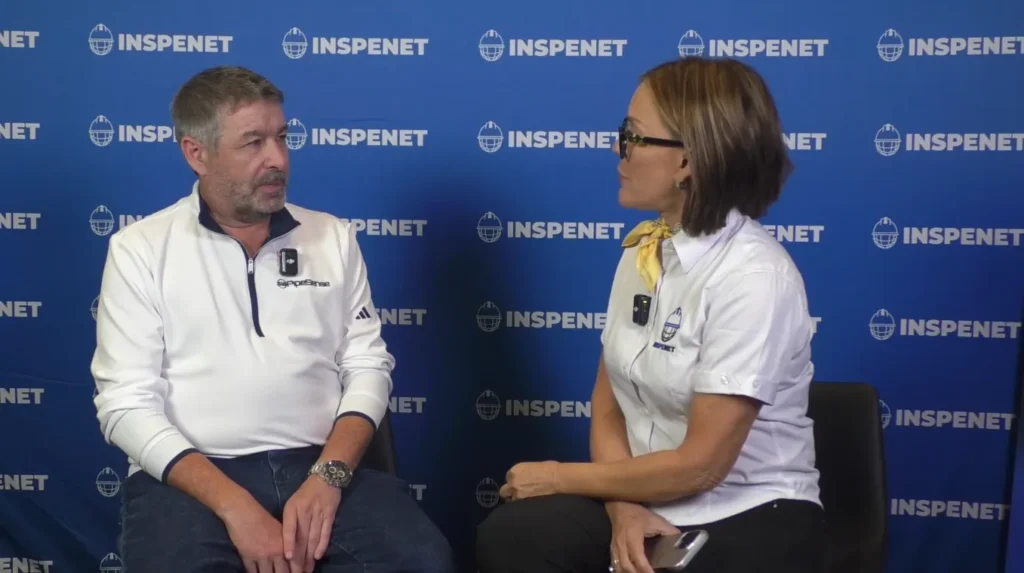
Mitchell explained that the company employs a two-stage analysis process. First, the system performs high-speed pressure sampling and executes advanced analytics through edge computing. When the algorithm identifies a potential event, the relevant information is sent to a central server where a machine learning model comes into play to validate the result and discard false positives.
This approach allows for high sensitivity in identifying small leaks without increasing the number of incorrect alerts, one of the main historical challenges of pipeline monitoring systems.
Precisely, the reduction of false positives is part of the philosophy with which PipeSense was born. The company explains that its goal has been to develop technologies capable of providing reliable results so that operators can trust every alert generated by their systems. This approach has marked the evolution of its solution portfolio since its inception and continues to guide the development of new products.
From reactive maintenance to predictive maintenance
Beyond the launch of the new Leak Detection Pig, Stuart Mitchell shared a vision for the future of the pipeline industry.
In his opinion, the sector is moving toward a model where information collected by different tools will allow for the anticipation of problems before leaks or structural failures occur.
The combination of data from permanent monitoring systems, internal inspection tools, and historical information opens the door to predictive models capable of identifying areas with a higher probability of failure due to phenomena such as material fatigue.
This shift involves moving from a strategy based on reacting when an incident occurs to one oriented toward planning interventions before the problem affects the operation.
For operators, this evolution can translate into better asset management, a reduction in operational risks, and a more efficient use of resources allocated to the maintenance of critical infrastructure.
Technology designed to protect critical infrastructure
The consequences of a leak can go far beyond a service interruption; they can also involve high economic costs, damage to infrastructure, and risks to people and the environment.
Having real-time information allows for a reduction in the time needed to identify an incident and facilitates the adoption of corrective measures before the problem escalates.
The ability to focus efforts on the points where there is truly a higher level of risk represents one of the main advantages of this new generation of pipeline monitoring solutions.
According to Mitchell.
In parallel, the integration of artificial intelligence with advanced analysis platforms helps operation teams have more precise information to prioritize inspections, plan maintenance, and optimize asset management.
PipeSense continues to expand its technological offering
The launch presented during the 2026 API Summit reflects PipeSense's strategy of continuously expanding the capabilities of its technological platform.
The company has developed solutions for permanent leak detection, hydrostatic test monitoring, blockage location, and pig tracking, all supported by the same technological base. Likewise, the company maintains a commitment to innovation applied to pipeline integrity with the goal of providing tools that offer reliable and useful information for decision-making.
With the presentation of this Leak Detection Pig, PipeSense adds a new capability to its portfolio and reinforces an increasingly visible trend in the industry: leveraging real-time processing, artificial intelligence, and predictive analysis to improve the safety, availability, and management of pipeline transport infrastructure.
For more content on API Summit 2026, visit our LinkedIn profile.
Source: Inspenet.