Pipeline integrity: integrated data analysis redefines asset management
Pipeline integrity is entering a new stage marked by the intelligent use of information. As energy infrastructures accumulate decades of operation and inspection campaigns generate increasingly larger volumes of data, the true challenge is no longer obtaining more information but interpreting it collectively to better understand the state of assets and anticipate potential failures.
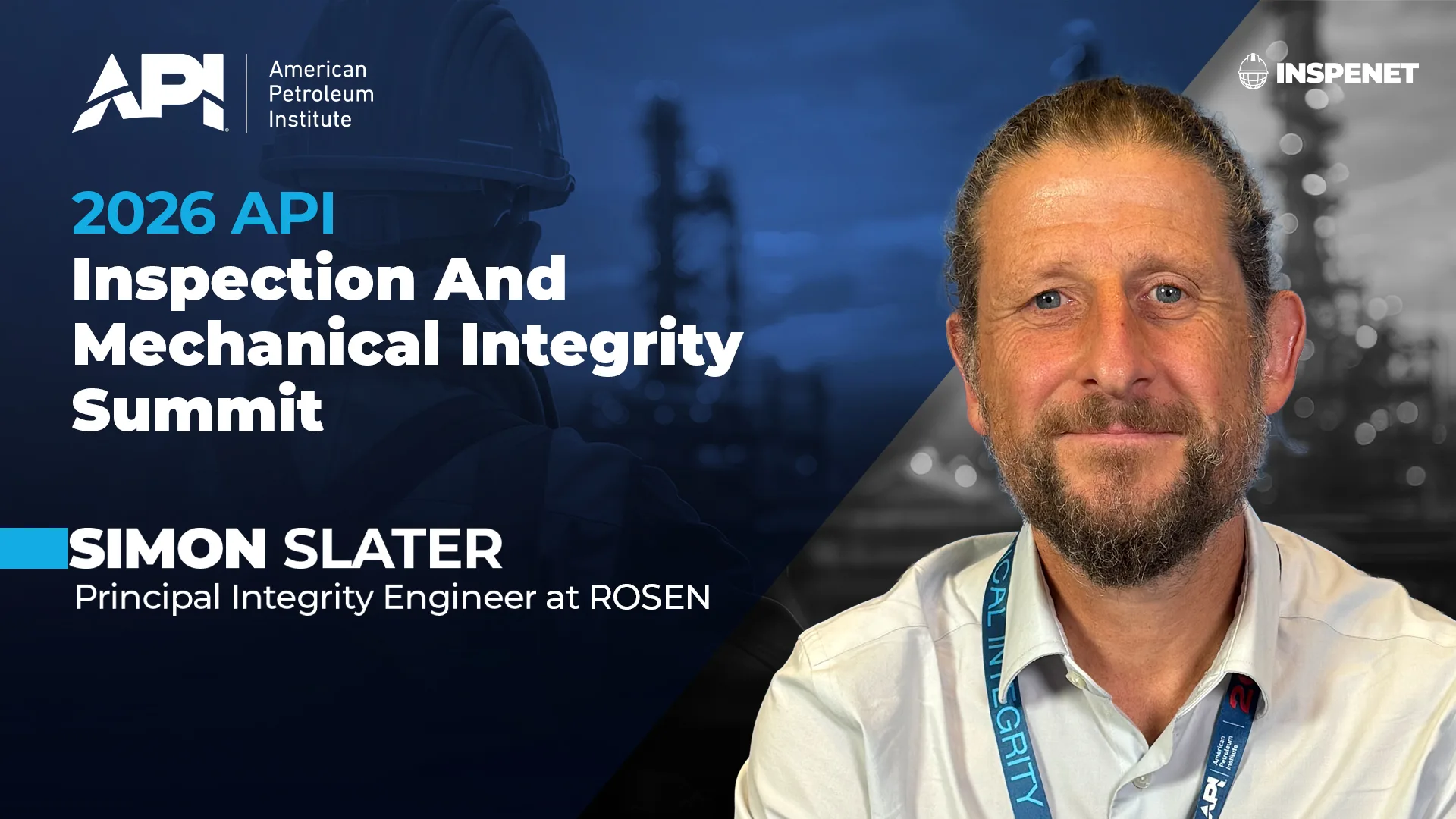
During the 2026 API Summit, Simon Slater, Principal Integrity Engineer at ROSEN, explained that the future of integrity management involves moving past the isolated analysis of each inspection and adopting a comprehensive vision capable of relating historical data, different inspection technologies, and technical knowledge to offer a much more precise image of a pipeline's behavior over time.
From isolated analysis to a comprehensive vision
For years, pipeline inspections have become an increasingly complete source of information. Each campaign provides thousands of records on corrosion, deformations, cracks, and other indicators that allow for understanding the state of the infrastructure at a given moment. However, the true potential of that information appears when all those data are studied collectively.
As Slater explained, the industry currently has a huge volume of historical information that can provide much more value than has traditionally been obtained. The key consists of integrating the results of different inspections carried out throughout the asset's useful life to understand how different deterioration mechanisms evolve.
This change represents a significant evolution within pipeline integrity, as it allows for moving from a point-in-time evaluation to a continuous interpretation of the infrastructure's behavior. In this way, operators can identify trends, detect changes more quickly, and have a more solid basis for planning future actions.
Likewise, the specialist highlighted that joint analysis offers a much more complete vision than that obtained through the independent study of each inspection. The combination of different information sources helps to better understand the interaction between the various factors affecting the pipeline's condition and facilitates a more precise risk assessment.
Aging infrastructures and increasingly complex risks
The growing interest in integrating data also responds to the natural evolution of many energy infrastructures. Numerous hydrocarbon transport systems have accumulated decades of operation and present conditions that require increasingly detailed monitoring.
In this context, threats no longer usually manifest in isolation; corrosion can coincide with cracks, ground movements, or other phenomena that alter the pipeline's behavior. Analyzing each of these factors separately limits the ability to understand the real risk the asset faces.
For Slater, this is precisely where one of the industry's great challenges lies. The available information continues to grow, but the complexity of interpreting it correctly also increases. Therefore, having tools capable of integrating different data sets is essential to understand how different threats interact and which ones require priority intervention.
The expert stressed that data, by themselves, do not generate better decisions. Their utility depends on the ability to analyze them within an appropriate technical context and transform them into knowledge applicable to daily asset management.
Technology as support for better interpretation
The development of new analysis tools is facilitating this evolution toward more complete management models. The incorporation of solutions capable of combining different inspection technologies allows for a more detailed representation of the infrastructure's state.
As an example, Slater referred to DataFusion, a service developed by ROSEN that integrates information from different inspection tools to more accurately characterize phenomena such as corrosion and other degradation mechanisms.
The purpose of this type of solution is not only to gather large amounts of data but to establish relationships between them to offer a more consistent assessment of the pipeline's condition. By combining different perspectives on the same asset, engineers can reduce uncertainties and improve the quality of their diagnoses.
This approach is particularly useful in scenarios where multiple deterioration mechanisms are acting simultaneously. The integration of information allows for understanding how these processes evolve over time and facilitates the identification of areas that require more exhaustive monitoring.
Likewise, the use of more advanced analytical models contributes to organizations making better use of the information they already possess, avoiding duplication of efforts and increasing the value of inspection campaigns carried out over the years.
Data for making better decisions
One of the central messages of the interview was that pipeline integrity is closely linked to the quality of the decisions made by operators.
Companies responsible for large transport networks must manage limited resources while maintaining high levels of safety and reliability. In this scenario, knowing precisely which assets require immediate attention allows for allocating investments where they truly generate the greatest impact.
Slater explained that having integrated information makes it easier to establish priorities with greater confidence. Instead of basing decisions solely on a point-in-time snapshot of the pipeline's condition, integrity managers can rely on a much more complete history that reflects the evolution of each anomaly.
This approach helps reduce uncertainties, improves intervention planning, and favors more efficient maintenance strategies. At the same time, it provides stronger technical arguments to justify investments and establish action schedules adapted to the risk level of each asset.
The ability to transform data into useful knowledge thus becomes a differentiating element within the modern management of energy infrastructures.
What sets ROSEN apart in asset management?
During the conversation, what distinguishes ROSEN within the inspection and asset management sector was also addressed.
According to Slater, one of the company's main values lies in its ability to combine specialized engineering, technological development, and experience accumulated in international projects. This integration allows for addressing complex problems from different perspectives and developing solutions adapted to the specific needs of each operator.
The company has also built a broad knowledge base thanks to decades of experience in the inspection of industrial assets. This learning facilitates the continuous development of new analysis methodologies and tools aimed at improving integrity assessment.
Another aspect highlighted by the engineer was the permanent collaboration between specialists from different disciplines. The interaction between experts in inspection, data analysis, and integrity assessment allows for converting large volumes of information into technical recommendations that support clients' decision-making.
This collaborative approach contributes to technology and experience working together to offer a more complete understanding of infrastructure behavior.
Pipeline integrity enters a new stage
The evolution of pipeline integrity points toward models where historical information takes a leading role. Rather than increasing the amount of available data, the next step consists of leveraging all the knowledge generated during years of inspections to better understand the state of assets and anticipate their evolution.
Simon Slater's statements during the 2026 API Summit reflect an increasingly present trend in the energy industry: integrating data, experience, and engineering to build more precise assessments and support decisions with a higher level of confidence. In an environment where infrastructures age and risks constantly evolve, the ability to interpret information comprehensively will be one of the factors that define the future of asset management.
For more content on API Summit 2026, visit our LinkedIn profile.
Source: Inspenet.