Penspen applies probabilistic analysis to pipeline integrity
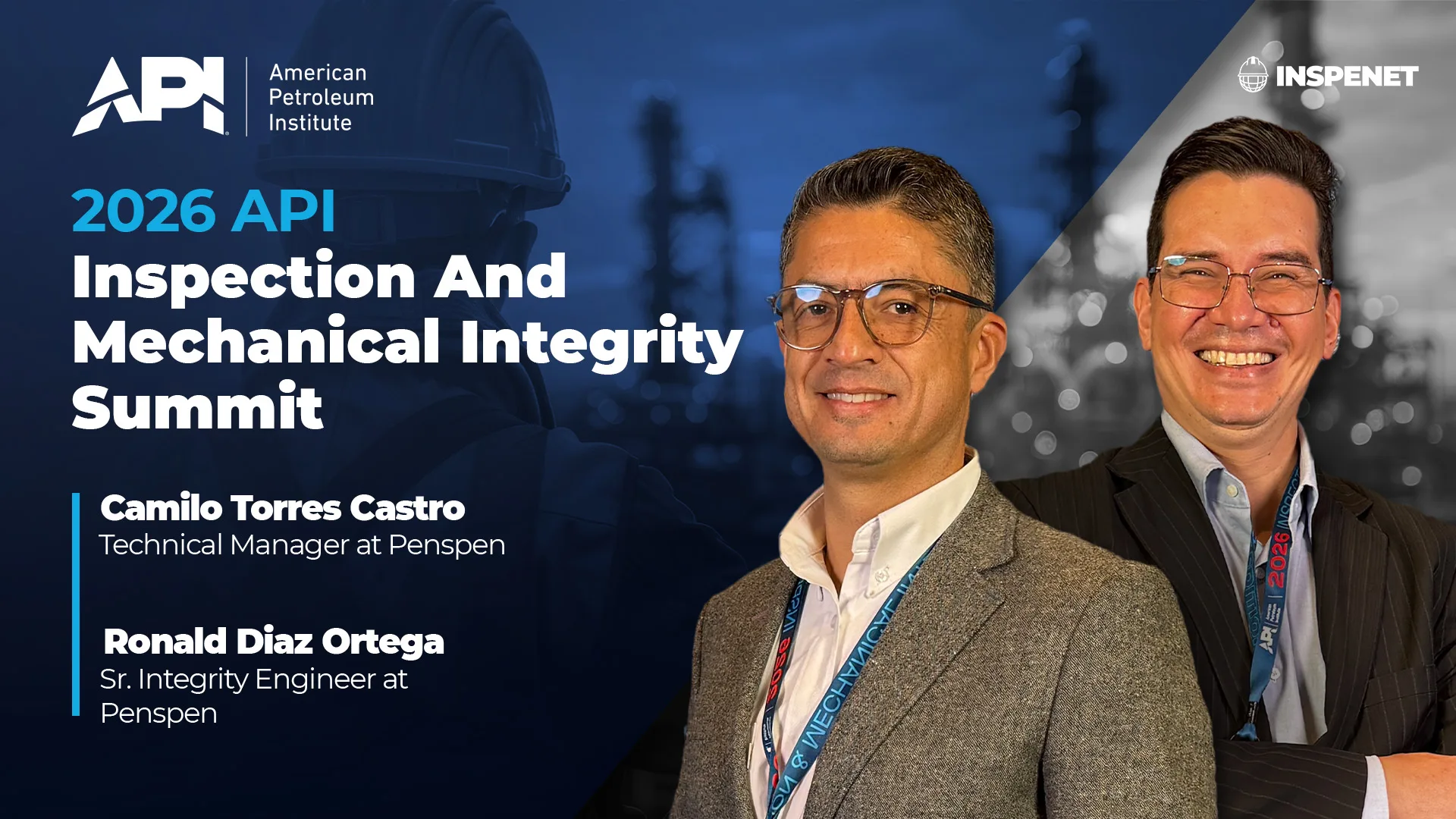
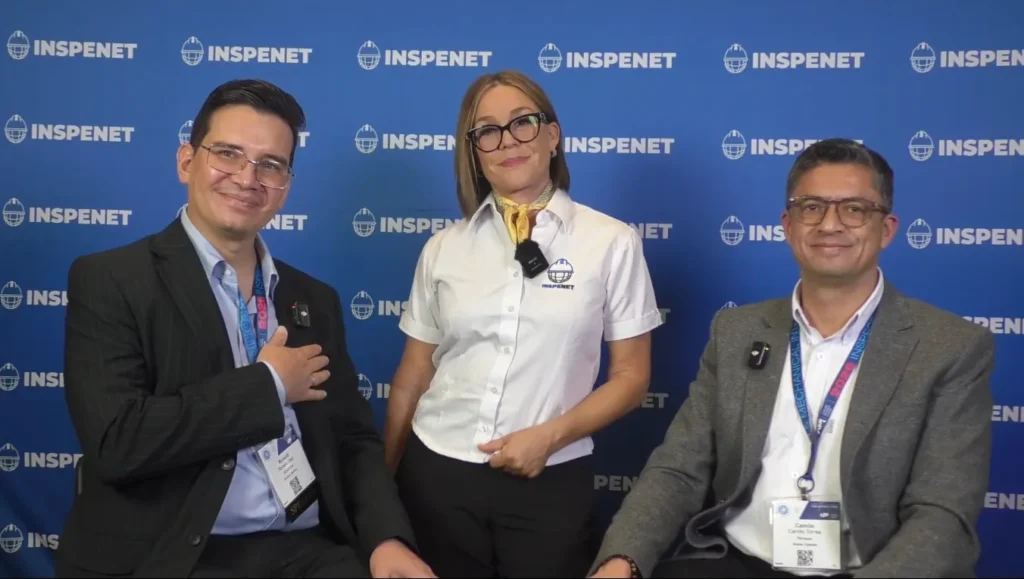
During API Summit 2026, Penspen shared its vision for the evolution of pipeline integrity management through probabilistic methodologies. In an interview conducted during the event, Camilo Torres Castro, Penspen’s Technical Manager, and Ronald Díaz Ortega, Senior Integrity Engineer, explained how this type of analysis improves risk assessment and supports more accurate decisions on maintenance, inspections, and repairs of critical infrastructure for the energy industry.
Today, oil and gas pipeline operators manage large volumes of information from in-line inspections, operational monitoring, and maintenance programs. In this scenario, the ability to interpret that data and turn it into well-founded technical decisions is becoming increasingly important. That is precisely where probabilistic analysis is beginning to play a relevant role within modern integrity management programs.
Pipeline integrity moves toward probabilistic models
Traditionally, many integrity assessments have been carried out using deterministic methodologies. These approaches use conservative values to estimate the behavior of anomalies detected in a pipeline. Although this procedure has proven useful for years, it can also lead to overly conservative decisions and result in interventions that may not be necessary.
As Camilo Torres Castro explained during the interview, the goal is to incorporate tools that make it possible to better understand the uncertainty associated with the actual behavior of each anomaly. Instead of working with a single fixed value, the model considers different possible scenarios and calculates the probability that a given condition will exceed a critical limit.
This shift in approach allows decisions related to piping integrity to be supported by a much more comprehensive statistical assessment. It also gives operators a more detailed view of the level of risk associated with each asset.
Monte Carlo simulations to understand uncertainty
One of the central aspects of the methodology presented by Penspen is the use of Monte Carlo simulations. Ronald Díaz Ortega explained that this technique makes it possible to represent the natural variability present in parameters such as corrosion depth, anomaly growth, material properties, and pipeline operating conditions.
Instead of analyzing a single scenario, the system runs millions of iterations using statistical distributions for each variable. As a result, it produces a distribution of possible behaviors that makes it possible to estimate the probability of exceedance of certain acceptance criteria.
The specialist noted that the quality of the analysis depends largely on correctly selecting the statistical distributions used. To do so, Penspen validates the models using real data obtained from field inspections and historical studies related to failures and piping behavior.
This validation process provides greater confidence in the results obtained and allows the models to more accurately represent the conditions observed during asset operation.
A tool to optimize maintenance decisions
Beyond the statistical component, the main contribution of this methodology lies in its practical application. The information obtained through probabilistic analysis makes it easier to prioritize interventions according to the risk level of each anomaly.
In many integrity programs, operators must decide which defects to repair immediately and which can remain under monitoring until the next inspection. Having a probabilistic estimate makes it possible to support these decisions with a stronger technical basis.
As a result, it is possible to reduce unnecessary excavations and focus available resources on those segments where the risk truly justifies an intervention. This approach also promotes more efficient use of budgets allocated to oil and gas pipeline maintenance.
The model also provides useful information for planning future in-line inspections. By estimating the expected growth of anomalies, operators can define more appropriate inspection intervals for each section of the infrastructure.
Data analysis is redefining integrity management
During the conversation, Penspen’s representatives also highlighted the role played by modern data-processing tools. Increased computing power makes it possible to run simulations that, a few years ago, required long computation times.
Today, these analyses can be completed in hours or a few days, depending on the complexity of the project. This evolution makes it easier to incorporate probabilistic models into routine integrity management processes without affecting the response times required by operations.
At the same time, the growing volume of information generated by smart inspections is driving the adoption of methodologies that can make better use of the available data. In this context, probabilistic analysis represents a natural evolution of risk assessment programs.
Probabilistic analysis is gaining ground in the industry
Another aspect addressed during the interview was the evolution of recommended practices within the sector. As the specialists explained, more and more operators are requesting probabilistic assessments as a complement to traditional analyses.
The industry is looking for tools that make it possible to technically justify decisions related to maintenance, inspections, and asset repair. In this sense, probabilistic analysis offers a framework that explicitly incorporates the uncertainty present in the available data.
Although deterministic methodologies continue to be widely used, the trend points toward models that are increasingly risk-oriented. According to the interviewees, this evolution could also be progressively reflected in future updates to standards and technical recommendations related to pipeline integrity management.
Penspen and its experience in energy infrastructure
Founded in 1954, Penspen has more than seven decades of experience providing engineering services for the energy sector. The company has delivered more than 15,000 projects in over 100 countries and has a workforce of more than 1,700 professionals across different offices around the world.
Its activities include engineering, asset integrity management, project management, digital solutions, and consulting for the energy transition. This combination of capabilities makes it possible to support operators throughout the entire infrastructure life cycle.
The proposal presented during API Summit 2026 reflects Penspen ’s commitment to incorporating advanced analytical tools that help improve decision-making in pipeline management. As the energy industry continues to move toward risk-based models, the use of probabilistic methodologies is playing an increasingly relevant role in planning inspections, optimizing resources, and understanding the behavior of critical assets with greater accuracy.
For more content on API Summit 2026, visit our LinkedIn profile.
Source: Inspenet.