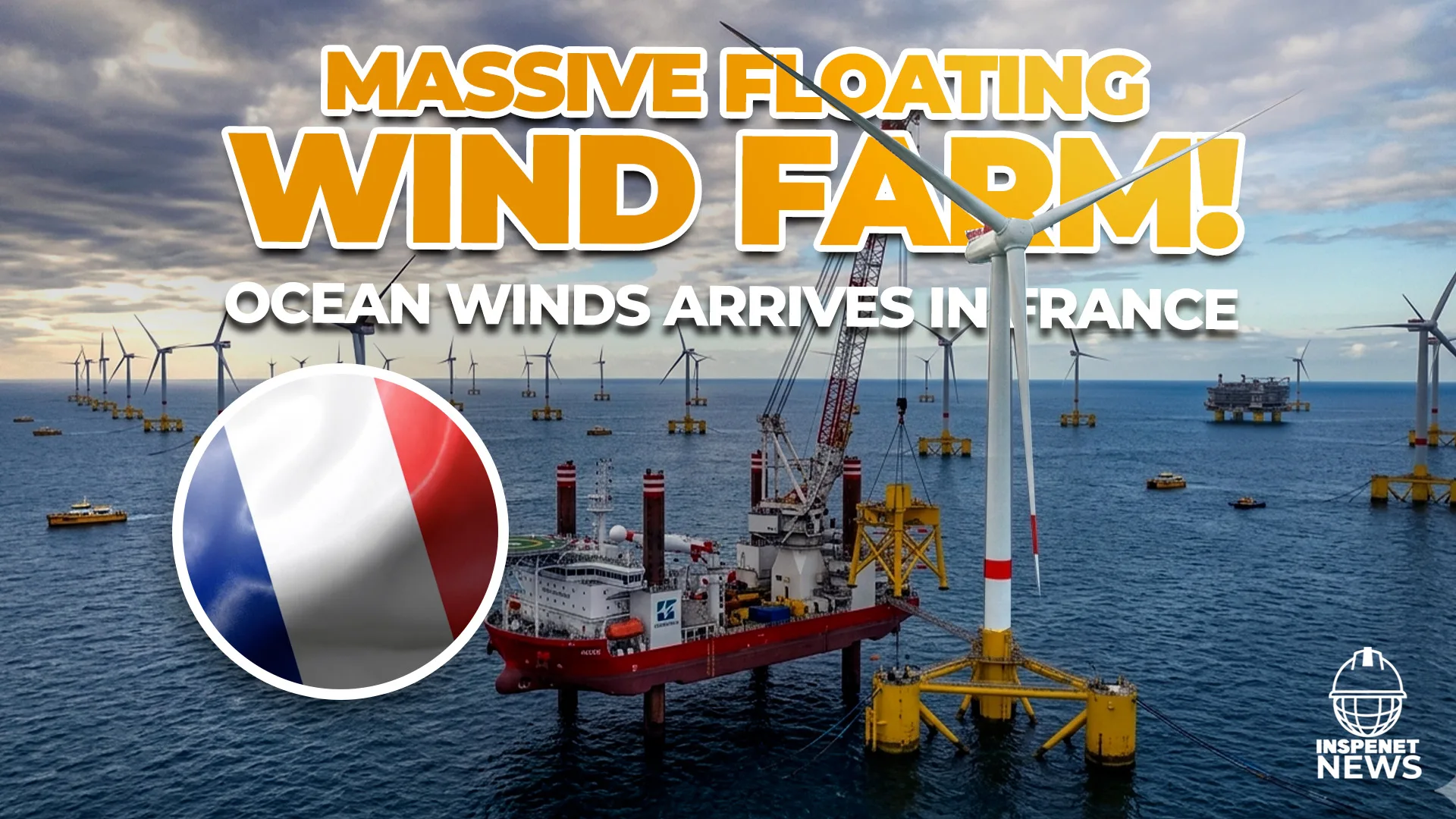
Ocean Winds installs the first Dieppe Le Tréport turbine
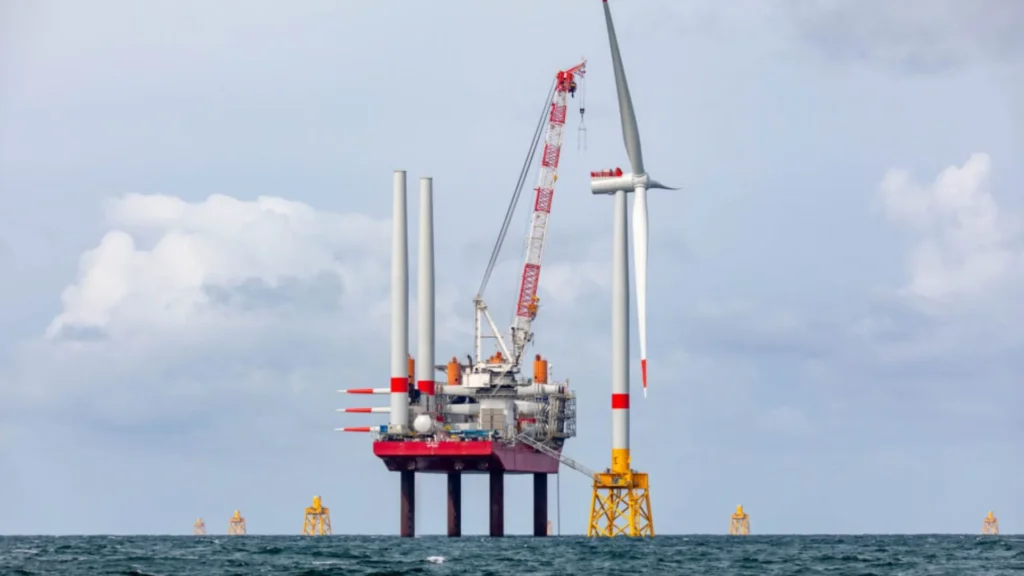
The installation of the first turbine in Dieppe Le Tréport marks a new milestone for Ocean Winds in France. The wind energy project is moving towards the gradual start of electricity generation after completing one of the most significant tasks of its construction phase.
The offshore wind farm enters a decisive phase
Ocean Winds is currently continuing to develop the offshore wind farm located off the coast of Dieppe and Le Tréport. The installation of the first wind turbine marks the beginning of a phase in which the infrastructure will gradually become an active source of renewable electricity.
Furthermore, the offshore substation is already installed, which will allow the turbines to be connected to the electrical grid as they become operational. According to the planned schedule, the first units will begin generating power in the coming weeks.
Dieppe Le Tréport will bring energy to 850,000 people
Once completed, Dieppe Le Tréport will have 62 wind turbines and an installed capacity of 500 MW.
Thanks to this infrastructure, the park will be able to generate electricity equivalent to the annual consumption of approximately 850,000 people. This capacity places it among the most significant clean energy developments currently under construction in France.
Furthermore, the project is part of the country's efforts to increase the share of renewable energy within its energy system and reduce dependence on conventional sources.
Ocean Winds strengthens its presence in France
The installation of the first turbine comes at a time of intense activity for Ocean Winds in the French market.
Since the beginning of 2026, the company has achieved full commissioning of the Îles d'Yeu et de Noirmoutier offshore wind farm . Simultaneously, it also delivered its first energy from the Éoliennes Flottantes du Golfe du Lion floating wind project.
These advances demonstrate the company's ability to simultaneously manage wind energy projects based on both fixed foundations and floating technologies.
A European industrial chain is involved in the construction
Furthermore, the development of Dieppe Le Tréport mobilizes numerous industrial players from various European countries.
Siemens Gamesa supplies the turbines used in the wind farm. A significant portion of the components are produced in France, while other infrastructure elements are manufactured in Spain and Greece before being transported to the logistics ports involved in the project's execution.
Similarly, companies specializing in offshore installations such as Jan De Nul and DEME play a fundamental role in the maritime operations necessary to complete the deployment of the wind turbines.
Electricity production will increase gradually.
As the installation of new turbines continues, the offshore wind farm will combine construction tasks with the gradual start of electricity generation.
Each new connection will increase the production of clean energy destined for the French grid. With this, Ocean Winds continues to consolidate its position within the European offshore wind sector as France advances in the development of new renewable energy capacity off its coasts.
News of additional interest
BOURBON reinforces its submarine presence in Ghana
BOURBON announced the signing of a new multi-year contract to provide underwater services in the Jubilee field, off the coast of Ghana. The agreement includes the deployment of the multipurpose vessel Bourbon Evolution 802 , equipped with two remotely operated vehicles, to perform inspection, maintenance, and repair of underwater infrastructure, as well as offshore installation and technical support operations.
The campaign includes work on wellheads, cleaning mooring systems on a floating production platform, and activities related to pipelines and subsea equipment. Approximately sixty people are currently involved in the operations on board, including specialists and client representatives. The vessel is designed to work on complex deepwater projects and combine surface operations with advanced subsea activities.
Dairy waste is transformed into jet fuel
Circularity Fuels announced the completion of its first pilot project to convert raw agricultural biogas directly into sustainable aviation fuel (SAF). For six months, the company used methane from a dairy farm in California to produce fuel that meets international aviation industry standards. The system employs modular technology that integrates reforming and synthesis processes to transform organic waste into fuel ready to be blended with conventional kerosene.
According to the company, this technology could significantly reduce SAF's production costs compared to other projects currently under development. Furthermore, it utilizes a raw material that is typically wasted or released into the atmosphere. During testing, the system achieved high conversion rates of methane and carbon dioxide, generating a fuel that, according to their estimates, has a negative carbon footprint due to the capture and utilization of emissions that would normally be released into the environment.
WinGD's ammonia engine passes crucial test
WinGD has successfully completed factory acceptance testing of its X72DF-A engine, designed to run on ammonia as a marine fuel. The evaluation was conducted in China and involved several international classification societies. The engine will be installed on a 210,000-deadweight-ton bulk carrier ordered by CMB.TECH, marking a significant step forward in the adoption of alternative fuels for shipping.
The X72DF-A uses a high-pressure ammonia injection system combined with a small amount of pilot fuel. According to the company, it offers performance similar to conventional diesel engines in terms of efficiency and operation. Furthermore, it is part of an initial order of 40 engines intended for various types of vessels, a sign of the industry's growing interest in lower-emission energy solutions.
Russia relaxes fuel regulations amid shortages
Russia has temporarily relaxed quality standards for gasoline and diesel to address a domestic fuel shortage. The measure, implemented by the Ministry of Energy, will be in effect for six months and will allow the sale of fuels with lower octane ratings and higher sulfur content. The goal is to maintain supply while several strategic refineries undergo maintenance and production faces operational difficulties.
The supply deficit has been exacerbated by the overlap between scheduled shutdowns at major refineries and the continued export of fuels to international markets. This is compounded by complications arising from Western sanctions, which have hampered access to equipment and spare parts necessary for the operation and maintenance of Russia's refining infrastructure.