Traeger Brothers analyzes the distribution of industrial valves
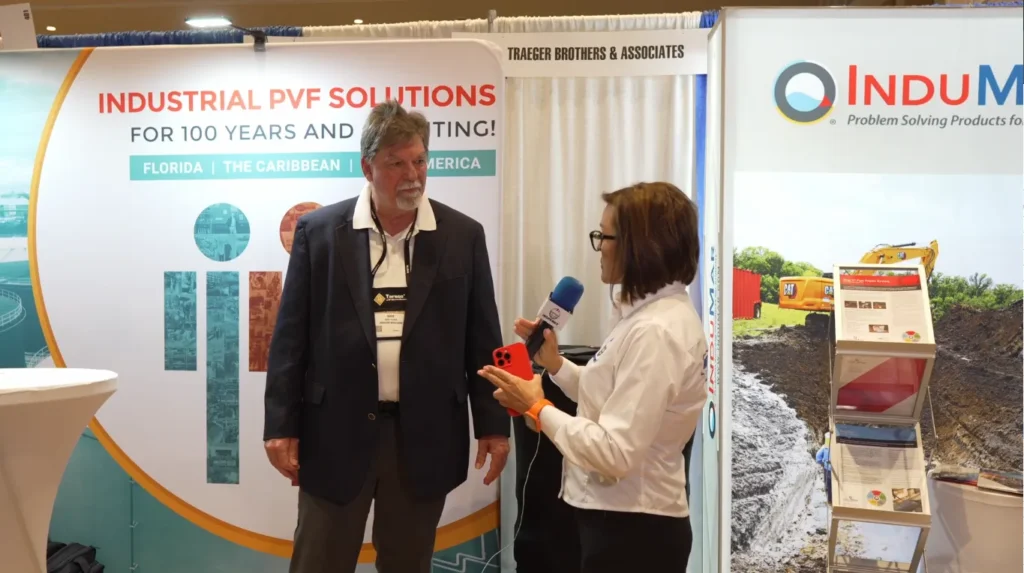
The industrial valve distribution sector is undergoing a transformation marked by constant price fluctuations, new technical requirements, and an increased need to ensure operational safety in refineries, storage terminals , and power plants. At NISTM 2026, Traeger Brothers & Associates shared its perspective on this landscape through Dave Tilden, Senior Sales Associate and Business Development Manager for the English-speaking Caribbean.
The company, with a presence in Florida, the Caribbean, Central America, and South America, works with international manufacturers, importers, and engineering firms to supply industrial equipment used in tank farms , refineries, and power plants. In the interview, Tilden explained how the company tailors its technical offerings to each client's specific needs and how the market is facing an increasingly dynamic cost environment.
The executive also addressed the continued role of API standards , the importance of selecting the right valves for each application, and how new technologies, including AI-based systems, are beginning to improve service and supply processes.
Technical precision dictates valve distribution
One of the central points of the conversation was the complexity involved in selecting valves and industrial equipment for critical applications.
Each client handles particular specifications related to approved manufacturers, permitted materials, and technical regulations that must be strictly met.
As Dave Tilden explained.
In sectors such as refining, hydrocarbon transportation , and fuel storage, selecting the wrong valve can have significant operational and environmental consequences. Therefore, the distribution of industrial valves is no longer limited to simply having an inventory available, but requires in-depth technical knowledge of processes, fluids, pressure, corrosion, and international standards.
Tilden noted that many clients operate under specific Approved Manufacturer Lists. Large energy companies, such as Exxon, use Approved Manufacturer Lists to ensure compatibility and quality across all their projects. Given this, Traeger Brothers develops product lists aligned with the technical and regulatory requirements of each operation.
Furthermore, the executive emphasized that one of the distributor's main responsibilities is to identify potential gaps in the specifications provided by the customer. This capability allows them to recommend suitable components for each application and minimize long-term operational risks.
Safety defines the valves in refineries
During the interview, Dave Tilden emphasized that the main criterion when selecting industrial valves is to ensure that the equipment matches exactly the application where it will be installed.
In simple applications, such as conventional water systems, the level of demand may be lower. However, in critical hydrocarbon refining or transportation units, operating conditions require highly specialized valves capable of withstanding pressure, temperature, and corrosive substances.
The executive mentioned specific cases such as coker units within refineries or systems that handle hydrofluoric acid. In these environments, a failure can lead to fires, explosions, or spills with considerable environmental impact.
For this reason, the distribution of industrial valves within the energy sector increasingly depends on criteria related to reliability, traceability, and regulatory compliance. Companies seek suppliers capable of guaranteeing certified equipment and specialized technical support throughout the entire project lifecycle.
Tilden also explained that the experience gained working with manufacturers and industrial clients allows Traeger Brothers to connect operational needs with specific solutions. This relationship between technical expertise and logistical capabilities has become a differentiating factor in today's industrial market.
Prices and tariffs put pressure on the industrial supply chain
Another of the most relevant topics addressed during NISTM 2026 was the volatility currently facing the industrial supply chain.
According to Tilden, constant changes in tariffs, import duties, and cost structures create a difficult environment for distributors and customers to forecast. Many quotes issued months ago become invalid due to changes in international prices or regulatory shifts.
The executive explained that some companies request to execute projects using bills of materials quoted the previous year. However, the current context requires constant recalculation of prices and conditions, as the market behaves like a constantly moving target.
This phenomenon particularly affects companies linked to the distribution of industrial valves and equipment for refineries, where projects usually involve large volumes of materials and extensive purchasing processes.
Furthermore, international trade tensions continue to impact the availability of certain industrial components. This compels distributors to maintain strong relationships with multiple manufacturers and seek reliable alternatives to avoid operational delays.
In this context, adaptability becomes fundamental; companies with regional experience and technical knowledge can respond more quickly to market changes and offer solutions tailored to each client's timeline.
The industry evolves without changing its technical foundations
Although sectors such as electronics or consumer goods experience rapid changes year after year, Tilden believes that the valve and industrial equipment industry maintains a more gradual evolution.
Many systems currently used in refineries retain operating principles similar to those implemented decades ago. API standards and fundamental safety requirements remain relatively stable within the energy sector.
However, that doesn't mean the industry is stagnating. The executive explained that there have been significant advances related to corrosion protection, specialized coatings, and improvements in materials.
Traeger Brothers works with manufacturers of industrial coatings that enhance the durability of valves, fasteners, and components exposed to harsh environments. These improvements extend equipment lifespan and reduce maintenance needs at terminals and industrial plants.
Tilden also noted that technology is beginning to play an increasingly important role in areas such as customer service and industrial sourcing. Artificial intelligence-based tools help optimize internal processes and improve response times to complex requirements.
Despite these advances, the main focus remains operational safety. Whether in tank farms , refineries, or power plants , operators prioritize safe, reliable systems that comply with international standards.
Traeger Brothers expands its reach in Florida and the Caribbean
The interview also provided insight into the regional reach of Traeger Brothers & Associates within the industrial market.
The company has specialized sales teams based on territory and client type. Its structure includes representatives for different areas of Florida, the English-speaking Caribbean, the Dutch islands, Central America, and South America.
Dave Tilden, who leads business development in the English-speaking islands of the Caribbean, emphasized that this segmentation allows for closer attention and a better response to the needs of each market.
In addition to distributing industrial valves, the company supplies components used in piping, storage, fluid transport, and power generation systems. Its model combines technical sourcing, commercial support, and operational industry expertise.
In a context where industrial projects increasingly require precision and regulatory compliance, companies with regional experience and consolidated relationships with international manufacturers acquire a strategic role within the energy supply chain.
For more content about NISTM 2026, visit our LinkedIn profile.
Source: Inspenet.