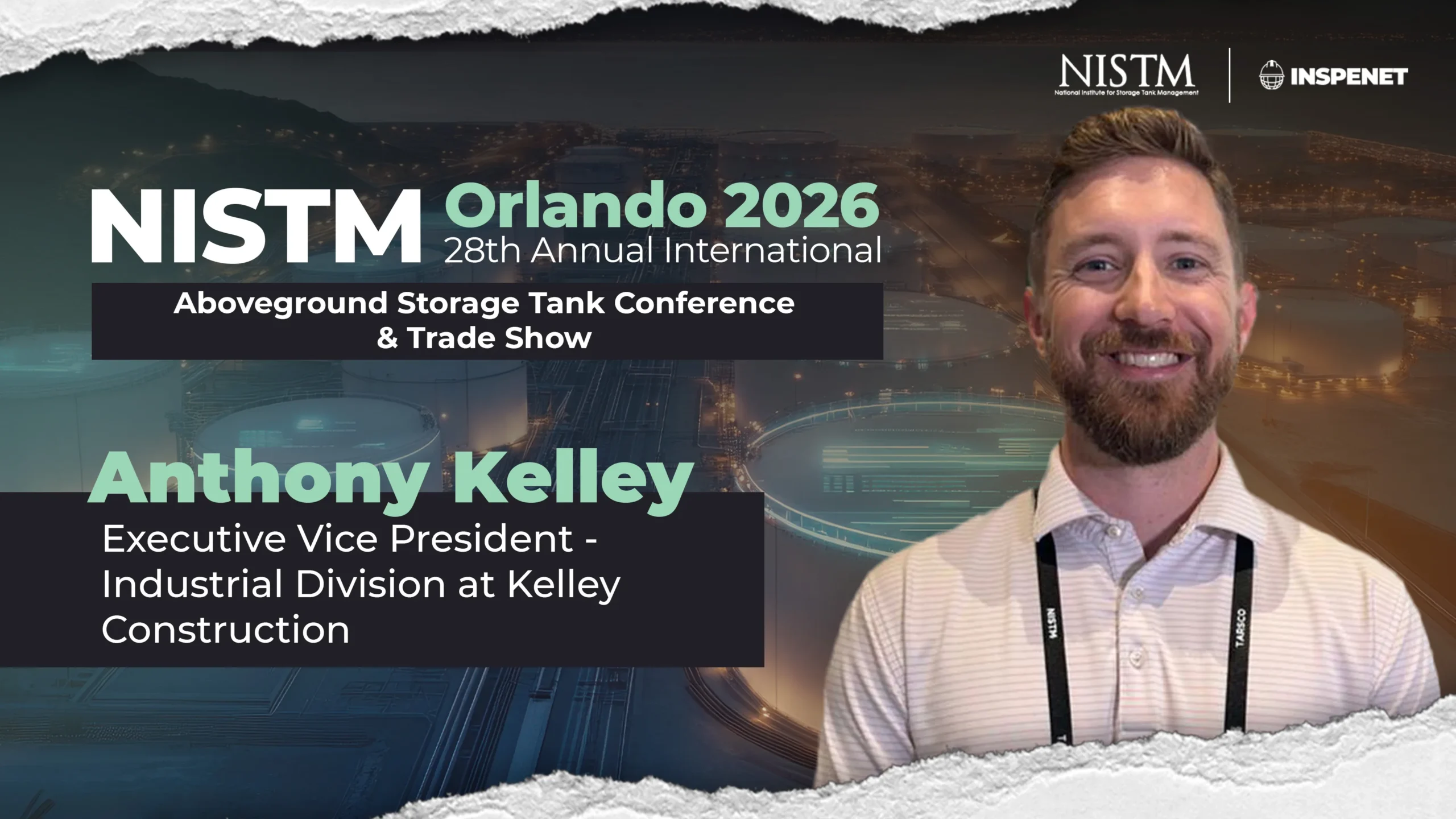
Industrial construction: culture, safety and technology at Kelley
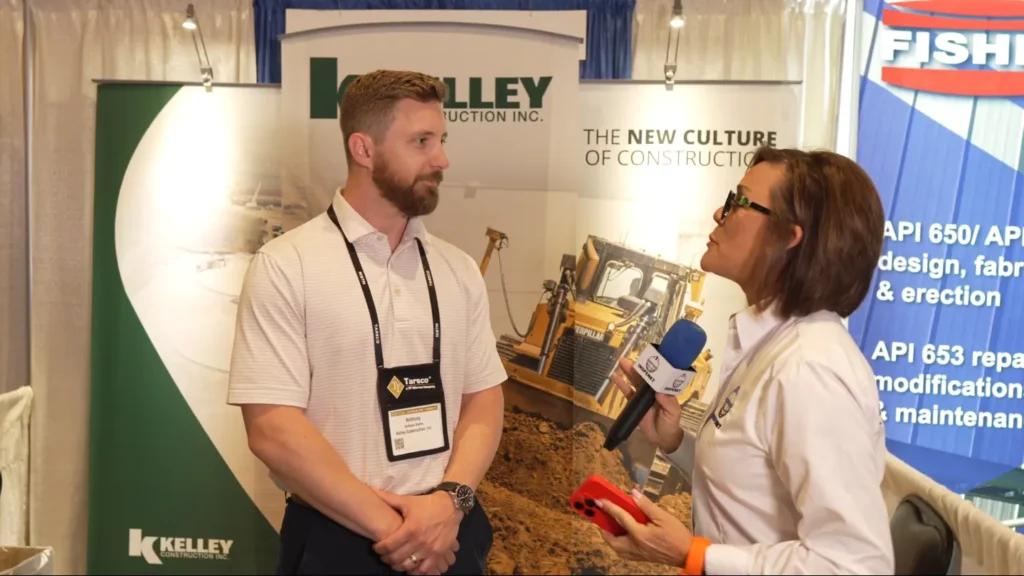
At NISTM 2026, the leading event for the tank storage industry, industrial construction once again took center stage . In this context, Anthony Kelley, Executive Vice President – Industrial Division at Kelley Construction, explained how the company is addressing the sector's current challenges. His vision revolves around three key areas that are shaping market evolution: corporate culture, on-site safety, and the integration of new technologies.
A trajectory based on specialization and national reach
To begin, Kelley Construction positions itself as a civil contractor specializing in industrial foundations with a presence in almost every state in the United States. The company is licensed in 49 states and has accumulated more than four decades of experience in the sector, which has allowed it to consolidate a highly focused technical offering.
In this context, their expertise lies in solutions such as ring walls and tank foundations , critical elements in energy storage infrastructure. This technical approach allows them to participate in projects where precision and structural reliability are paramount.
Furthermore, the company has built a solid base of repeat customers thanks to its ability to adapt to different operating environments. This positioning reinforces its role within the industrial construction ecosystem in the United States.
Culture as an operational axis in industrial construction
On the other hand, one of the differentiating elements that Anthony Kelley highlights is the corporate culture. Under the concept of a “new construction culture,” the company places people at the heart of its activity.
As he explains, the success of projects depends not only on technical expertise, but also on the quality of the relationships established with clients. This relational approach allows for the development of long-term partnerships and facilitates the execution of complex projects.
In this sense, internal culture becomes an operational factor, where teams work in alignment under shared values that prioritize collaboration, responsibility, and continuous improvement. As a result, the company is able to maintain consistent standards across different types of industrial projects.
Operational safety as a standard in industrial projects
At the same time, safety is one of the organization's strongest pillars. In a sector where operational risks are high, Kelley Construction has achieved a TRIR of zero.
This result is supported by a particularly relevant fact: the company has surpassed one million hours worked without any recordable incidents. This achievement reflects the effectiveness of its protocols and the commitment of its teams to complying with safety standards.
Furthermore, Anthony Kelley emphasizes that this performance is not accidental, as safety is part of the company's daily culture , which involves constant training, rigorous supervision, and a preventative mindset at all operational levels.
In this way, safety ceases to be a requirement and becomes an integrated element in every phase of the project within industrial construction.
Customer alignment as the main challenge
However, beyond the operational achievements, the sector presents significant challenges. One of the main ones, according to Kelley, is the ability to align with the client's objectives from the earliest stages of the project.
Each industrial project responds to specific needs, requiring a high degree of understanding and adaptation. The challenge lies in translating those expectations into viable technical solutions that meet the required standards.
Therefore, communication and clarity in defining objectives become crucial factors. When there is effective alignment, project development flows more efficiently and the risks associated with changes or deviations are reduced.
This challenge highlights the inherent complexity of industrial construction and the need for teams capable of managing multiple variables simultaneously.
Artificial intelligence enters civil engineering
In terms of innovation, Kelley Construction is making progress in integrating artificial intelligence into various internal processes. The company has adopted a proactive approach to implementing these tools.
Currently, artificial intelligence is applied in areas such as business development, estimation, and operations. These applications allow for optimized time management, improved calculation accuracy, and easier decision-making.
This move reflects a growing trend within the industrial construction sector, where digitalization is playing an increasingly important role . Early adoption of these technologies can make a significant difference in terms of efficiency and competitiveness.
Likewise, the company is developing internal systems that integrate these capabilities, which demonstrates a clear commitment to the technological evolution of the sector.
Adaptation to the client's environmental standards
In another vein, the environmental approach is also part of the company's operations, albeit with a particular nuance. Kelley Construction adapts its practices to the requirements established by its clients.
This approach reflects the diversity of regulations and expectations present in industrial projects. Instead of applying a single model, the company adjusts its processes to meet the specific standards of each client.
This approach ensures compliance with environmental requirements without compromising the technical feasibility of projects. This flexible approach is particularly relevant in regulated sectors such as energy.
A comprehensive view of industrial construction
Finally, Anthony Kelley's participation in NISTM 2026 allows us to understand how industrial construction is evolving in a context marked by technical demands and digital transformation.
The combination of corporate culture, operational safety, and technological adoption defines Kelley Construction 's approach. This model emphasizes the importance of people, process discipline, and adaptability.
In a sector where each project presents unique challenges, having a solid foundation in these pillars becomes a determining factor in achieving consistent results.
For more content about NISTM 2026, visit our LinkedIn profile.
Source: Inspenet.