Industrial automation and digitalization are setting the course at NISTM 2026
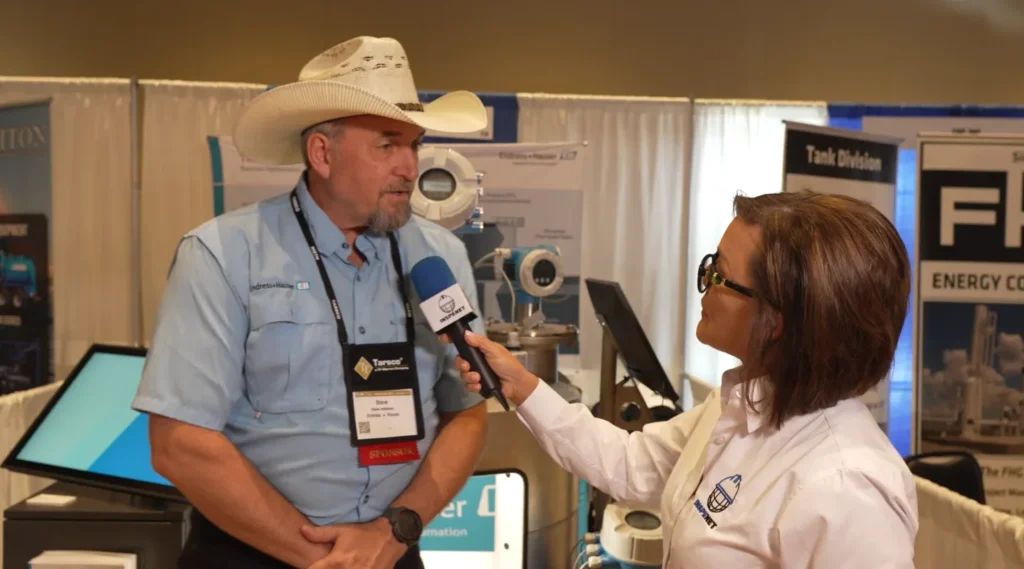
At NISTM 2026, industrial automation is solidifying its position as a crucial driver in the evolution of bulk liquid storage. During the event, Steve Hoffmann, National Business Manager at Endress+Hauser, discusses how the integration of advanced measurement systems and digital solutions is redefining operational management in sectors such as oil and gas, where accuracy and immediate access to data make all the difference.
From the outset, the expert makes it clear that the focus is no longer solely on measurement, but on transforming data into immediate decisions. This evolution marks a significant shift in how companies manage their assets and operational risks.
Endress+Hauser and its role in industrial instrumentation
On the one hand, Endress+Hauser positions itself as a global provider of automation and measurement solutions for industrial processes. The company operates in multiple sectors, from energy and water to food and pharmaceuticals, with a clear focus on data accuracy and reliability.
Furthermore, their offering combines instrumentation, software, and services , enabling companies to optimize their processes and improve operational control. This comprehensive approach is crucial in environments where every data point matters and every deviation can have a financial or security impact.
Tank measurement and control in the energy sector
In the energy sector, industrial automation takes on a particularly critical dimension. As Hoffmann explains, many of the solutions presented at the event are geared towards measuring liquids in storage tanks, especially hydrocarbons.
In this regard, precise inventory control allows companies not only to know the volume stored but also to manage high-value assets. Likewise, these solutions facilitate product traceability, an important aspect in large-scale operations.
As the market demands greater transparency, having reliable measurement systems becomes an operational and financial requirement.
Operational safety as a priority in automation
Furthermore, safety remains a central focus within industrial automation. Hoffmann emphasizes that many of the fluids handled can be hazardous to both the environment and personnel.
Given this scenario, measurement technologies allow for constant monitoring of tank conditions and the prevention of hazardous situations. From leaks to overfilling, each controlled variable reduces the likelihood of incidents.
Likewise, data visibility helps companies to act quickly in response to any deviation, reinforcing security throughout the operation.
Digitization and real-time data: the big change
However, the most relevant point of the interview lies in digitization.
The sector is in a clear transition towards models where data is no longer isolated but integrated into connected systems.
According to Hoffmann.
In this new scenario, industrial automation relies on cloud solutions that allow access to real-time information from any point in the operation. This capability facilitates immediate decision-making, something especially valuable in dynamic environments.
Furthermore, eliminating manual processes and paper records reduces errors and improves efficiency. Information flows continuously from field devices to management systems, creating a complete view of the operation.
Artificial intelligence and new operational capabilities
Meanwhile, the integration of artificial intelligence is beginning to open up new possibilities within industrial automation. Although still in the development phase in many cases, its application is already geared towards optimizing processes and improving operational efficiency.
Hoffmann points out that the company is collaborating with technology partners to test various AI-based applications. These initiatives aim to move towards models where systems not only monitor but also propose actions or adjustments based on the data.
As these technologies mature, their integration will become increasingly common in the industry.
An industry driven by data and connectivity
Looking ahead, the trend is clear: the industry is moving towards fully digitalized environments . The availability of data across multiple platforms allows companies to break free from the isolated systems of the past.
Likewise, connectivity between devices and systems facilitates more agile and coordinated management; this approach, in addition to improving efficiency, also reinforces transparency throughout the operational chain.
In this context, industrial automation acts as the axis that connects technology, data, and decision-making.
Customer-centric corporate culture
Finally, beyond technology, Hoffmann focuses on Endress+Hauser's corporate culture. As a family-owned company, the organization maintains a customer-centric approach, summarized in its principle "serve first, then win."
This approach strengthens customer relationships and focuses the development of solutions on real market needs. In a demanding sector like industry, this approach makes a significant difference.
Outlook for the energy sector
In short, industrial automation continues to advance toward more connected, efficient, and safe models. The combination of precise measurement, digitalization, and technological integration is redefining how companies manage their operations.
Events like NISTM 2026 reflect this evolution and highlight that the future of the sector lies in leveraging the value of data. Along this path, companies like Endress+Hauser will continue to play a key role in the industry's transformation.
For more content about NISTM 2026, visit our LinkedIn profile.
Source: Inspenet.