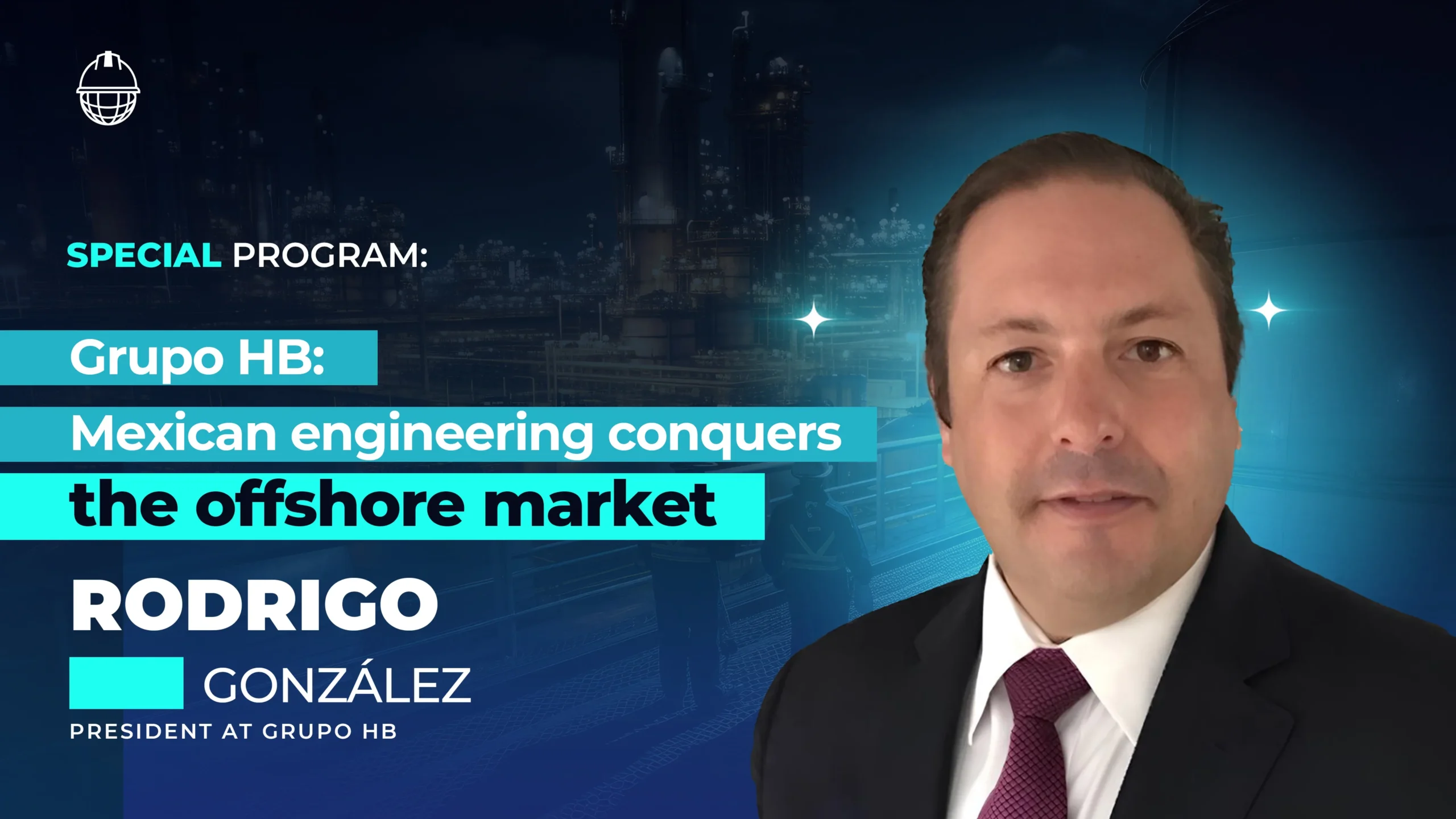
Grupo HB: leadership in offshore marine engineering
Marine engineering in Mexico is undergoing constant evolution, driven by companies that have successfully adapted to global challenges. A clear example is Grupo HB, a company with more than three decades of experience that has positioned itself as a benchmark in complex offshore and energy projects.
In an exclusive interview, Rodrigo González, President of Grupo HB, shares the keys to the success of a company that has brought Mexican engineering to international standards.
A track record that defines excellence
Grupo HB began as a family project with a clear vision: to provide specialized engineering solutions with commitment and discipline. Over 36 years, the company has evolved from port infrastructure projects to becoming a key player in the development of offshore solutions and liquefied natural gas (LNG) terminals.
This growth has been marked by continuous technological adaptation and the pursuit of specialized niches within the marine sector.
Specialized engineering for high-complexity projects
One of Grupo HB’s main differentiators is its ability to develop engineering solutions tailored to the Latin American context. This approach allows the company to deliver more precise and efficient solutions while facilitating collaboration with major international companies.
The company has embraced the “localization” of engineering, adapting global standards to local conditions, improving execution, and reducing risks in complex projects.
A landmark project in the Mexican pacific
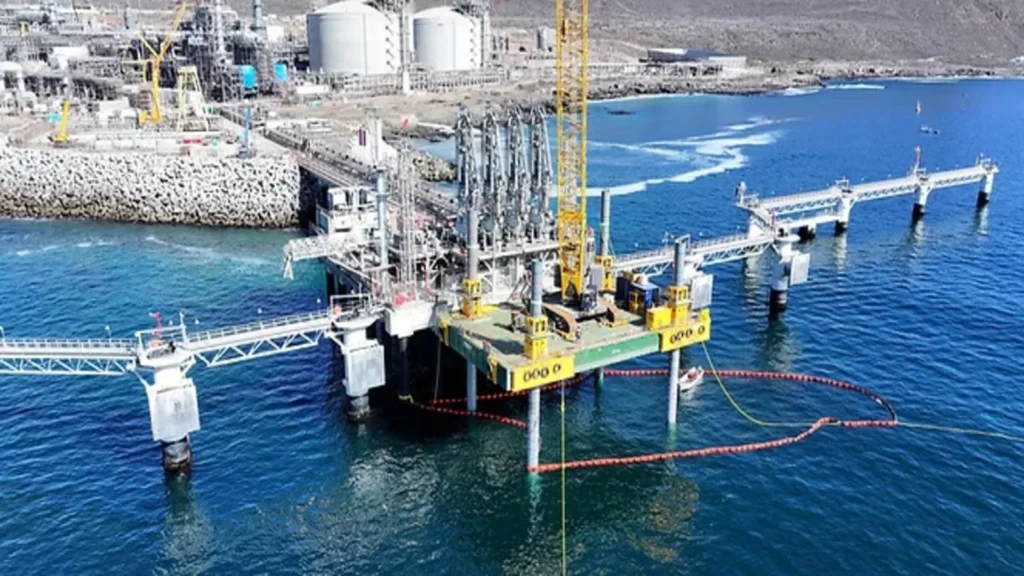
Among its most notable achievements is the replacement of marine loading arms at an LNG terminal, considered among the largest installed in the Pacific and the Americas.
This project represented a significant technical challenge due to:
- Demanding marine conditions
- High-precision lifting operations
- Complex international coordination
- Minimal margin for error
Rigorous planning and close client-company integration were key to its success, enabling safe and efficient execution.
Risk management and real-time decision-making
One of the most important lessons from the project was the ability to adapt to unforeseen circumstances, such as sudden weather changes that required operations to be halted.
Grupo HB’s strategy is based on:
- Transparent communication with the client
- Continuous risk assessment
- Fast, coordinated decision-making
This approach reduces uncertainty and builds trust at every stage of the project.
International collaboration as a strategic factor
The project’s success also depended on coordination with teams from different countries, including specialists from Norway and Panama.
Effective integration was achieved through:
- Supply chain synchronization
- Ongoing communication between technical teams
- Alignment at every operational phase
This working model has enabled Grupo HB to compete on a global scale.
The role of LNG in the energy transition
Liquefied natural gas is emerging as a key component in the transition toward cleaner energy. Grupo HB has identified this opportunity and has focused part of its strategy on developing solutions for this sector.
The company already has the technical capabilities and strategic partnerships to participate in projects related to new energy technologies.
International expansion: from latin america to the world
Currently, Grupo HB operates in countries such as Peru and is planning expansion into Colombia, Argentina, Honduras, and even India.
This internationalization reflects:
- The competitiveness of Mexican engineering
- The ability to adapt to different markets
- A global growth vision
Organizational culture: transparency and agility
One of Grupo HB’s pillars is its corporate culture, based on honesty and direct communication with clients.
Its main values include:
- Full transparency in every project
- Agile decision-making
- Close client relationships
- Fast problem-solving
These elements have been key in building long-term relationships.
Message for the next generation of engineers
Rodrigo González emphasizes that the sector requires professionals capable of adapting to a rapidly changing environment.
His advice to young engineers is clear:
Accelerate your learning and align with the speed of technological change.
The combination of talent and adaptability will be crucial to leading the future of offshore engineering.
Grupo HB demonstrates that Mexican engineering can compete globally, leading complex projects with innovation, precision, and a strong corporate culture.
Its focus on sustainability, specialization, and international expansion positions it as a benchmark in the marine and energy sectors, paving the way for the development of offshore engineering in Latin America.