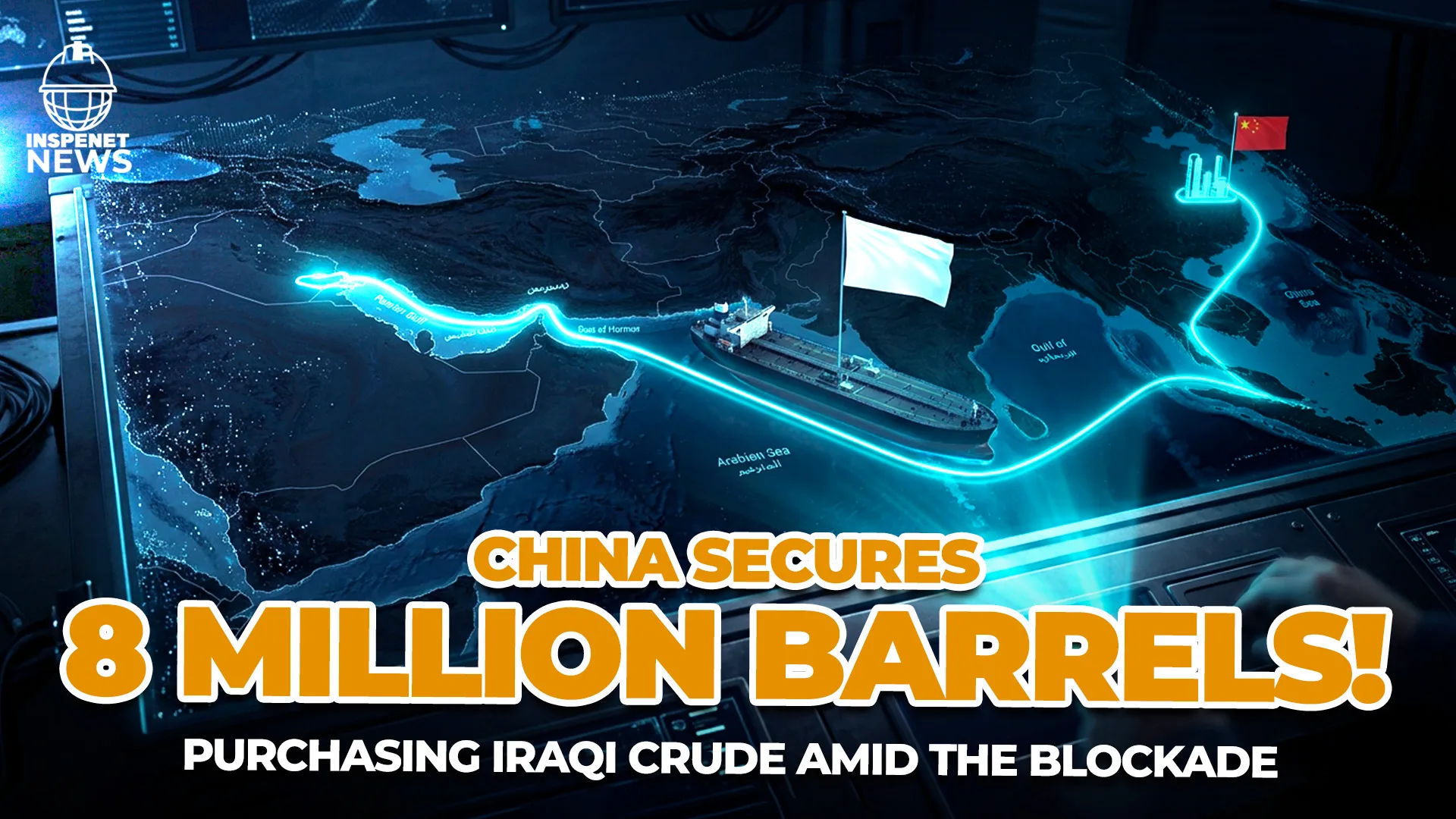
China accelerates purchases of Iraqi oil due to Gulf crisis
Chinese refineries are accelerating their purchases of Iraqi crude as disruptions to major Middle Eastern shipping routes disrupt supplies to Asia. In recent transactions, they acquired 8 million barrels of Basrah Heavy and Basrah Medium crude for immediate delivery.
Furthermore, the move allows China to cover some of its needs with Iraqi shipments while oil from other producers faces longer journeys and greater difficulties in reaching the Asian market.
Chinese refineries secure 8 million barrels of Iraqi oil
Specifically, the recent transactions include approximately 8 million barrels of Basrah Heavy and Basrah Medium crude. These varieties are part of Iraq's oil supply and allow Chinese refineries to expand their supply sources.
These purchases also come at a time when securing available shipments has become increasingly important for Asian buyers. Maritime difficulties in the Middle East have reduced the regularity of some routes connecting Gulf producers with China.
Therefore, Iraqi crude can cover a portion of the supply that takes longer to reach Chinese shores. The move also demonstrates how refineries are responding to a situation where the shipping route can be as important as the availability of oil.
The Strait of Hormuz continues to limit oil transport
Meanwhile, oil continues to flow through the Strait of Hormuz despite the Iranian blockade. However, transit remains well below pre-conflict levels.
During the week ending August 17, Marine Traffic recorded 95 vessel crossings , compared to 118 the previous week. The difference reflects the ongoing pressure on one of the main routes for transporting oil from the Gulf.
Meanwhile, some oil tankers have turned off their transponders during their voyages, a practice that makes them harder to detect using standard maritime tracking systems. Even so, these measures have not allowed for a return to pre-war traffic levels.
For Iraq, the Strait of Hormuz is of direct importance because it constitutes its main export route for oil destined for international markets. Maintaining this transit allows the country to continue placing part of its production in Asia.
Iraq increases its exports to 2 million barrels per day
Meanwhile, Iraq has managed to increase its oil exports through the Strait of Hormuz compared to previous months. Since the beginning of August, the country has exported crude at a rate of nearly 2 million barrels per day, according to data from its state-owned marketing company.
This ability to keep shipments in circulation favors the position of Iraqi oil compared to other Middle Eastern supplies that face greater logistical obstacles.
Consequently, China sees Iraq as a source capable of providing significant volumes at a time of uncertainty for regional maritime transport. The 8 million barrels recently acquired demonstrate the speed with which refineries are adjusting their purchases.
Saudi Arabia's problems open up space for Iraqi crude.
At the same time, Saudi Arabia has had to modify the routes used to transport some of its exports. First, it diverted shipments from Hormuz to the Red Sea. Then, attacks by the Houthis in Yemen against oil tankers and energy infrastructure increased the difficulties in that area.
In response, Saudi crude oil shipped from the port of Yanbu is being diverted to Egypt. The shipments are moving north through the Suez Canal to reduce the ships' exposure to attacks.
However, this alternative has limitations. The Suez Canal can accommodate smaller tankers than those that can navigate the Bab el-Mandeb Strait. Furthermore, the change in route increases the time required for certain Saudi cargoes to reach their final destination in China.
Thus, Iraqi oil is gaining ground as an alternative for Chinese refineries . The difference in transport times could influence purchasing decisions as long as disruptions to regional routes persist.
China is also seeking oil from the United Arab Emirates
In addition to Iraq, Chinese companies have also sought supplies in the United Arab Emirates. This strategy shows that buyers are spreading their purchases among various Gulf producers.
At the end of July, Sinopec, PetroChina, and Sinochem acquired approximately 2 million barrels of Upper Zakum crude oil during a spot tender. ADNOC sold a total of 12 million barrels of oil through this process.
Thus, China's oil purchases are being distributed among different available sources. Iraq now occupies a relevant position due to its ability to maintain exports while other routes face greater restrictions.
Gulf routes alter China's supply chain
Ultimately, the situation shows that supply to China depends as much on available production as on the capacity to transport it. Hormuz, the Red Sea, Bab el-Mandeb, and the Suez Canal are part of a maritime network under intense pressure.
As long as these difficulties persist, Chinese refineries will have incentives to seek shipments that reduce delays and allow them to maintain operations. In that scenario, Iraq could temporarily gain a share of Asian purchases if it maintains its export pace.
At the same time, increased Chinese purchases could alter the destination of some Middle Eastern shipments. This will depend on maritime traffic, vessel availability, and the ability of producers to maintain their oil exports to Asia.
News of additional interest
Key Capture secures US$300 million for batteries
Key Capture Energy (KCE) secured a $300 million financing line from Standard Chartered to boost its battery storage portfolio in the United States. The funds will support projects at various stages of development, with an immediate focus on the NY-ISO electricity market in New York and the MISO market, which covers much of the Midwest. The company already operates 623 MW of storage capacity, 580 MW of which are located in Texas.
KCE is looking to expand in areas where storage needs are increasing but where there is still room for new projects. New York aims to contract 6 GW of storage by 2030, and KCE has submitted projects to its state program. In MISO, the company sees new opportunities arising from the growing electricity demand linked to electrification, data centers, and artificial intelligence. Standard Chartered will be the sole supplier and arranger of the new line.
UCC accelerates its expansion in submarine services
Underwater Construction Corporation (UCC) received a strategic investment from Crescentia Capital and Graham Capital Investments to accelerate its growth. The funds will allow the company to expand regional operations, incorporate new technology and equipment, and evaluate acquisitions. UCC also seeks to strengthen its services for critical infrastructure sectors such as nuclear and hydroelectric power, municipal water systems, and U.S. Navy projects.
Founded in 1969, UCC has seven regional offices and more than 225 certified commercial divers. Its services include underwater inspection, cleaning, repair, and maintenance, as well as underwater welding and remotely operated vehicle (ROV) operations. Raymond W. Palumbo will continue as president and CEO, and the current UCC team will remain in place to lead its operations.
Aramco moves crude oil out of Hormuz to supply Asia
Saudi Aramco is negotiating with Asian refineries to supply crude oil from locations outside the Strait of Hormuz due to disruptions on that route. The Saudi oil company is offering Arab Medium and Arab Heavy crude shipments via ship-to-ship transfers near Fujairah, in the United Arab Emirates. According to sources cited in the report, the operations would include deliveries scheduled for September.
The company has also used alternative routes to maintain its exports. Some of the Arab Light crude has been diverted to Yanbu, on the Red Sea, and shipments have also been offered from Sidi Kerir, Egypt. These moves come as security concerns on the region's shipping lanes disrupt energy trade and put pressure on Aramco's presence in markets like India.
India studies loans to alleviate renewable energy losses
India is considering offering low-cost loans with seven- to eight-year repayment terms to renewable energy producers affected by grid constraints. Since February 2025, developers have reportedly lost approximately 45 billion rupees (about US$470 million) due to restrictions on transmitting electricity from states such as Rajasthan and Gujarat. Between April and June, the country failed to feed 14% of its solar power into the grid.
The rapid growth of clean energy generation has outpaced the development of some of the infrastructure needed to transmit it. By May 2026, nearly a third of the 54.8 GW of newly installed clean energy capacity relied on temporary transmission systems, according to ICRA. The government is now discussing with producers which projects could receive financial support as it seeks to alleviate accumulated losses.