Asset integrity management with Baker Hughes and Antea
Asset integrity management is undergoing a transformation driven by digitalization, industrial connectivity, and the strategic use of artificial intelligence. At the API Summit 2026, Baker Hughes and Antea shared their vision on how these technologies are changing the way industrial operators identify risks, prioritize inspections, and make decisions about critical assets.
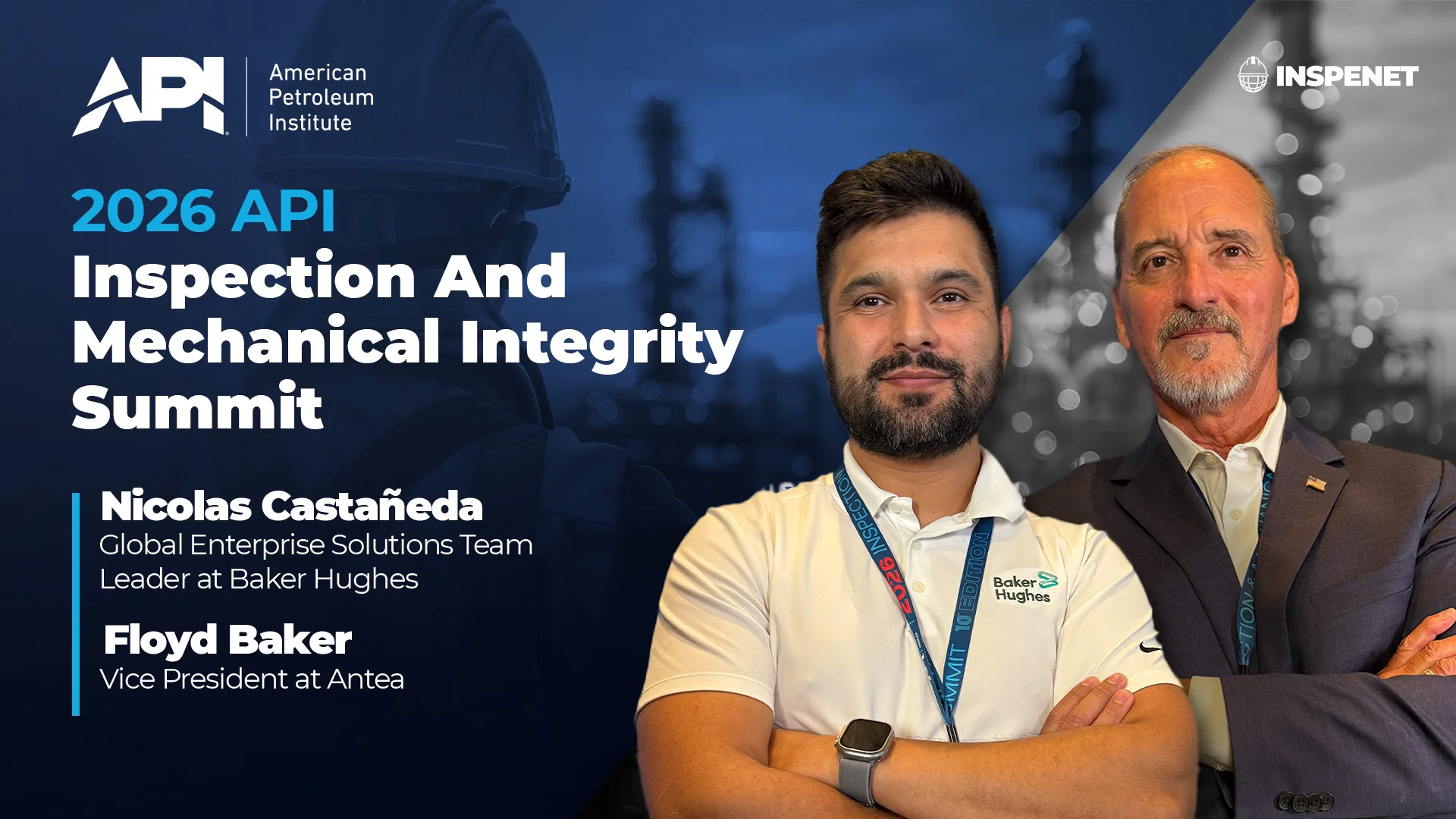
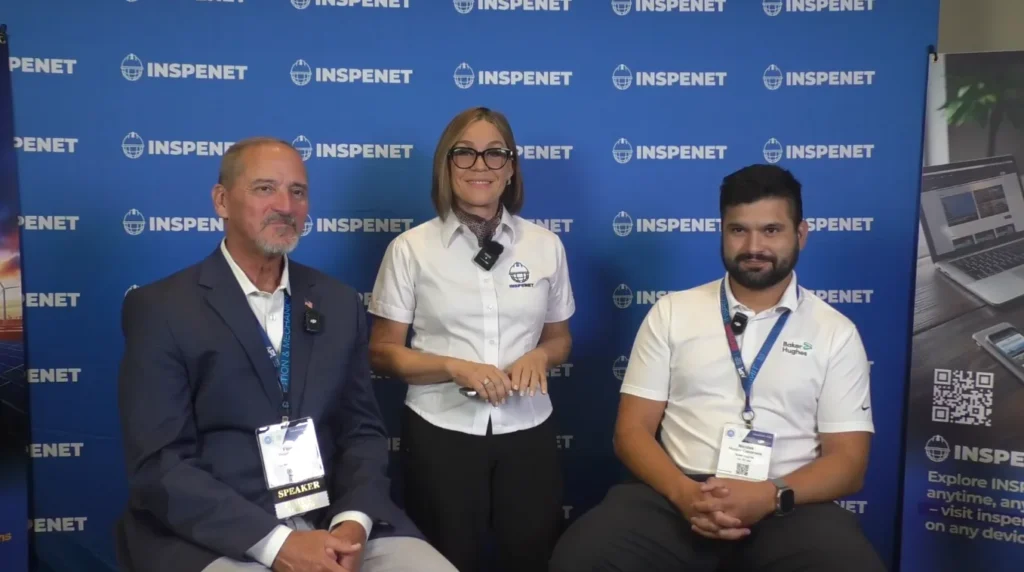
The interview featured Nicolás Castañeda, Global Enterprise Solutions Team Leader at Baker Hughes , and Floyd Baker, Vice President of Antea Americas , who discussed the evolution of risk-based inspection, the role of digital twins , and the integration of both companies within Baker Hughes' Cordant™ ecosystem . The message was clear: the industry is moving beyond static models toward platforms capable of interpreting real-time data and translating it into concrete actions before a failure occurs.
A unified view of integrity and risk
One of the most relevant announcements of the conversation was the integration of Antea within the Cordant™ ecosystem , Baker Hughes' digital platform designed to connect different disciplines related to the performance of industrial assets.
As Nicolás Castañeda explained, the goal is to provide a unified solution that allows risk to be used as a common unit of analysis across different areas of operation. This integration brings together capabilities related to asset strategy , equipment health status, defect elimination, and mechanical integrity management.
Thanks to this approach, operators gain a much broader view of the condition of their facilities. Instead of analyzing information in isolation, the platform allows them to identify where the highest levels of risk are concentrated and establish action priorities based on a much more solid technical foundation.
This approach represents a significant evolution from traditional systems, where information from inspections, maintenance, and operation remained distributed among different tools without efficient correlation.
Integrity management evolves in real time
For decades, risk -based inspection (RBI) has been one of the cornerstones of managing equipment integrity in the oil, gas, and process industries.
However, Floyd Baker explained that the real change lies not in the concept of RBI, but in the way it can now feed on continuously updated information.
corrosion rates , and maximum permissible operating conditions within a Digital Twin environment . This digital representation provides context to the data and allows engineers and integrity managers to more quickly understand the actual condition of each asset.
The next stage involves transforming a traditionally periodic process into a dynamic system.
To achieve this, the platform connects the Integrity Operating Windows (IOW) with various industrial data sources, including DCS systems, PLCs, SCADA, data historians, and sensors distributed throughout the plant. When any of these parameters exceeds predefined thresholds, the platform automatically detects the deviation and reports it to the risk-based inspection module.
As a result, the system recalculates the probability of failure considering the new operating conditions. In this way, risk ceases to be a snapshot obtained during a scheduled inspection and becomes an indicator that evolves virtually in real time.
For operators, this change means having much more up-to-date information to prioritize inspections, plan interventions, and reduce exposure to unexpected failures.
Automation and context to turn data into decisions
One of the aspects that Floyd Baker repeatedly emphasized was the importance of context.
Industrial facilities generate enormous volumes of information from inspections, sensors, control systems, and historical records. However, having data does not guarantee better decisions.
As he explained, value emerges when all that information is organized within a platform capable of automating processes and relating the different elements that affect the integrity of an asset.
In this sense, automation is one of Antea's main differentiating factors.
The goal is to reduce manual intervention in repetitive tasks and allow professionals to dedicate more time to technical analysis and decision-making. The platform automates data collection, continuously monitors critical variables, and recalculates the risk level when operating conditions change.
This capability also allows for a complete history of the behavior of each asset, facilitating trend analysis and early identification of degradation mechanisms.
asset integrity management ceases to depend exclusively on periodic inspection campaigns and becomes a continuous process supported by contextualized information.
Artificial intelligence must respond to a business case
Artificial intelligence was another of the central themes of the interview, although both executives agreed on a clearly pragmatic approach.
Nicolás Castañeda explained that Baker Hughes is developing a platform-level artificial intelligence environment to leverage all the information flowing into the digital ecosystem . The intention is to create use cases that can be extended to different areas without losing the specific knowledge of each discipline.
However, Floyd Baker wanted to make an important distinction from the discourse that currently dominates much of the market.
In his opinion, there is great anticipation surrounding artificial intelligence, but incorporating this technology solely for commercial reasons does not provide value to customers.
Therefore, both Antea and Baker Hughes focus their efforts on identifying processes where artificial intelligence generates tangible benefits within the workflow.
One of the examples mentioned during the conversation involves conversational assistants capable of querying information stored in controlled and pre-cleaned databases. Unlike models fed by open data, these systems work with data validated by the organization, which significantly improves the quality of the responses.
This type of application allows you to locate technical documentation more quickly, access historical information, and speed up certain tasks without compromising the reliability of the results.
Artificial intelligence, therefore, is presented as an enabler within the platform and not as the main objective of digital transformation.
From predictive maintenance to prescriptive decision-making
Another concept that emerged during the interview was the transition from predictive models to prescriptive models.
According to Nicolás Castañeda, many organizations have been collecting operational, inspection, and maintenance data for years. The current challenge is to transform this enormous volume of information into concrete recommendations that allow them to act before the risk level increases.
In other words, the market is no longer just looking to predict when a failure might occur.
The next step is to determine the best course of action to take after identifying that risk.
This evolution involves combining artificial intelligence, expert knowledge, integrity methodologies, and analytical capabilities within a single platform.
By integrating all these disciplines, operators can respond more quickly to operational deviations, reduce the likelihood of critical events , and optimize the allocation of resources for maintenance.
For Baker Hughes, this change represents a natural evolution of the industrial sector towards more agile decision models based on contextualized information.
Expert knowledge remains a strategic asset
Beyond technology, both interviewees dedicated part of the conversation to one of the biggest challenges currently facing the industry: generational change.
Floyd Baker noted that a significant portion of the workforce is nearing retirement, which poses a clear risk to preserving the knowledge accumulated over decades of field experience.
From their point of view, the priority is to capture that technical knowledge within digital platforms before it disappears with the departure of the most experienced professionals.
However, he also noted that technological adoption remains one of the sector's main challenges. For this knowledge to be leveraged through artificial intelligence and machine learning, it must first be recorded in a structured way in digital systems.
Nicolás Castañeda shared a complementary vision, recognizing the importance of preserving the experience accumulated over the years, although he also highlighted that new generations arrive with a different way of working, more oriented towards the intensive use of data and the questioning of traditional processes.
In this context, digital platforms act as a meeting point between both professional profiles.
On the one hand, they preserve the technical knowledge developed over decades.
On the other hand, they offer tools that allow new professionals to interpret that information more quickly and develop new ways of operating.
A new stage for asset integrity management
The conversation held during the API Summit 2026 reflects a trend that is beginning to consolidate in the energy and industrial sectors.
Asset integrity management is evolving towards platforms where risk-based inspection, real-time operational data, digital twins, automation, and artificial intelligence applied to specific problems converge.
The integration of Antea within the Cordant™ ecosystem represents a step in that direction by bringing together different disciplines under a single vision of risk and facilitating faster and more informed decision-making.
Likewise, the approach shared by Baker Hughes and Antea highlights that the future of industrial integrity will depend less on having large volumes of data and more on the ability to contextualize, interpret, and turn them into actions that reduce operational risk before an incident occurs.
For more content about API Summit 2026, visit our LinkedIn profile.
Source: Inspenet.