Asset integrity evolves with engineering and digitization
Asset integrity is undergoing a transformation driven by digitalization, advanced analytics, and the need to maximize the reliability of industrial facilities. In sectors such as oil and gas, petrochemicals, energy, and manufacturing, companies are no longer looking only for periodic inspections, but for comprehensive strategies that enable them to manage the full lifecycle of their equipment, optimize maintenance resources, and reduce operational risks.
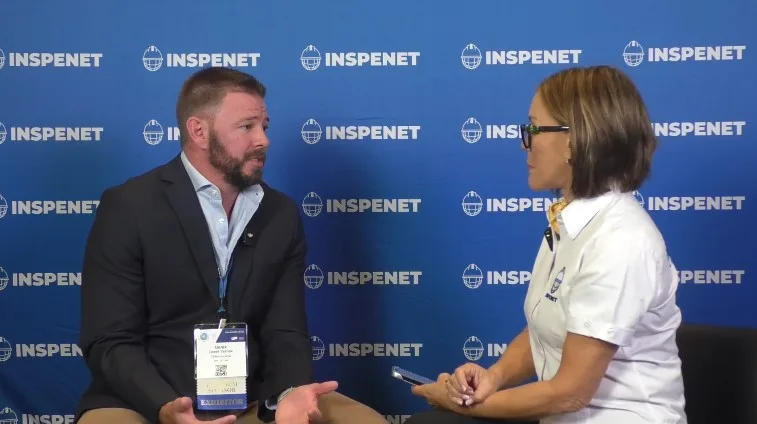
During the API Inspection & Mechanical Integrity Summit 2026, organized by the American Petroleum Institute (API), Derek Yelinek, Senior Engineering Manager, Asset Integrity at TEAM, Inc., shared how the company is responding to this evolution by integrating inspection, engineering, digital technologies, and data analytics. His vision reflects a trend that is redefining how industrial operators protect critical assets and make decisions based on technical information.
Asset integrity requires a comprehensive vision
The growing complexity of industrial facilities has led asset integrity to no longer be understood as a set of isolated inspections, but rather as a discipline that integrates different technical areas under a single objective: ensuring safety, reliability, and operational continuity.
As Yelinek explained, organizations need providers capable of supporting them through every stage of their assets’ lifecycle. This involves combining inspection services, engineering assessments, structural analyses, technical information management, and specialized support within a single program.
This approach ensures that the results obtained during an inspection do not remain as mere documentary records, but are transformed into useful information to set priorities, plan interventions, and define more efficient maintenance strategies.
Integration across different disciplines also enables better coordination among inspectors, engineers, maintenance leaders, and operations teams, creating a more complete view of the true condition of industrial assets and reducing uncertainty in decision-making.
Digital models strengthen asset integrity
One of the most notable aspects of the interview was the role digital technologies play in the evolution of asset integrity. TEAM has incorporated tools such as 3D laser scanning to generate highly accurate digital representations of industrial facilities, tanks, piping, and other critical equipment.
These digital models provide a virtual replica of the assets, making it easier to plan inspections, engineering projects, and plant shutdowns without relying exclusively on physical access to the facilities.
The information obtained through laser scanning offers significant advantages for coordinating multidisciplinary projects. Different technical teams can review the same 3D model, identify interferences, verify dimensions, and prepare modifications before carrying out any field work.
In addition to improving planning, this digitalization helps reduce intervention time, minimize risks during scheduled shutdowns, and optimize the use of resources. With accurate geometric information, decisions can be made with greater confidence and anticipation.
These tools also facilitate remote work among specialists located in different regions, who can simultaneously analyze an asset’s condition without needing to travel to the operating site. As a result, companies achieve more agile and collaborative engineering processes.
The adoption of digital models therefore represents an important shift in how industrial assets are managed, by turning large volumes of information into a solid foundation for strategic planning and risk management.
Engineering and inspection to make better decisions
Although inspection technologies remain fundamental, Yelinek noted that their true value emerges when they are complemented by engineering analyses capable of interpreting field results.
In this regard, TEAM integrates various assessment methodologies to determine the structural condition of equipment and estimate its future behavior. These include dimensional analyses applied in accordance with API 653, widely used to evaluate storage tanks, as well as finite element analysis (Finite Element Analysis, FEA) studies when operating conditions require a more detailed evaluation.
These tools make it possible to understand how corrosion, deformation, or defects detected during inspections affect the asset’s structural performance.
Beyond identifying anomalies, the goal is to answer key operational questions: how long equipment can remain in service, what risks are associated with its current condition, and what actions must be implemented to ensure safe operation.
The combination of inspection and engineering provides a much more robust technical basis for defining maintenance plans, prioritizing investments, and scheduling future interventions according to each asset’s criticality level.
This approach also supports more efficient use of resources, as it avoids premature replacements and allows efforts to be focused on the equipment whose condition truly requires immediate attention.
From regulatory compliance to a risk-based strategy
One of the most important messages from the interview was that meeting regulatory requirements is no longer enough to ensure proper asset integrity.
While periodic inspections remain essential to meet regulatory requirements, the results obtained must be translated into concrete actions aimed at improving facility reliability.
Yelinek explained that decisions related to inspection intervals should not depend exclusively on fixed schedules, but should consider factors such as corrosion rate, the equipment’s actual condition, its remaining life, and the level of risk associated with each asset.
This dynamic approach makes it possible to adapt inspection strategies to the specific operating conditions of each facility, avoiding both unnecessary inspections and delays that could increase the probability of failure.
The availability of historical data, together with engineering assessments and digital models, makes it easier to build more flexible inspection programs aligned with the assets’ actual behavior.
In this way, organizations can optimize their maintenance resources without compromising safety, while also improving operational availability and reducing costs arising from unplanned interventions.
The shift toward condition- and risk-based strategies represents one of the main trends currently driving the evolution of industrial asset management.
TEAM focuses on comprehensive asset integrity programs
The proposal presented by TEAM during API Summit 2026 reflects a market evolution toward increasingly integrated solutions. Instead of offering standalone services, the company proposes programs that combine advanced inspection, specialized engineering, digital technologies, and centralized management of technical information.
This model enables data obtained during inspections to feed continuous evaluation processes, facilitating database updates, planning of future interventions, and decision-making grounded in technical evidence.
For highly regulated industries, where asset availability has a direct impact on productivity and safety, this integration represents an important advantage by reducing information fragmentation and improving coordination among the different areas involved.
Likewise, incorporating technologies such as laser scanning, 3D modeling, and engineering assessments strengthens organizations’ ability to anticipate potential issues and extend the service life of their facilities through smarter maintenance strategies.
The future of asset integrity is already underway
Derek Yelinek’s interview during the API Inspection & Mechanical Integrity Summit 2026 made it clear that asset integrity is evolving toward a model in which inspection is no longer an isolated activity, but becomes part of a continuous technical management process.
Integration among inspection, engineering, digitalization, and data analytics makes it possible to understand asset condition more accurately, optimize maintenance planning, and support decisions based on risk and actual condition.
In a context where industries seek to increase the reliability of their operations and maximize the return on their investments, comprehensive asset integrity strategies are becoming an essential component for managing increasingly complex facilities and meeting the operational challenges of the future.
For more content on API Summit 2026, visit our LinkedIn profile.
Source: Inspenet.