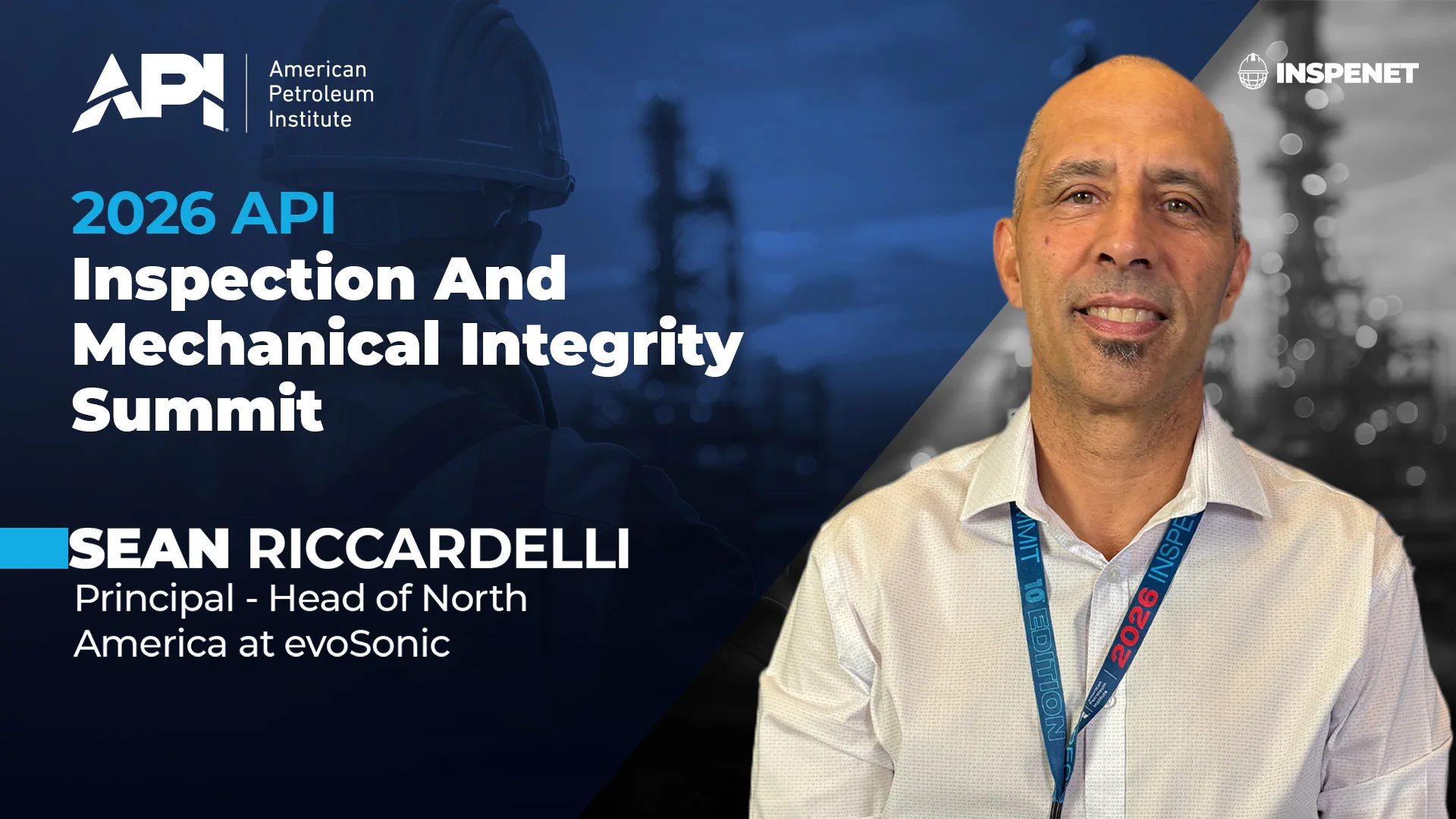
API Summit 2026: AI and traceability in industrial inspection
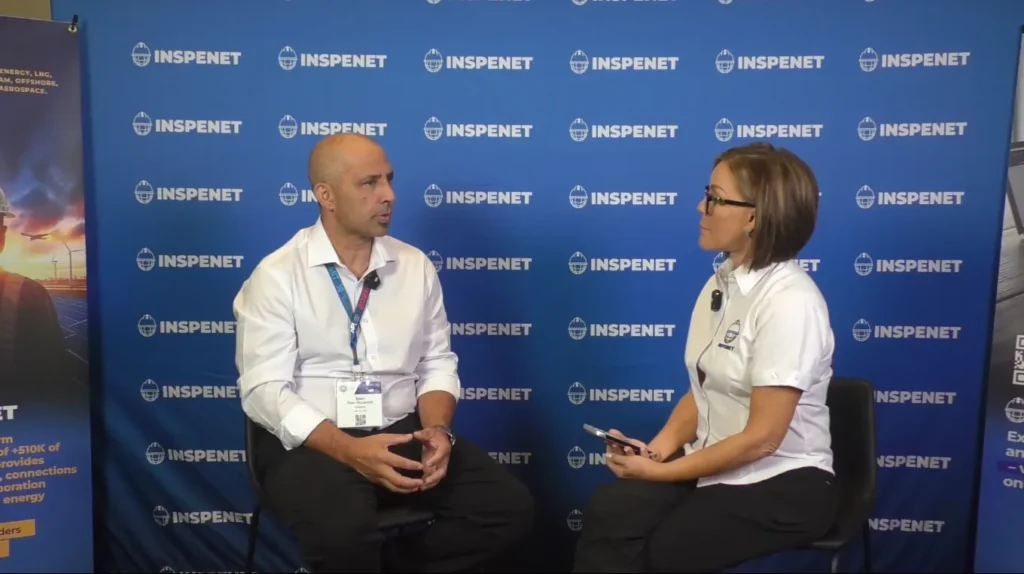
Sean Riccardelli, Principal Director for North America at evoSonic, discussed at API Summit 2026 how technical software and artificial intelligence can improve inspection, calculation, and risk analysis processes in industrial facilities. His presentation focused on a key idea: technology should facilitate the engineer's work without replacing their professional judgment.
Throughout the interview, Riccardelli explained that an industrial platform must adapt to the user's knowledge and allow them to quickly access the data they need. In this context, ease of use is not about reducing each process to a series of basic steps. It's about removing obstacles and providing a clear path to calculations that can affect the safety and operation of a plant.
The meeting also provided an opportunity to review the role of artificial intelligence in technical information management. According to Riccardelli, its greatest value lies in gathering scattered records, summarizing documents, and presenting useful data so that engineers can make better-informed decisions.
API Summit 2026 focuses on the technical user
First, API Summit 2026 provided a forum to discuss how software should be designed for engineers, inspectors, and asset integrity specialists. These users are experienced and understand the processes they need to perform. Therefore, an industrial platform should not attempt to replace their knowledge with rigid workflows or wizards that obscure the calculations.
Riccardelli pointed out that a good user experience must respect the professional's technical skills. The goal is for each engineer to be able to access their workflows quickly and without relying on lengthy configuration processes.
This idea changes the usual meaning of the concept of "easy to use." In a consumer application, simplicity might mean fewer options. In industrial inspection software, it means offering control, clarity, and direct access to the elements the user needs.
Furthermore, the design must consider different levels of experience. An engineer with years of experience might want to dive directly into the data, while a newer user might require a step-by-step guide. The platform must cater to both user profiles without obscuring the process or limiting the ability to review the information.
Likewise, the interface must show what information is used, what decisions are made, and how each result is obtained. This visibility is crucial when calculations need to be presented to other specialists, plant managers, auditors, or regulators.
Traceability for calculations that affect plant operation
On the other hand, one of the central points of the conversation was traceability; in industrial environments, a calculation can influence the operational continuity of a facility or the evaluation of equipment exposed to toxic and flammable substances.
Under these conditions, the engineer needs more than just a final result; he must know the origin of the data, the assumptions used, and the sequence followed by the system.
Riccardelli explained that the technical software must allow calculations to be verifiable and defensible. This capability provides support during internal audits , external reviews, and regulatory processes. It also helps maintain a clear record of the decisions made throughout an asset's lifecycle.
Trust is central to this process; an engineer can rely on technology but needs to verify that the results have a solid foundation . Therefore, internal validation and third-party review are part of the proposal presented at API Summit 2026.
In this sense, trust does not arise from an attractive interface, it arises from the possibility of reviewing the procedure and confirming that each calculation responds to a recognized methodology.
Furthermore, the development of these tools requires the direct involvement of engineers. Their field experience allows them to identify common errors, operational limitations, and needs that are not always visible to a team focused solely on programming.
Artificial intelligence organizes data without replacing the engineer
Next, Riccardelli addressed the use of artificial intelligence in engineering and industrial inspection . His position was clear: AI can accelerate analysis and reduce repetitive tasks, but the decision must remain the responsibility of a competent professional.
In a plant, technical information is usually found in multiple sources; it may be in process flow diagrams, mass and energy balances, photographs, inspection reports, historical records, scanned files, or separate document systems.
This fragmentation forces engineers to spend time locating documents and comparing data before reaching a conclusion. Artificial intelligence can reduce this burden by identifying relevant information, organizing it, and generating summaries that facilitate review.
During API Summit 2026, Riccardelli indicated that this capability allows for the collection of both structured and unstructured data. A system can work with digital records and documents that were previously stored in physical filing cabinets. It can also link inspection images to technical records or conditions documented in other systems.
However, automation has limits; the platform can provide context and highlight patterns, but it should not make a critical decision about the operation of a team on its own.
Technical judgment remains essential for assessing data quality, reviewing exceptions, and considering the specific conditions of each facility. AI acts as a support tool, helping specialists work faster and more consistently.
Less time searching for information and more time analyzing
Furthermore, data centralization can change how inspection teams spend their time. In many organizations, specialists dedicate a considerable portion of their workday to searching for documents stored in different systems.
This task may include locating old reports, reviewing photographs, validating versions, and confirming whether a record corresponds to the correct team. When information is scattered, the risk of working with incomplete or outdated data increases.
The proposal analyzed at API Summit 2026 seeks to bring that information to a common environment; the system can extract content from different sources and present it in an orderly way so that the engineer can focus their effort on the analysis.
This change can improve the repeatability of processes; if several professionals work with the same database and follow a visible methodology, it becomes easier to compare results and detect differences.
Similarly, a platform with traceability allows you to know who performed a review, what information they used, and what changes were made. This record is useful when an asset undergoes multiple inspections or when different contractors participate in the same assessment.
The improvement depends not only on making calculations faster, but also on reducing the possibility of important data being left out of the analysis.
A platform adaptable to equipment of different sizes
Another aspect addressed by Riccardelli was the ability to adapt; the needs of an independent consultant are different from those of a large company with multiple plants and teams distributed across several regions.
Therefore, an industrial software solution must serve both a single engineer and a large-scale organization. The individual user needs quick access and easy setup. The enterprise requires project control, user allocation, and a structure capable of supporting larger workflows.
The interview highlighted that the adoption process should be straightforward; a team should be able to create a workspace, define projects, assign users, and start using the applications without relying on extensive integration with the technology department.
This ease of use reduces a common barrier to adopting new tools: when changing platforms requires too many steps, some users revert to their previous methods. They may also create parallel solutions that make it difficult to control information.
In contrast, a clearer integration helps the engineer perceive value from the very first tasks. The system should allow the user to continue with a familiar methodology while taking advantage of new analysis and document management features.
The coexistence of experience and digital capability
Furthermore, API Summit 2026 also prompted reflection on the differences between generations of engineers and inspectors. Some professionals began their careers with paper records, while others have been trained in an environment dominated by mobile devices and digital applications.
Riccardelli clarified that this difference does not depend solely on age, but is also related to each person's level of technological familiarity.
An industrial platform must cater to both profiles: the experienced field professional needs to recognize the logic of the procedures they have used for years, while the digitally savvy user expects a fast, connected interface ready to work from different devices.
The challenge is to unite both perspectives; the software must preserve the technical sequence that gives confidence to the specialist and at the same time offer tools that reduce manual tasks.
This balance is important because accumulated experience remains a valuable source of knowledge. Technology can organize data and provide context, but it needs to incorporate how engineers interpret real-world operating conditions.
evoSonic and the vision from fieldwork
evoSonic 's profile adds another element to the analysis. The company presents itself as a company with American and Australian roots, founded by technicians for technicians. Its activity relates to equipment and solutions for non-destructive testing and industrial inspection.
This approach stems from the problems that arise during fieldwork. Technicians need tools that respond to real-world conditions and reduce the complexity of each inspection workflow.
Sean Riccardelli embodies this perspective in his role as Principal and Head of North America. His presentation at API Summit 2026 connected practical experience with topics such as digitization, artificial intelligence, and technical data management.
The link between hardware, software, and professional judgment will become increasingly important in industrial inspection. Measuring equipment generates information, while digital platforms help organize it. The engineer then translates that data into an operational decision.
API Summit 2026 proposes a trust-based digitization
Finally, the conversation highlighted that industrial digitization should not be measured by the number of functions incorporated into a platform. Its value depends on its ability to solve specific problems and support technical decisions.
API Summit 2026 showed that artificial intelligence can reduce the time spent searching for information and preparing data. It can also improve the consistency of analyses by bringing together disparate sources and presenting context clearly.
Even so, the engineer maintains a central role. He is the one who validates the data, interprets the results, and assumes responsibility for every decision.
Traceability completes this approach. By displaying the calculations, sources, and steps followed, the software allows for reviewing the work and defending it before other stakeholders.
For Sean Riccardelli, this balance between technology and professional experience defines the path of industrial inspection. Digital tools can make the process faster and more organized. However, their true value emerges when they help the engineer make decisions with greater clarity and confidence.
For more content about API Summit 2026, visit our LinkedIn profile.
Source: Inspenet.