API strengthens professional certification in the face of industry challenges
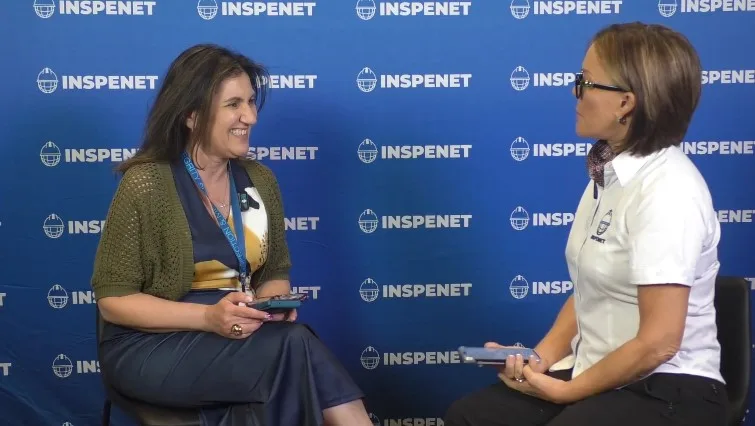
Professional certification has become a cornerstone of ensuring safety, quality, and technical competence within the energy industry. In a context marked by the incorporation of new technologies and the constant evolution of industrial processes, American Petroleum The API Institute continues to expand and strengthen its certification programs to meet the needs of the industry. This was explained by Andri Orphanides , Director of Individual Certification Programs at API , during an interview given at the API Summit 2026.
The event, which brought together more than 2,000 professionals and featured over 300 technical presentations , served as a platform to analyze some of the main challenges facing the industry. These included mechanical integrity , specialized training, the integration of artificial intelligence, and the preparation of professionals who will assume technical responsibilities in the coming years.
API strengthens professional certification
For decades, API has developed technical standards used worldwide and maintains certification programs designed to validate the knowledge and skills of professionals who perform critical functions for the industry.
Currently, these programs have approximately 43,000 certified professionals distributed across 135 countries, a figure that reflects the international reach of an initiative that seeks to establish homogeneous criteria for technical competence.
As Orphanides explained , the goal of these certifications goes far beyond simply obtaining accreditation. The purpose is to provide the industry with the confidence that certified professionals possess the necessary knowledge to perform their work according to the standards established by API.
Certification represents an industry-recognized standard and offers confidence to both companies and professionals.
The executive pointed this out during the interview.
This recognition has made API certifications a benchmark for companies seeking to ensure that their teams have qualified personnel to perform tasks related to inspection, maintenance, construction and operation of industrial facilities.
Mechanical integrity sets the industry agenda
One of the messages that was repeated most often during the conversation was the importance of mechanical integrity as a fundamental element to guarantee safe and reliable operations.
Orphanides noted that safety remains the top priority for the industry and that much of API's certification programs are specifically designed to ensure that professionals responsible for inspecting and evaluating critical equipment are properly trained.
Periodic asset inspection, correct application of technical codes, and continuous training help reduce risks and promote more efficient operation of facilities.
In this context, professional certification takes on a particularly relevant role by offering an objective mechanism to validate technical knowledge that must later be applied in the field.
Likewise, the constant updating of the programs allows for the incorporation of new practices and the adaptation of the content to the evolution of the industry.
Continuing education gains prominence
Learning does not end once certification is obtained, according to the head of Individual Certification Programs at API, continuing education is one of the most important aspects to maintain the technical competence of professionals.
The constant evolution of regulations, technological advances, and the emergence of new procedures make it necessary for inspectors, engineers, and specialists to periodically update their knowledge.
For this reason, API maintains recertification processes that encourage continuous professional development and help ensure that skills remain aligned with current industry needs.
This philosophy responds to a scenario in which technologies evolve rapidly and where technical updating becomes an indispensable condition to maintain high levels of security and quality.
Artificial intelligence opens up new opportunities
Another topic discussed during the interview was the growing interest in artificial intelligence and other emerging technologies.
Far from considering these tools as a substitute for technical knowledge, API analyzes how they can complement the work of professionals and contribute to improving the efficiency of certain tasks.
Orphanides explained that the institute works with industry experts to understand what new capabilities will be needed in the coming years and how certification programs will need to adapt.
The objective is to identify the skills that will allow professionals to use these technologies safely and effectively, while maintaining the technical rigor that characterizes the organization.
The incorporation of artificial intelligence-based solutions also raises new challenges related to data interpretation, asset monitoring, and decision-making, aspects that are expected to have increasing importance within specialized training.
Preparing the next generation of professionals
In addition to addressing current needs, API dedicates part of its efforts to analyzing how the profile of the professional of the future will evolve.
During the interview, Orphanides highlighted the Next Gen initiative, a program that seeks to identify the capabilities that the industry will demand in the coming years and assess whether it will be necessary to develop new certifications.
Technological transformation, generational change, and the emergence of new roles make this planning work especially relevant to ensure that the industry has the necessary talent.
The official explained that this analysis is carried out in collaboration with specialists from different technical areas, who contribute their experience to detect trends and anticipate future training needs.
This approach allows programs to evolve progressively without losing the technical support that characterizes API.
Knowledge transfer is becoming increasingly important
One of the challenges highlighted by the Director of Individual Certification Programs at API is the transfer of knowledge between generations .
Many professionals with decades of experience are approaching retirement, while a new generation begins to assume responsibilities within the industry.
Ensuring that this accumulated knowledge can be effectively transmitted is one of the main challenges to maintaining the high technical standards achieved over the past few decades.
In this regard, Orphanides highlighted the value of mentoring as a tool to facilitate this exchange of experience between veteran professionals and new specialists.
The combination of practical experience, structured training, and professional certification allows for building a solid foundation to face the changes that the sector is experiencing.
API Summit, a space for sharing knowledge
The API Summit represents one of the main forums organized by the institute to bring together specialists, companies and technical experts from different countries.
The 2026 edition required nearly two years of planning and included technical sessions, panel discussions, an exhibition area, and spaces dedicated to emerging technologies.
Beyond presenting new developments, the meeting fosters the exchange of experiences among professionals who work daily in disciplines related to inspection, mechanical integrity, maintenance, engineering and asset operation.
This exchange of knowledge helps to strengthen good practices and allows the conclusions obtained during the event to have direct application in the operations of the industry.
API adapts its certifications to the future of the sector
Andri 's statements Orphanides reflect that professional certification will continue to play a fundamental role within an industry undergoing constant transformation.
Technological evolution, the incorporation of artificial intelligence, the need to train new specialists and the constant updating of skills require continuous review of certification programs.
Faced with this scenario, API remains committed to developing technical standards and certifications that help companies have qualified professionals capable of meeting the current and future challenges of the energy industry. In this way, the organization aims to ensure that technical excellence continues to be a defining characteristic of the sector worldwide.
For more content about API Summit 2026 , visit our LinkedIn profile .
Source: Inspenet .