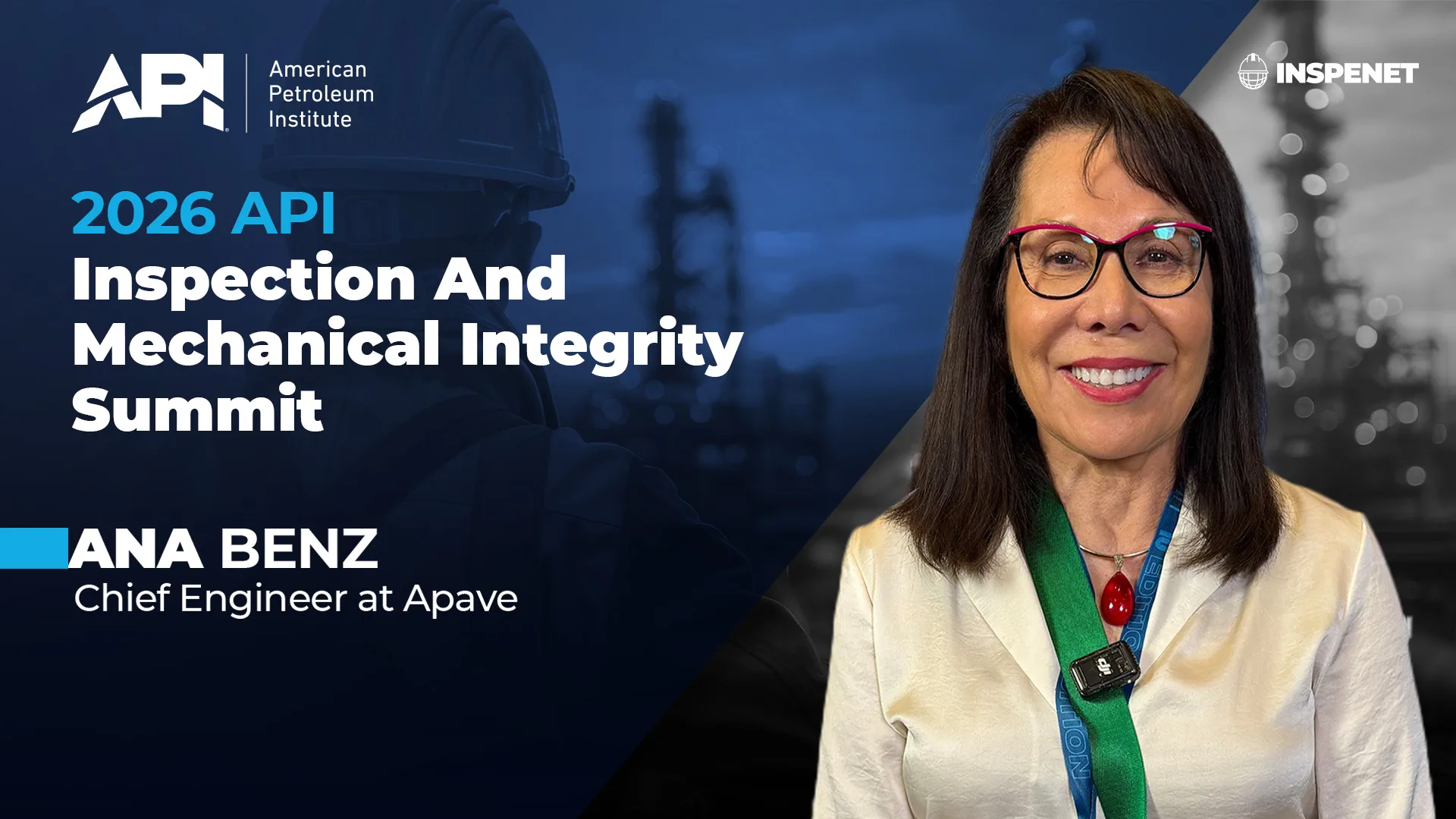
Apave analyzes the future of inspection and asset integrity
Asset integrity remains a cornerstone of the energy and process industries. In a landscape where facilities operate for longer periods and face increasing safety and performance demands, inspection companies play a crucial role in ensuring the reliability of equipment and infrastructure.
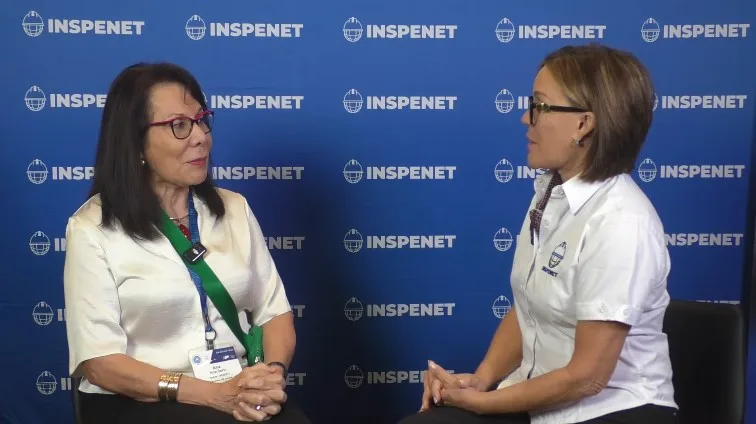
During API Summit 2026, Ana Benz, Chief Engineer at Apave , explained how this field is evolving thanks to the incorporation of new inspection technologies, the specialization of professionals, and a constant commitment to training. According to Benz, the transformation of the sector depends not only on new tools but also on the ability to attract talent and prepare future generations of engineers and technicians.
Asset integrity demands an increasingly broad perspective
The mechanical integrity of an installation goes far beyond regulatory compliance; its objective is to ensure that equipment maintains safe operating conditions throughout its life cycle, minimizing risks and preventing failures that could affect both people and production.
From this perspective, Apave develops services focused on industrial inspection and asset condition assessment using different methodologies tailored to each facility. The company, which has extensive international experience in inspection, certification, testing, and risk management , works with industries where operational safety is a constant requirement.
As Ana Benz explained, the inspection allows for a precise understanding of the equipment's actual condition, facilitating informed technical decisions. This information helps in planning maintenance, optimizing resources, and extending the useful life of assets without compromising operational safety.
Furthermore, the increasing complexity of industrial facilities is driving the constant evolution of inspection techniques. Customers demand increasingly precise methods capable of obtaining reliable information while simultaneously minimizing the impact on production.
Non-destructive testing gains accuracy
One of the highlights during the interview was the development of non-destructive testing (NDT) as an essential tool for assessing the condition of critical components without altering their operation.
These techniques allow for the detection of internal or surface defects before they develop into operational problems. Depending on the equipment's characteristics and the type of material, specialists select different methodologies to obtain the necessary information.
Among the solutions used are industrial radiography, ultrasound, penetrant testing, magnetic particle testing, and other techniques widely implemented within the energy and industrial sectors.
Ana Benz emphasized that combining different technologies provides a much more comprehensive view of asset condition. Each technique contributes specific information, and their combined use increases the reliability of the assessments.
This evolution also responds to the need to reduce downtime and optimize maintenance interventions. Having accurate information makes it easier to prioritize actions and concentrate resources where there is a real potential risk.
Technologies that transform industrial inspection
Technological innovation is also changing the way certain industrial inspections are carried out.
During the conversation, Ana Benz referred to the use of technologies such as laser ablation , a solution that allows for the removal of coatings without damaging the base material. This type of procedure facilitates subsequent inspections and improves the quality of the results obtained.
He also explained that the incorporation of new tools responds to the need to adapt to increasingly sophisticated facilities and materials with specific characteristics.
Another relevant element is the use of rope access techniques ( rope access ) to carry out inspections in hard-to-reach places. This methodology reduces the need to assemble large auxiliary structures and allows certain tasks to be carried out more quickly and flexibly when conditions permit.
The combination of advanced technologies with highly specialized equipment expands the possibilities for inspection in sectors where the availability of facilities is a critical factor.
For Apave , the goal is to select the most appropriate methodology for each project, based on the asset, the operating environment, and the client's needs. This approach allows for obtaining reliable information while maintaining high safety standards throughout the entire intervention.
Training remains an essential element
Technology alone does not guarantee a quality inspection; behind each evaluation there is a team of professionals whose experience is crucial to correctly interpreting the results obtained.
Ana Benz emphasized the importance of continuous training as one of the main factors that allow maintaining the technical quality of inspection services.
The new methodologies incorporate increasingly specialized procedures, which requires a constant updating of knowledge for both experienced inspectors and new professionals joining the sector.
Technical training also contributes to consolidating a safety culture where each intervention is carried out following rigorous procedures and homogeneous technical criteria.
Apave 's perspective , investing in the professional development of its teams is a necessary condition to respond to current industry demands and maintain customer confidence in highly complex projects.
The challenge of attracting new talent to the industry
Beyond technological evolution, one of the most important messages during the interview was the need to attract new professionals to disciplines related to industrial inspection.
Ana Benz acknowledged that many companies face difficulties in recruiting qualified personnel due to the generational shift currently taking place in the industry.
The experience accumulated by veteran professionals represents an asset of enormous value. However, it is essential that this knowledge be passed on to new generations to guarantee the continuity of the sector.
In this context, collaboration with educational centers and the dissemination of existing professional opportunities are becoming increasingly important.
Raising awareness of the real impact of engineering on the safety of people and the functioning of essential infrastructure can spark the interest of students who are still unfamiliar with this professional field.
More women in engineering to build more diverse teams
Another topic addressed during the interview was the presence of women in engineering and in activities related to mechanical integrity.
Ana Benz emphasized the importance of continuing to promote the inclusion of women in these technical fields. To this end, she believes it is essential to provide visible role models that allow future professionals to identify career opportunities within the industrial sector.
Diversity brings different perspectives to tackling complex problems and helps to strengthen work teams.
Although progress has been made in recent years, there is still room to increase female participation in certain engineering specialties.
The Chief Apave 's engineer encouraged young women interested in STEM careers to explore a professional field where technical ability, continuous learning, and teamwork are key factors for success.
The future of industrial inspection
Technological transformation is redefining how organizations manage the integrity of their assets. More advanced inspection methods, specialized procedures, and tools capable of providing increasingly accurate information allow for improved decision-making and optimized maintenance programs.
However, the interview with Ana Benz made it clear that the future of industrial inspection will depend as much on technological innovation as on talent development. The recruitment of new professionals, ongoing training, and knowledge transfer will be crucial factors in addressing the challenges facing the energy and process industries in the coming years.
In this scenario, Apave positions the combination of technical expertise, specialization, and innovation as the foundation for continuing to offer inspection solutions that help preserve the integrity of assets and maintain the safety of industrial facilities in an increasingly demanding environment.
For more content about API Summit 2026 , visit our LinkedIn profile .
Source: Inspenet .