Acuren integrates data and engineering to better manage assets
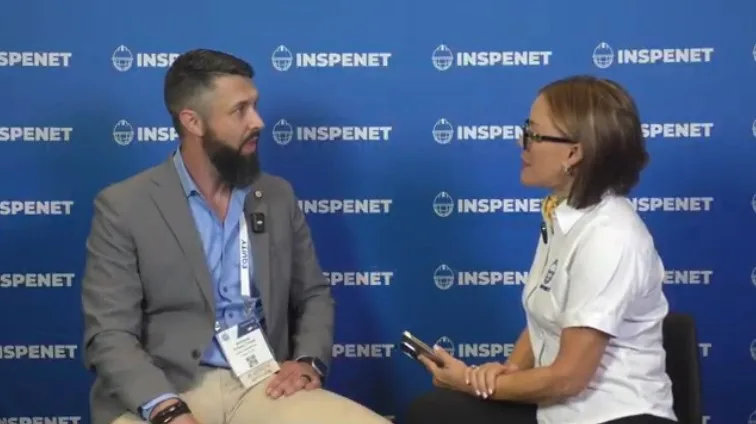
During API Summit 2026 , Anthony Chaney , Vice President of Sales at Acuren , shared the company's vision for the evolution of industrial asset management in a context marked by aging infrastructure, growing energy demand , and the incorporation of new technologies. He explained that true value no longer lies solely in obtaining data through inspections, but in transforming that information into decisions that improve the availability, safety, and performance of assets throughout their entire lifecycle.
Asset management is evolving towards a holistic approach
Currently, industrial companies face the challenge of maintaining facilities that, in many cases, have been in operation for decades. This situation necessitates the adoption of strategies that combine different disciplines to understand the actual condition of each asset and plan the most appropriate actions.
In this context, Anthony Chaney highlighted that Acuren has developed a model that integrates inspection, engineering, data analysis, and repair within a single organization. The goal is to provide a comprehensive view of asset status and enable operators to make informed decisions more quickly.
As he explained, the information obtained during an inspection only acquires true meaning when it can be analyzed in conjunction with the technical expertise of the engineers and specialists responsible for assessing risks and defining the necessary actions. In this way, the company aims to support its clients throughout all stages of a facility's lifecycle.
Information becomes valuable when it facilitates decision-making.
One of the central messages of the interview was that the amount of data available in the industry continues to grow, although having more information does not guarantee better results.
Anthony Chaney pointed out that the real challenge lies in transforming that data into useful knowledge for those managing complex facilities. To do this, it is necessary to combine different sources of information, interpret them correctly, and present them in a way that allows for prioritizing investments, scheduling interventions, and reducing operational risks.
He also explained that the speed with which an organization can turn data into decisions is a differentiating factor in sectors where operational continuity is a critical factor.
From this perspective, Acuren believes that intelligent information management will be one of the main factors of competitiveness in the coming years, especially in industries where asset reliability has a direct impact on production.
Engineering and inspection work as a single discipline
Another point highlighted by the commercial vice president was the importance of eliminating traditional barriers between inspection teams and engineering departments.
For many years, these functions have operated independently. However, the increasing complexity of industrial assets demands much closer collaboration between the two areas.
Anthony Chaney explained that having engineers and inspectors working together allows for a more accurate interpretation of the results obtained on the ground and the design of solutions tailored to each situation.
This approach also makes it easier for customers to access a single provider capable of assessing the asset, proposing necessary actions, and carrying out repairs when appropriate.
As a result, response times can be reduced and decisions are based on a more complete technical view of each installation.
Artificial intelligence depends on the quality of the data
Artificial intelligence also occupied an important part of the conversation, although this technology is arousing great interest throughout the energy industry, Anthony Chaney reminded that its effectiveness depends directly on the quality of the information available.
In this regard, he indicated that tools based on artificial intelligence allow for accelerating the analysis of large volumes of data and detecting patterns that might go unnoticed using traditional methods.
However, he warned that these platforms can only generate reliable results when they work with consistent and properly structured information.
For this reason, the process of capturing data through inspections continues to play an essential role within any industrial digitization strategy.
For Acuren , the combination of human expertise, advanced inspection technologies, and analytical capabilities will improve the speed and accuracy with which the condition of assets is assessed.
Aging infrastructure demands new strategies
Another challenge discussed during the interview was the progressive aging of many industrial facilities in North America.
Anthony Chaney explained that many assets continue to operate well beyond their originally designed lifespan. This reality necessitates the implementation of increasingly sophisticated inspection programs to identify potential degradation mechanisms early on.
According to Acuren, no single inspection method is sufficient to fully assess a complex asset. Therefore, Acuren focuses on combining various non-destructive testing technologies , integrity analysis, and risk assessment to obtain a more accurate view of the condition of the facilities.
This approach allows for prioritizing interventions and allocating available resources where they actually generate the greatest operational benefit.
An offering that covers the entire asset lifecycle
In addition to inspection and engineering activities, Anthony Chaney highlighted that Acuren has progressively expanded its capabilities to offer services that cover virtually all needs related to asset integrity.
The company develops inspection solutions, specialized engineering, integrity analysis, monitoring, non-destructive testing and repair services for sectors such as oil and gas, energy, chemical industry, power generation, mining and infrastructure.
This comprehensive approach aims to reduce complexity for operators by consolidating diverse technical capabilities within a single provider. In this way, information generated during inspections remains connected to subsequent assessment and action phases, promoting more efficient asset management.
Specialized knowledge continues to play a decisive role.
Despite the advance of digitization and artificial intelligence, Anthony Chaney stressed that knowledge of people continues to be an essential element.
Interpreting the results obtained during an inspection requires experience, technical judgment, and a deep understanding of the behavior of materials and industrial equipment.
For this reason, the company continues to invest in the development of specialized professionals capable of working with new digital tools to offer well-founded recommendations to its clients.
According to the executive, technology should complement the experience of specialists and allow them to dedicate more time to analysis and decision-making.
Growing energy demand will shape the future of the sector
Finally, Anthony Chaney noted that the increase in global energy demand will continue to drive the need to maintain safe, reliable, and available infrastructure for longer periods.
Given this scenario, he explained that organizations will need to rely more and more on asset management models capable of integrating inspection, engineering, data analysis, and digital technologies to optimize the performance of their facilities.
From the perspective of Acuren , the future of asset integrity lies in providing operators with higher quality information and quickly converting it into technical decisions that contribute to extending the useful life of infrastructures, improving their performance and responding more effectively to the demands of a constantly evolving industry.
For more content about API Summit 2026 , visit our LinkedIn profile .
Source: Inspenet .