For years, energy companies have invested significant effort in producing sustainability reports, ESG disclosures, creating emissions inventories, and committing to decarbonization. These tools remain important. They communicate direction, align stakeholders, and demonstrate strategic intent. However, the energy sector is now entering a more demanding phase.
The market is no longer satisfied with broad commitments. Regulators, investors, customers, and communities increasingly expect operational evidence: measurable, verifiable, field-level proof that assets are becoming safer, more efficient, more reliable, and lower emission.
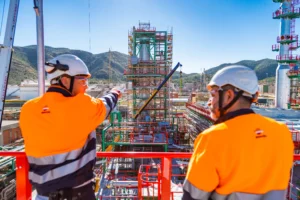
For oil and gas, LNG, midstream, downstream, terminals, petrochemicals, and other critical infrastructure sectors, this shift creates both a challenge and an opportunity. The challenge is that many companies still operate with fragmented data, manual workflows, inconsistent inspection records, and limited integration between sustainability objectives and daily operations.
ESG Is Moving Closer to Operations
The first generation of ESG programs was often reporting-driven. Companies gathered data from business units, calculated emissions, prepared disclosures, and communicated progress. In many cases, this process happened after operations had already occurred.
That model is no longer sufficient.
The new expectation is not only to report what happened, but to demonstrate how performance is being managed. This requires connecting emissions reduction, energy efficiency, inspection, maintenance, repair, and asset integrity into one operational discipline. A methane leak, for example, should not be treated only as an environmental data point. It is also a safety signal, a product loss, an operational inefficiency, a maintenance event, and a reputational risk. Similarly, excessive energy consumption in an industrial facility is not only a cost issue. It may indicate equipment degradation, poor process control, heat loss, inadequate insulation, or suboptimal operating practices.
The companies that lead the next phase of the energy transition will be those that treat sustainability as an operational performance system, not as a separate reporting exercise.
Methane: A Clear Example of Field-Verified Value
Methane illustrates why field-verified data matters. The International Energy Agency estimates that around 35 million tonnes of methane emissions from oil, gas, and coal could be avoided at no net cost, based on 2024’s average energy prices, because captured gas can often be sold or used.
This changes the business conversation. Methane reduction is not only about compliance or climate responsibility. It is also about operational discipline, avoided losses, better maintenance prioritization, and stronger asset knowledge.
However, methane programmes only create value when they move from detection to action. Detecting a leak is the beginning, not the end. The real value comes from quantifying, classifying, prioritizing, repairing, verifying, documenting, and learning from each event. That requires workflows, trained personnel, digital records, evidence capture, and management accountability.
This is where field technologies, including optical gas imaging, mobile leak detection, advanced sensors, digital LDAR platforms, analytics, and structured repair workflows, become strategic tools. They transform invisible losses into actionable operational decisions.
Digital Transformation Must Serve Field Execution
Digital transformation in energy is often discussed in terms of platforms, dashboards, artificial intelligence, and advanced analytics. These tools are valuable, but only when they improve execution.
A dashboard that does not change maintenance behavior has limited value. A sensor that generates data but does not trigger decisions creates complexity. A digital platform that does not fit field workflows will struggle to be adopted.
The most effective digital transformation programmes start with operational questions:
Where are we losing energy? Which assets create the highest emissions risk? Which leaks require immediate intervention? Which inspections generate evidence that can support compliance, reliability, and executive decision-making?
When digital tools answer these questions, they become part of the operating model. They help leaders move from periodic reporting to continuous performance management.
Reliability and Decarbonization Must Advance Together
A practical energy transition cannot compromise reliability. LNG terminals, pipelines, refineries, petrochemical facilities, offshore assets, storage terminals, and industrial plants are critical systems. They support economic activity, energy security, mobility, manufacturing, and social development.
Therefore, decarbonization strategies must be designed around operational reality. Reducing emissions while increasing downtime is not a sustainable solution. Deploying technology without field adoption is not transformation. Setting targets without execution capability creates credibility risk.
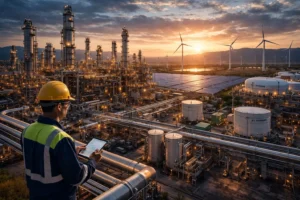
The best approach is integrated: improve energy efficiency, reduce methane and fugitive emissions, modernize inspection practices, strengthen asset integrity, and deploy technologies that are practical for field conditions. This is especially important in Latin America, where energy companies often face aging infrastructure, capital constraints, regulatory evolution, and growing pressure to demonstrate environmental performance while maintaining affordability and reliability.
Conclusions
The future of sustainability in the energy sector will be defined by evidence. Not only by what companies report, but by what they can prove in the field.
For executives, this requires a change in mindset. ESG, emissions reduction, reliability, energy efficiency, and digitalization should not be managed as separate initiatives. They should be integrated into a single operational performance agenda.
For technical leaders, it means building systems that connect inspection, measurement, repair, verification, and continuous improvement. For investors and regulators, it means looking beyond commitments and asking for field-verified performance. For service and technology providers, it means delivering solutions that are not only innovative, but deployable, measurable, and useful to operators.
The energy industry does not need more complexity. It needs clearer evidence, better decisions, and stronger execution.
As the sector navigates LNG growth, methane scrutiny, infrastructure modernization, and the broader energy transition, leaders should ask one essential question:
Are we simply reporting performance, or are we proving it in the field?
That question may define the next generation of operational excellence in energy.
References
- International Energy Agency. (2025). Global Methane Tracker 2025: Key findings. International Energy Agency. https://www.iea.org/reports/global-methane- tracker-2025/key-findings
- International Energy Agency. (2025). Gas 2025: Analysis and forecast to 2030. International Energy Agency. https://www.iea.org/reports/gas-2025
- United Nations Environment Programme. (n.d.). Oil & Gas Methane Partnership 2.0. UNEP International Methane Emissions Observatory. https://methanedata.unep.org/oil-gas-methane-partnership
- United Nations Environment Programme. (n.d.). The Oil & Gas Methane Partnership 2.0. OGMP 2.0. https://www.ogmpartnership.org/
This article was developed by Malvin Delgado of Trustwell Energy and published as part of the eighth issue of Inspenet Brief (July 2026), dedicated to technical content in the energy and industrial sectors.