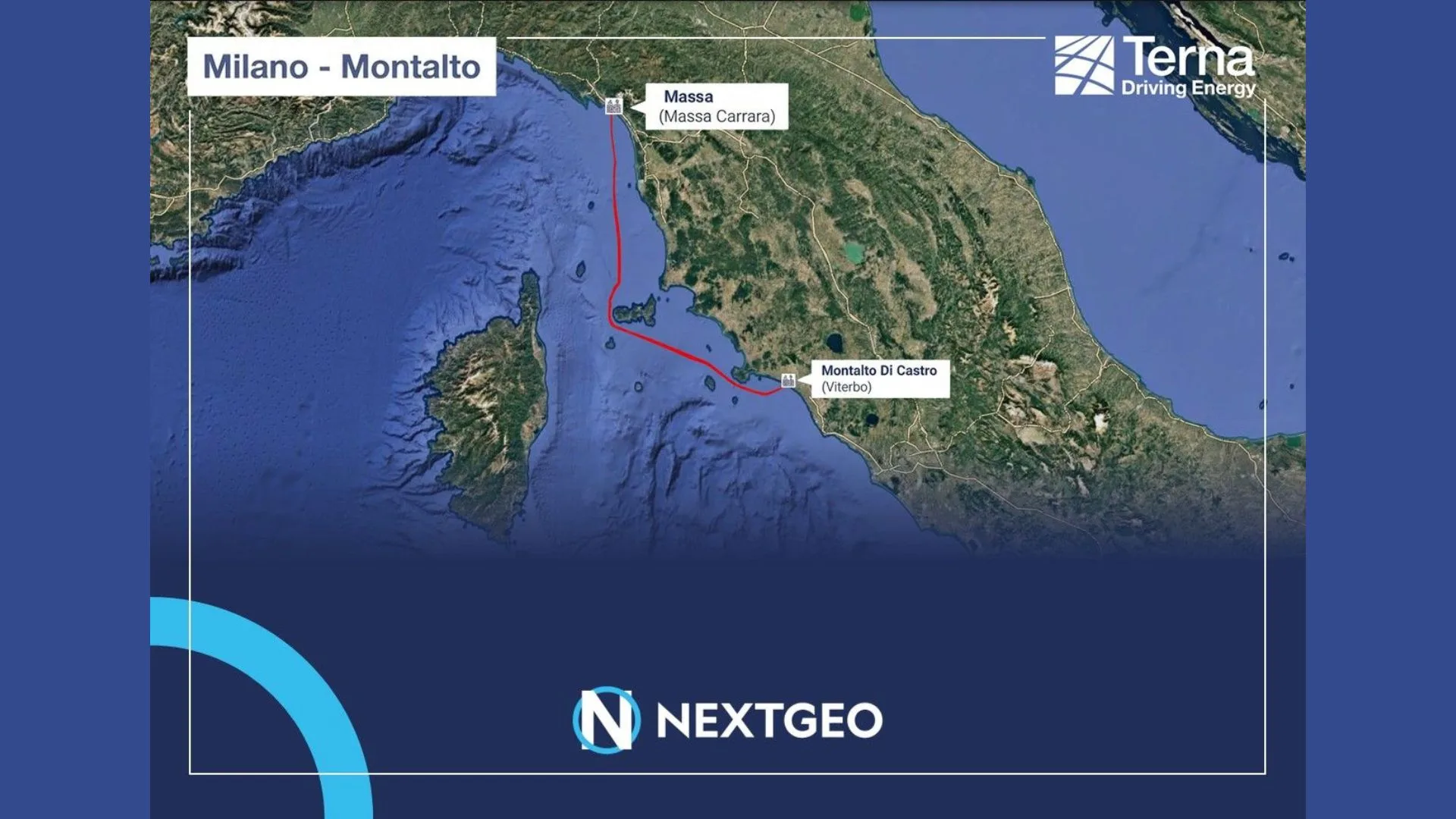
NextGeo has commenced a marine survey campaign to define the underwater route of the Milano–Montalto electrical connection, one of the projects included in Terna’s Hypergrid program.
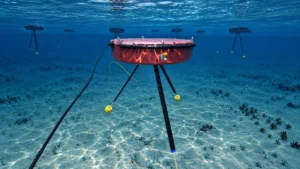
The Italian company will conduct survey work on the seabed between Montalto di Castro and Massa. The objective is to gather geophysical, geotechnical, and environmental information before moving toward the final design and installation of the submarine cables.
During this phase, technical teams will analyze seabed conditions and the characteristics of the terrain beneath the surface. This data will allow for the identification of obstacles, sensitive areas, and potential risks for the future power line layout.
Furthermore, the campaign will serve to adjust the route and define the most suitable installation methods. The information obtained will be key to reducing technical and environmental uncertainties during the subsequent stages of the project.
An HVDC connection of approximately 500 kilometers
The Milano–Montalto project involves a high-voltage direct current connection, known as HVDC, with an approximate length of 500 kilometers. About 280 kilometers will correspond to the submarine section.
The infrastructure will have a transmission capacity of 2,100 MW. With these characteristics, the link will allow for the transport of large volumes of electricity between different areas of Italy and improve the management of energy flows.
The submarine section will depart from a planned conversion station in Montalto di Castro, in the province of Viterbo. Industrial land currently undergoing decommissioning will be utilized for its construction.
On the other hand, the arrival point will be located near Avenza, in Massa-Carrara. A transition station will be built there between the submarine cable and the overhead infrastructure in an area where Terna already operates an electrical substation.
The project is part of Terna’s Hypergrid program
The Milano–Montalto connection is integrated into Hypergrid, Terna’s program to modernize and strengthen the national transmission grid.
This plan seeks to increase electrical exchange capacity between regions and facilitate the integration of new renewable sources. It also aims to improve system stability in the face of changes in generation and consumption.
In this context, HVDC links allow for the transport of electricity over long distances with lower losses. Additionally, they offer greater control over energy flows and help de-congest existing electrical corridors.
The new infrastructure will contribute to creating a more flexible grid, prepared to manage a greater presence of renewable energy.
NextGeo provides specialized vessels and personnel for marine surveys
Next Geosolutions, known as NextGeo, provides marine geoscience services and offshore construction support. The company works on energy, infrastructure, and utility projects.
For the Milano–Montalto campaign, the company will provide specialized vessels and technical personnel with expertise in geophysical, geotechnical, and environmental surveys.
The work will also include safety protocols and environmental protection measures during offshore operations. These controls aim to limit risks to personnel, equipment, and the marine environment.
The campaign represents a technical stage prior to the installation of the cable. Its results will help Terna and the engineering teams make decisions regarding the design, construction, and future operation of the electrical link.
Source and photo: NextGeo