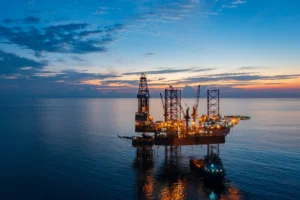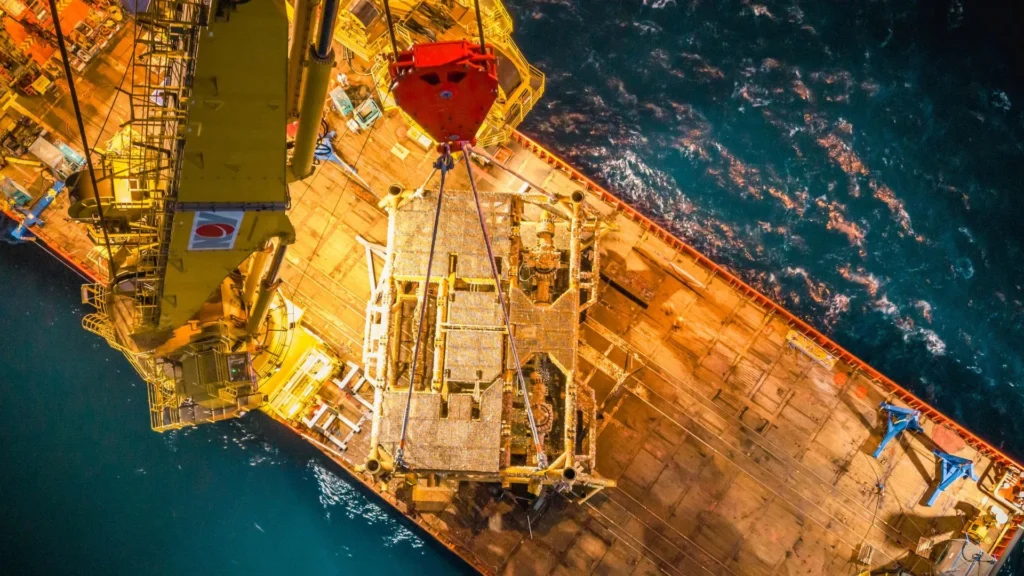
DeepOcean will take on a new FPSO underwater decommissioning contract in the North Sea, where it will support the disconnection and removal of a floating production, storage and offloading unit currently linked to an underwater infrastructure.
According to information released by the company, the scope of the project combines subsea operations and surface work. The intervention includes flushing with hydrocarbons and chemicals, isolating subsea equipment, and disconnecting subsea pipelines, collectors, and infrastructure.
In addition, the project includes disconnecting dynamic risers and umbilicals, cutting and recovering elevators and mooring chains, and navigating the FPSO for its safe towing to the coast.
This is a complex operation, as it involves system preparation, physical separation of assets, and relocation of a floating unit out of the field.
Details of the dismantling of the FPSO in the North Sea
The management and execution of the project will be handled by DeepOcean’s operations in Aberdeen, UK. This is a key factor in the contract’s success, given the British team’s extensive experience in decommissioning work on the UK continental shelf.
Likewise, the company highlighted that its capabilities in engineering, project management, maintenance, installation and offshore recycling will be applied in an operation where safety will be of paramount importance.
Robin Mawhinney, DeepOcean’s Executive Vice President for the EMEA region, noted that the contract covers both subsea and topside operations, an area where the company has already participated in highly complex projects. According to Mawhinney, teamwork and technical expertise will allow for the safe and efficient removal of the subsea infrastructure, as well as the towing of the FPSO.
Methodologies applied after Gryphon Alpha
Furthermore, DeepOcean will utilize proprietary methodologies and tools developed during the decommissioning of the FPSO Gryphon Alpha. This experience will allow them to complete the survey without the need for divers, a crucial factor in reducing human exposure during demanding underwater operations.
Gary Scott, DeepOcean’s commercial director for EMEA, indicated that the implementation will be supported by the learning gained from Gryphon Alpha.
The Gryphon project also brought recent recognition to DeepOcean. The company, along with TotalEnergies’ Gryphon decommissioning team, received the “Best Safety Improvement Award” for contributions to health, safety, sustainability, and environmental performance at TotalEnergies facilities in the UK during 2025.
Source and photo: DeepOcean