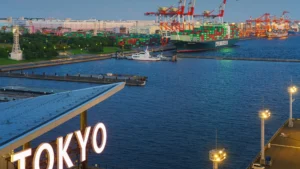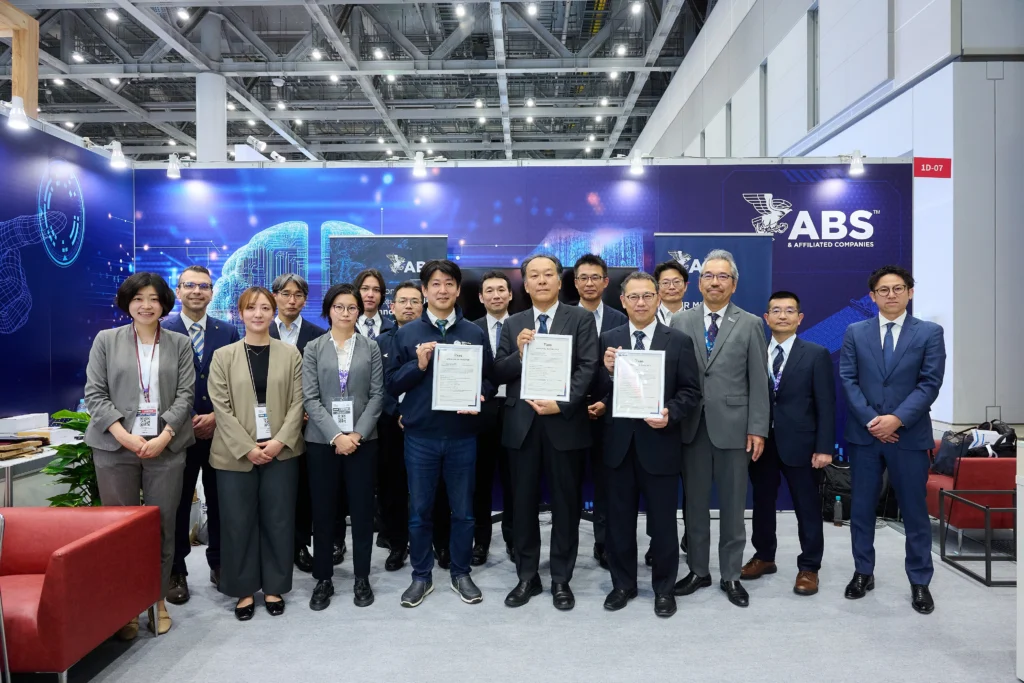
ABS granted approval in principle to the joint design of an autonomous maritime platform for reusable rocket recovery. The project was developed by Innovative Space Carrier, Mitsui O.S.K. Lines and TSUNEISHI SOLUTIONS TOKYOBAY.
The certification covers not only the main barge, but also the complete system required for the operation. This includes an offshore support vessel and a ground control station, essential for coordinating recovery.
The breakthrough represents significant structural progress in the evolution of space infrastructure at sea. It also reinforces the convergence between naval engineering and new aerospace technologies.
Safety and efficiency at sea
The approved design is intended for deepwater recovery operations, where the return of reusable vehicles can be performed more safely. This mode helps protect overflights and improves operational control during the maneuver.
One of the main benefits is the reduction of human risk. As these are unmanned and autonomous operations, the exposure of personnel involved in recovery tasks is considerably reduced.
In addition, the solution can generate significant cost savings. The reuse of rockets and recovery at sea aim to make this type of space missions more economically viable.
ABS and the new space port
ABS emphasized that it seeks to lead in defining standards for offshore space infrastructure. The company published the world’s first requirements for addressing offshore spaceport challenges in 2023.
The agency has also worked on developments related to autonomous systems and remote dynamic positioning. This prior knowledge allows it to more accurately assess these types of emerging platforms.
ABS granted approval in principle to the joint design of an autonomous maritime platform for reusable rocket recovery. The project was developed by Innovative Space Carrier, Mitsui O.S.K. Lines and TSUNEISHI SOLUTIONS TOKYOBAY.
Safety and efficiency at sea
The approved design is intended for deepwater recovery operations, where the return of reusable vehicles can be performed more safely. This mode helps protect overflights and improves operational control during the maneuver.
One of the main benefits is the reduction of human risk. As these are unmanned and autonomous operations, the exposure of personnel involved in recovery tasks is considerably reduced.
In addition, the solution can generate significant cost savings. The reuse of rockets and recovery at sea aim to make this type of space missions more economically viable.
ABS and the new space port
ABS emphasized that it seeks to lead in defining standards for offshore space infrastructure. The company published the world’s first requirements for addressing offshore spaceport challenges in 2023.
The agency has also worked on developments related to autonomous systems and remote dynamic positioning. This prior knowledge allows it to more accurately assess these types of emerging platforms.
For the industry, the approval is of strategic value because it technically validates a still incipient operating model. In practice, it opens the door to new solutions for reusable launches and recoveries in the ocean.
Source and photo: https://ww2.eagle.org/