Offshore wind energy: Evolve and Shell agreement in UK
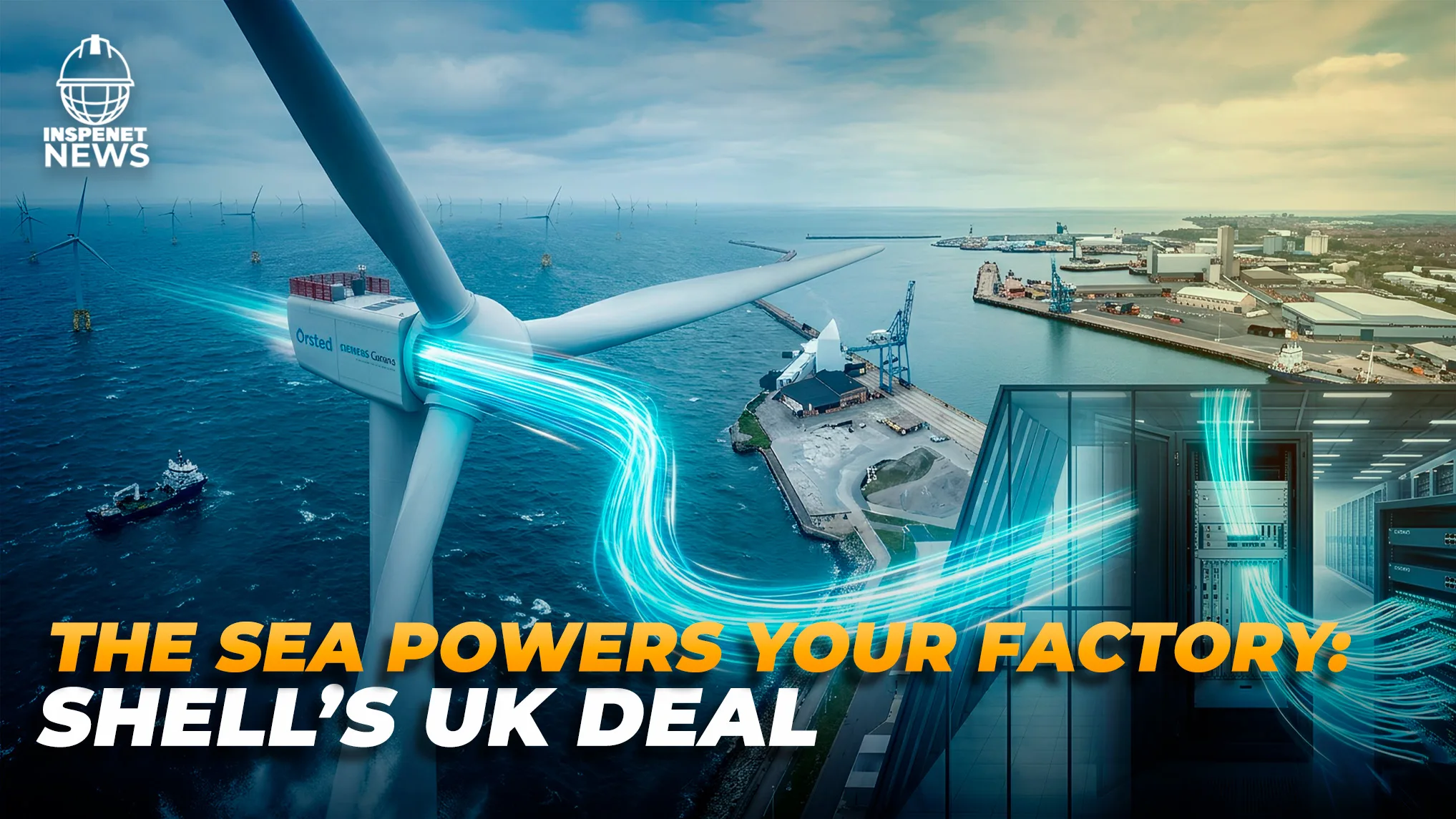
Evolve Energy has signed a power purchase agreement with Shell Energy Europe to secure electricity supply from offshore wind energy. The agreement will extend for nine years and represents the largest transaction of this type completed by the company to date.
Additionally, the contract contemplates the supply of more than 1 TWh of clean electricity until 2035, with annual delivery close to 112 GWh. This volume will cover the energy demand of multiple companies in the United Kingdom.
Race Bank as the core of electricity supply
For its part, the Race Bank wind farm is positioned as the primary generation source, located in the North Sea with an installed capacity of 573 MW. This complex is one of the most significant within the offshore wind energy sector in the country.
Likewise, its strategic location off the coasts of Norfolk and Lincolnshire facilitates efficient distribution of electricity supply to industrial and commercial customers.
A model that facilitates access to clean energy
Similarly, Evolve Energy will implement a model based on an "energy basket", which aggregates the demand of more than 80 companies. This approach allows organizations to access clean energy from different sources through a single commercial framework.
Consequently, the usual barriers faced by many companies when attempting to contract renewable electricity supply directly are reduced.
Impact on companies and decarbonization
On the other hand, this agreement reinforces the growing trend toward decarbonization in the business environment. Companies are increasingly seeking energy solutions that guarantee stability, traceability, and emissions reduction.
In the words of James Hall, Chief Operating Officer of Evolve Energy, the contract enables connecting large-scale generation with companies committed to long-term energy planning.
Offshore wind energy market outlook
Finally, this type of agreement consolidates the role of offshore wind energy as one of the primary electricity sources in the United Kingdom. The collaboration between suppliers and marketers opens new opportunities to expand access to clean energy.
In this way, renewable-based electrici+ty supply continues to gain prominence in the corporate market, driven by the need for more flexible and sustainable models.
Additional news of interest
Faster subsea inspection in Senegal
DeepOcean and Woodside successfully executed an inspection and 3D scan simultaneously at the Sangomar oil field, off Senegal. This operation covered 69 subsea structures and was performed without increasing offshore personnel. Thanks to this methodology, work time was reduced to just over half compared to traditional methods, which required separate processes.
The system integrates underwater robots, proprietary software, and photogrammetry techniques to generate detailed digital models of the seabed. This enables detection of failures such as cracks or deformations with greater precision and improves maintenance planning. Additionally, the operation generated a larger amount of useful data for future interventions at the field.
China leads global nuclear energy
China reached an installed nuclear energy capacity of 125 million kilowatts, positioning itself as the largest global player in this sector. The country currently operates 60 reactors and has 36 more under construction, representing more than half of the nuclear projects under development globally. Additionally, new units have been approved that reinforce its sustained expansion plan in the coming years.
The momentum does not stop. China plans to initiate more construction and commission several plants in the short term, while consolidating proprietary technologies such as the Hualong One reactor, which already totals more than 40 units in operation or development within and outside the country. This progress is supported by a strengthened domestic industry and state policies aimed at accelerating energy capacity toward 2030 and beyond.
Tanker fleet heads for U.S. crude
A large number of empty supertankers departed from Asia bound for the United States to load crude oil, forming one of the largest concentrations of vessels on record. This movement responds to the drop in supply from the Middle East, where passage through the Strait of Hormuz has been affected. Faced with this situation, Asian refineries are seeking to replace the lost oil with U.S. barrels.
The impact has been strong on the global market. Middle East exports fell nearly 60% in March, leading Asia and Europe to increase their purchases of U.S. crude. Although some producers are attempting to redirect shipments through other routes, they cannot fully compensate for the decline, which has generated rapid changes in energy trade flows.
Green light for nuclear facility in Spain
The Nuclear Safety Council issued a favorable report to renew the operation of the Juzbado nuclear fuel facility in Salamanca for ten years. The decision is based on technical evaluations, safety reviews, and compliance with regulations by Enusa, the company responsible for the installation. The process now moves to the Ministry for Ecological Transition, which will have the final say.
The permit includes strict limits and conditions on operation, material control, and safety management. Technical instructions are also established covering everything from periodic reports to requirements on nuclear material transport and international standards. These measures seek to ensure that the plant maintains adequate levels of safety and control during its operation.