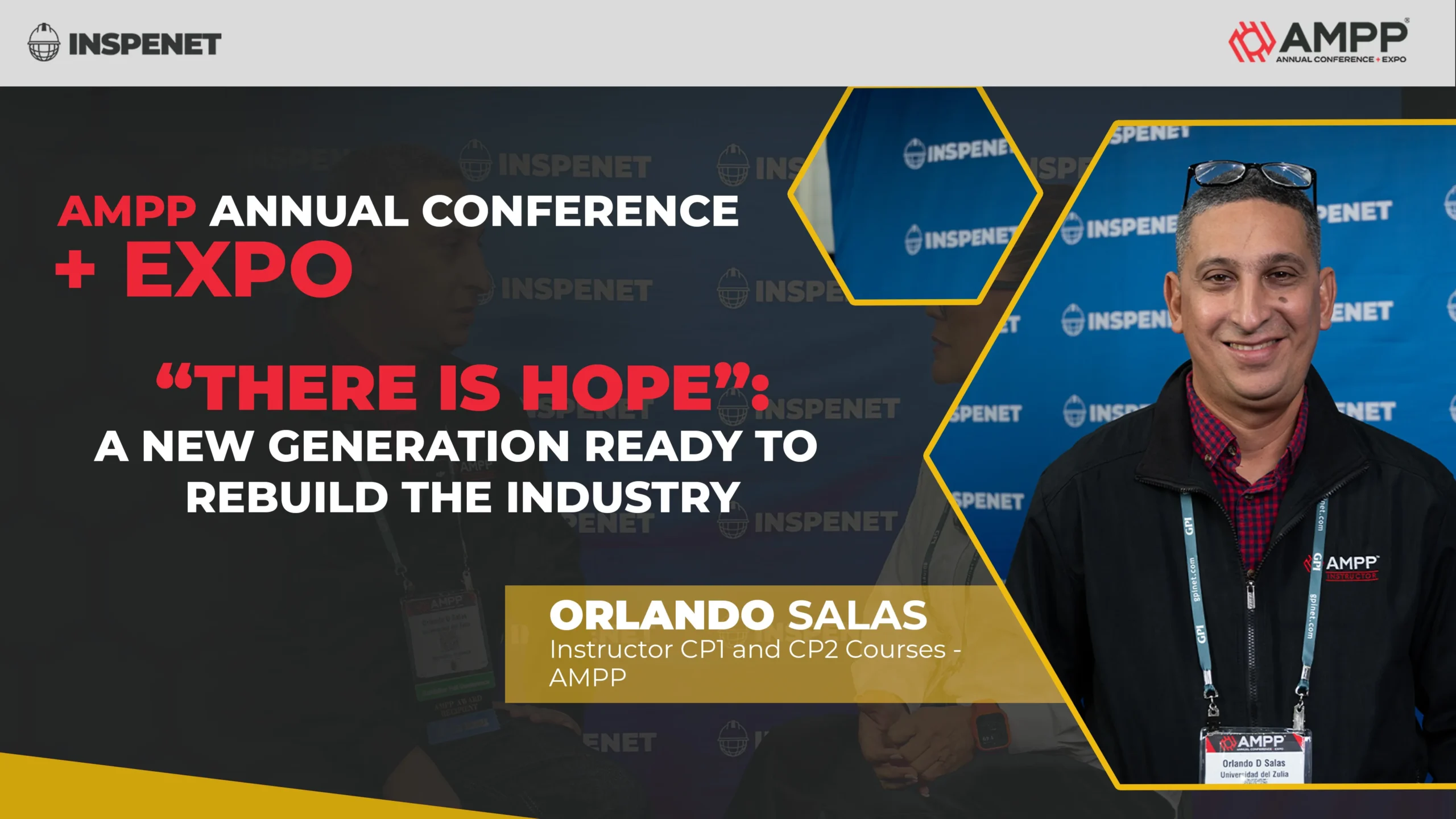
Corrosion training and young talent at AMPP 2026
A meeting point for technical knowledge
Within the framework of the AMPP Annual Conference + Expo 2026, the conversation regarding corrosion training acquires special relevance within the energy and industrial sectors. This global event brings together professionals focused on materials protection and asset integrity, establishing itself as a crucial space for sharing experiences and trends.
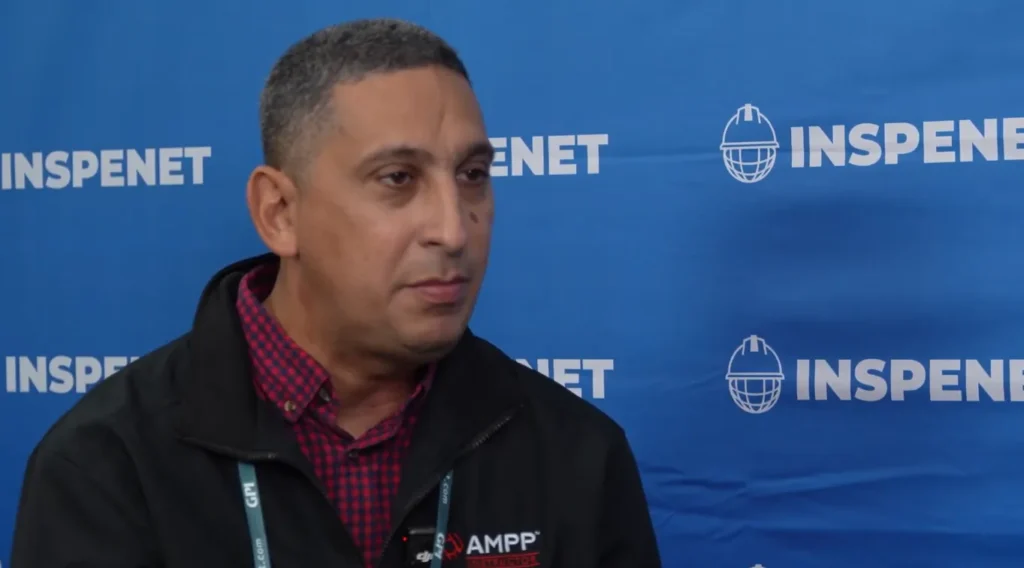
In this context, Orlando Salas, an instructor for AMPP CP1 and CP2 courses, provides a vision centered on the development of young talent, highlighting the need to strengthen the connection between academia and industry. His experience of more than two decades in cathodic protection supports an approach that combines technical knowledge with practical application.
Corrosion training: a commitment to generational renewal
One of the main pillars addressed is the incorporation of university students into the field of corrosion. Through initiatives driven in Venezuela, it has been possible to integrate young people from various institutions such as the University of Zulia, the Rafael Urdaneta University, and the University of Oriente.
This effort responds to a clear need in the industry: to train professionals capable of taking on the challenges associated with the maintenance of critical infrastructure. Likewise, the enthusiasm generated in students demonstrates that corrosion training can become a driver for professional development when presented in an attractive and applied manner.
In fact, the progressive growth in student participation reflects how these initiatives generate a multiplier effect within the academic environment.
Hands-on learning: the key to technical education
Furthermore, one of the distinguishing elements of the educational model promoted by Salas is its theoretical-practical approach. Unlike traditional schemes, the programs include direct laboratory experimentation and pilot systems that allow students to apply concepts in real-world scenarios.
Notable among these resources are cathodic protection systems and laboratory tests that simulate industrial conditions. These types of experiences facilitate the understanding of topics such as coatings, corrosion, and structural monitoring.
Consequently, students not only acquire knowledge but also develop technical skills that are essential when entering the workforce. This integration of theory and practice significantly strengthens the quality of corrosion training.
AMPP as a benchmark for international standards
In parallel, alignment with AMPP guidelines plays a fundamental role in the quality of training programs. This international organization is positioned as a benchmark in the development of standards, certifications, and best practices in materials protection.
Thanks to this connection, the content taught remains consistent with the global demands of the sector. Certifications such as CP1 and CP2 represent added value for professionals, facilitating their entry into international markets.
Likewise, the adoption of these standards allows for raising the technical level of corrosion training in the region, aligning it with global industry trends.
International collaboration and knowledge transfer
Similarly, the participation of international experts reinforces the learning process. The inclusion of professionals with global experience enriches the content and broadens the students' perspective.
In this sense, collaboration with prominent figures in the sector contributes to strengthening educational quality, creating an environment for knowledge exchange that benefits both students and teachers.
This dynamic demonstrates how corrosion training thrives on international cooperation, consolidating knowledge networks that transcend borders.
Trajectory and recognition in cathodic protection
On the other hand, Orlando Salas's career represents an example of the impact that specialization in this field can have. With more than 24 years of experience in cathodic protection, he has led projects ranging from design to the evaluation of systems for the preservation of structures.
This journey has been recognized with the Oladis Troconis de Rincón award, which honors professionals for their contribution to the application of engineering principles for the protection of industrial assets.
These types of awards not only validate individual experience but also highlight the importance of disciplines like corrosion within the sustainability of critical infrastructure.
Future outlook for corrosion training
Finally, the growth of these initiatives presents a promising scenario for talent development in the sector. The goal of expanding student participation and consolidating training programs points toward a constant evolution of corrosion training.
As the industry demands better-prepared professionals, these types of educational models, aligned with AMPP standards, are positioned as an effective response to current challenges. The combination of practice, international standards, and global collaboration defines the path toward a more robust training aligned with market needs.
Ultimately, corrosion training is establishing itself as a strategic pillar to ensure the integrity of industrial assets and the future of the energy sector.
For more content about AMPP 2026, please visit our LinkedIn profile.
Source: Inspenet.