Chevron strengthens its oil strategy in Venezuela
Asset exchange shapes energy strategy
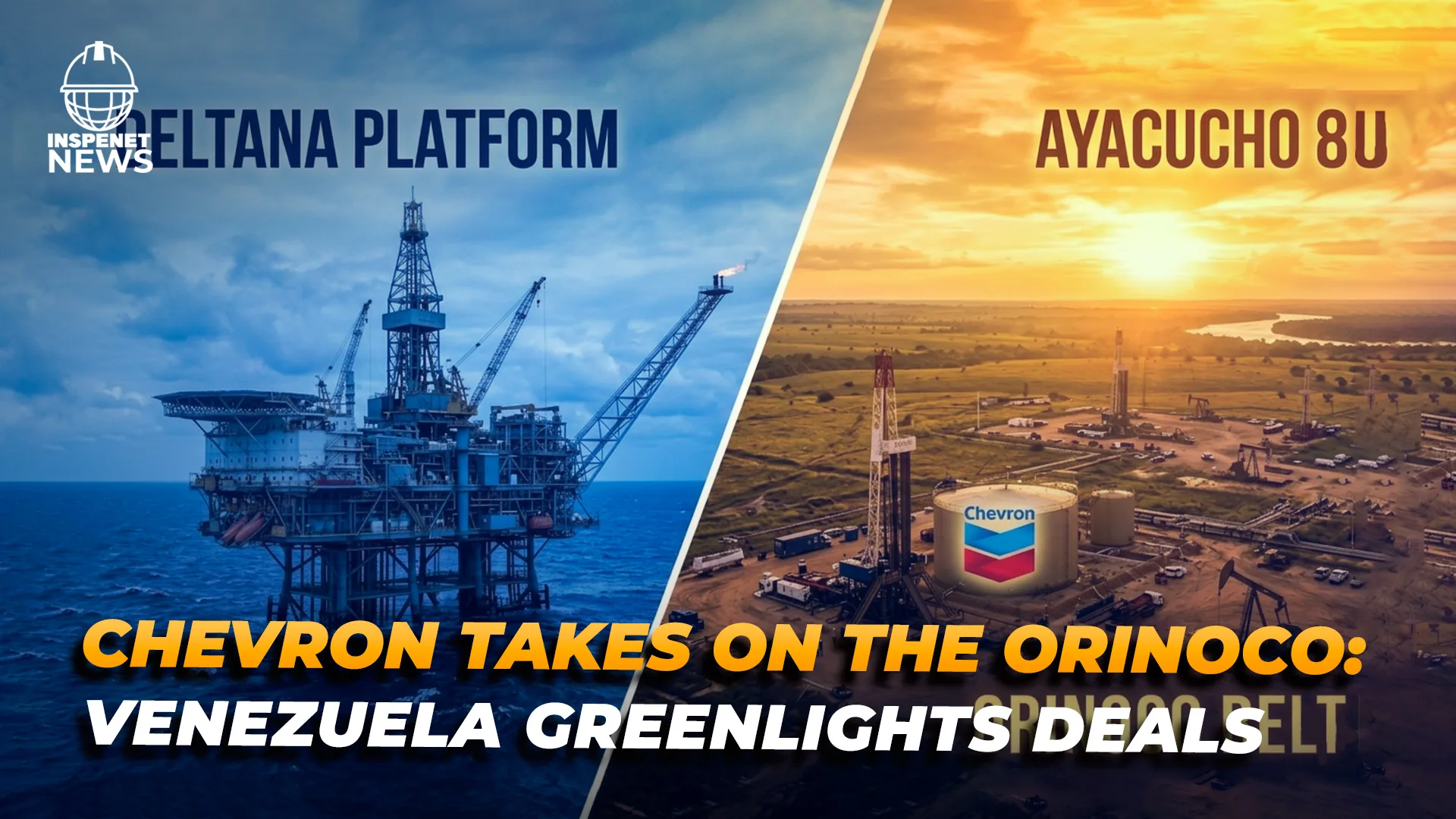
Moving forward, Chevron has taken a decisive step in its strategy in Venezuela after completing an asset exchange with PDVSA. The agreement allows the U.S. company to focus on operations related to heavy oil, a segment with high potential within the country.
Furthermore, the operation responds to a portfolio optimization logic, where both parties reorganize their interests to focus on assets considered priorities.
Chevron expands its stake in Petroindependencia
Chevron increases its stake in Petroindependencia to 49%. This move gives it greater operational weight within one of the main joint ventures focused on extra-heavy crude.
Likewise, this adjustment strengthens its decision-making capacity in important projects, which could translate into improvements in efficiency and production in the short and medium term.
Ayacucho 8 drives expansion in the Orinoco Belt
On the other hand, access to the Ayacucho 8 area represents a significant point within the agreement. This field, located in the Orinoco Oil Belt, is close to Petropiar's already active operations.
Consequently, this proximity facilitates operational synergies, reduces logistical costs, and allows for accelerated development of the block under more efficient conditions.
Which assets does Chevron transfer to PDVSA?
In contrast, Chevron transfers assets primarily linked to gas to PDVSA, including stakes in the Deltana Platform and Petroindependiente.
In this way, the company reduces its exposure in segments less aligned with its current focus in Venezuela, concentrating resources in areas with higher strategic returns.
Impact on Venezuelan oil production
In this context, the agreement may influence the country's oil production behavior. Greater operational control by Chevron in heavy oil projects could favor progressive increases in extraction.
Similarly, the strengthening of joint ventures reinforces the cooperation model between PDVSA and international partners, a relevant element for sustaining the sector's activity.
Chevron's role in the Venezuelan energy sector
Finally, Chevron consolidates its position as one of the most relevant international players within the Venezuelan oil industry. Its historical presence and participation in strategic assets allow it to maintain an active role in the country's energy dynamics.
At the same time, this asset exchange reflects a trend towards the reorganization of the energy landscape, where alliances and operational adjustments set the course for the sector.
Additional news of interest
USA and Iran resume dialogue amid tension
The United States and Iran could return to negotiations this week in Islamabad after the failure of the last talks. Although Washington imposed a blockade on Iranian ports, both sides keep diplomatic channels open. This signal helped calm energy markets, with oil prices falling after days of uncertainty.
The conflict remains at a delicate point: Iran restricts passage through the Strait of Hormuz, a crucial route for global energy trade, while the United States responds with military pressure and warnings. Despite the exchange of threats, the ceasefire remains in place, and international actors like France and the United Kingdom are already exploring options to ensure maritime security in the area.
Equinor reduces its stake in Scatec
Equinor decided to sell part of its stake in Scatec, divesting 8.07% for approximately 1.6 billion Norwegian kroner. After the transaction, the company retains an 8.05% share and agreed not to sell more shares for 90 days. The company had built its position since 2018 and doubled it in recent years.
Despite the move, the relationship between both firms remains active; Equinor and Scatec will continue to work together on solar projects in Brazil, such as Apodi and Mendubim. Furthermore, the sale was made at a profit compared to the average purchase price, which was around 80 kroner per share.
Transocean secures Ccntract until 2030
Transocean announced a contract extension for its Deepwater Corcovado vessel with Petrobras, adding approximately $445 million to its backlog. This agreement extends the unit's operation until November 2030, reinforcing long-term revenue stability for the company in the ultra-deepwater segment.
Before the extension takes effect, the company will face an interim period between April 2026 and September 2027, during which its backlog will be reduced by approximately $20 million. Even so, the new contract largely offsets this adjustment and consolidates the vessel's activity in one of the most active offshore markets.
Industrial heat now warms homes
Uniper and Evonik have commissioned a high-temperature heat pump in Germany that supplies district heating to approximately 1,000 homes in the Ruhr region. The system utilizes waste heat from chemical processes and raises it to 130 degrees Celsius, sufficient to integrate it into the urban network. The installation can provide up to 1.5 megawatts of thermal energy and marks a technical advance by working with large temperature differences.
The project helps avoid up to 1,750 tons of CO₂ annually by replacing fossil fuels in heat generation. Additionally, it optimizes energy use within the industrial plant by reusing heat that was previously wasted. The companies are also studying expanding capacity in the future with up to an additional 20 megawatts.