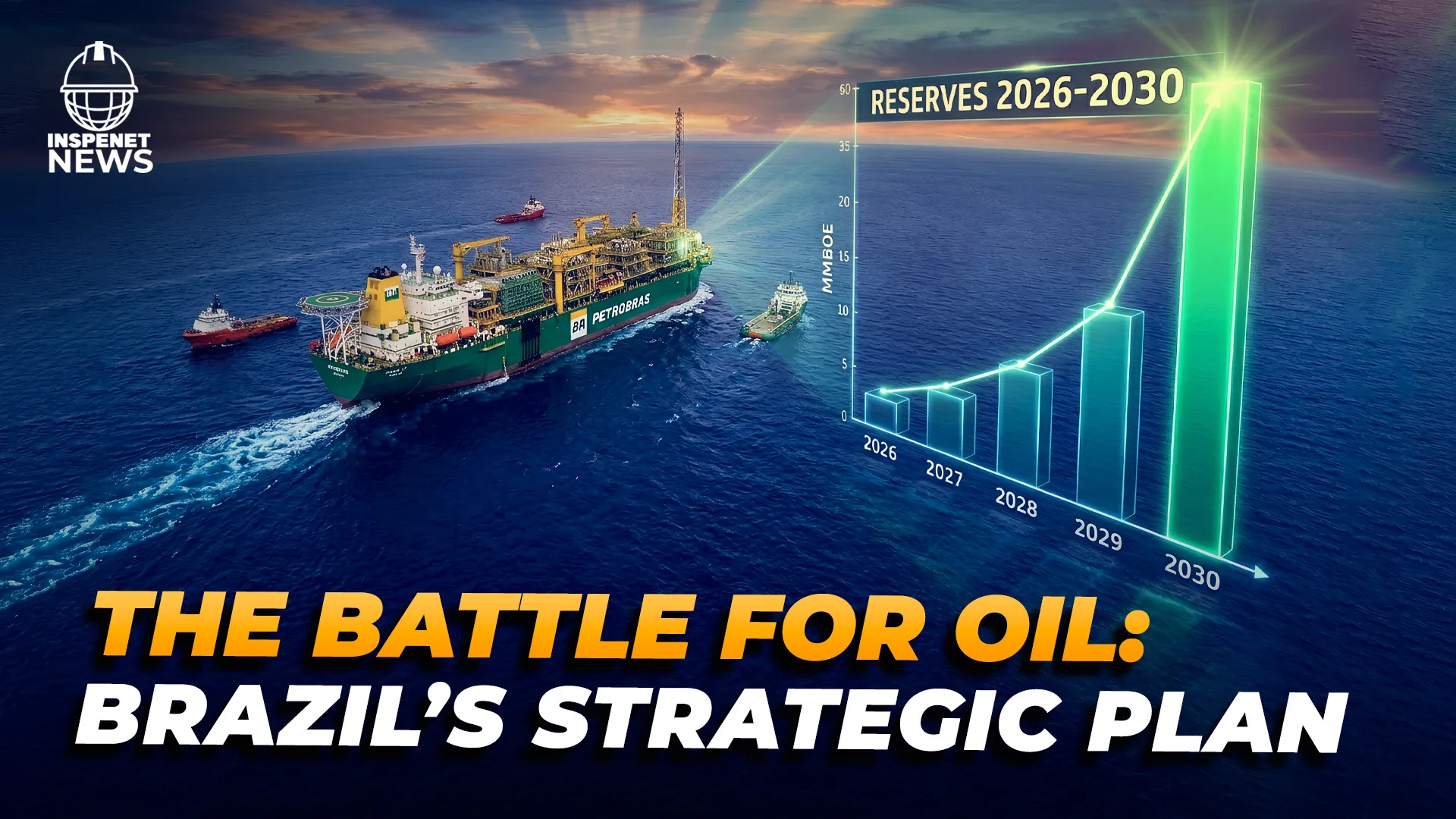
Petrobras strengthens its presence in Africa with Block 3
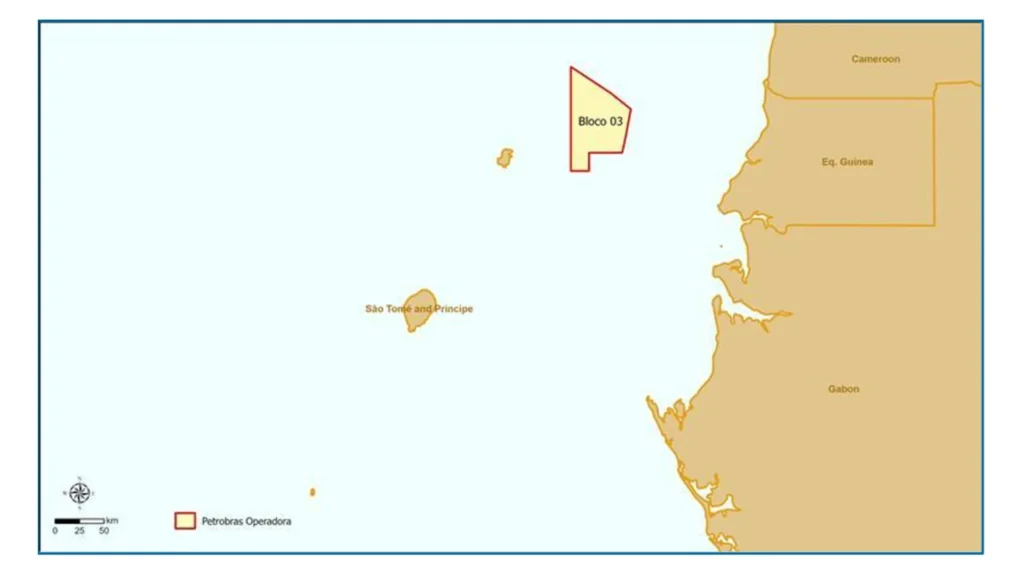
Petrobras has signed an agreement to acquire a majority stake in Block 3, located in the waters of São Tomé and Príncipe. The operation involves the purchase of 75% of the asset from Oranto Petroleum, which also grants it the role of project operator.
Furthermore, this entry positions the Brazilian company as a key player in the development of the offshore block, consolidating its expansion strategy outside Latin America.
What will the new consortium look like after the operation?
On the other hand, the consortium's structure changes significantly after the transaction. Once completed, the distribution will be as follows: Petrobras will control 75%, Oranto Petroleum will retain 15%, and the National Petroleum Agency of São Tomé and Príncipe (ANP-STP) will maintain 10%.
In this regard, Petrobras will lead operational and technical decision-making within the block, marking a shift in asset management.
Petrobras' expansion strategy in Africa
Since 2024, Petrobras has resumed its activities in Africa with the aim of strengthening its presence in emerging markets. The incorporation of this offshore block is part of this roadmap, focused on expanding its geographical reach.
Additionally, the company seeks to leverage the potential of underexplored regions, where oil activity offers new growth opportunities.
Objectives: diversification and reserve increase
In line with its long-term planning, the company aims to diversify its asset portfolio and strengthen its oil and gas reserves. Exploration in São Tomé is presented as a way to advance this objective.
Similarly, collaboration with local and international partners is part of the approach adopted by Petrobras to develop projects in new areas.
Regulatory conditions and next steps of the agreement
Finally, the formalization of the operation is subject to the fulfillment of prior conditions, including the obtaining of governmental and regulatory authorizations in São Tomé and Príncipe.
Meanwhile, Petrobras has indicated that any relevant progress will be communicated to the market in accordance with its transparency and governance policies, in line with its 2026-2030 Business Plan.
Additional news of interest
Giant gas discovery boosts Indonesia's energy power
Eni announced the discovery of a large gas field in the Geliga-1 well located in the Kutei basin off the coast of Indonesia. Initial estimates point to approximately 5 trillion cubic feet of gas along with 300 million barrels of condensate, reinforcing the energy value of the area. Drilling reached over 5,000 meters deep and confirmed a gas column with good conditions for extraction, while tests are being prepared to measure its productive capacity.
This discovery adds to a series of recent successes in the same basin, including other nearby wells that have confirmed abundant resources. Furthermore, its proximity to existing infrastructure and already approved projects would allow for accelerated development and reduced costs. The combination with other nearby fields could raise production to significant levels, with the potential to supply both the local market and liquefied natural gas exports.
Oil prices rise due to US-Iran tensions
Oil prices saw a sharp rebound of nearly 5%, driven by fears of a potential end to the ceasefire between the United States and Iran. Brent approached $95 per barrel while WTI surpassed $88, amid new incidents such as the seizure of an Iranian vessel by the US and threats of retaliation from Tehran. Tensions are also rising due to signs of attacks on oil tankers and a lack of progress in new negotiations.
The Strait of Hormuz, a route through which nearly a fifth of the world's oil circulates, continues to operate under severe restrictions. Vessel traffic has drastically reduced, affecting the flow of between 10 and 11 million barrels per day. This is compounded by higher logistical costs, shipping delays, and adjustments in international markets, while countries like China reorganize their fuel exports.
China resumes coal-to-gas plan amid energy crisis
China has reactivated the Fuxin project to convert coal into gas, an initiative halted since 2014 due to high costs and environmental concerns. The plan, valued at approximately $3.7 billion, returns amid tensions in the Middle East that have affected global gas supply. The decision responds to the need to secure energy against external disruptions, also leveraging its extensive coal reserves.
The country is simultaneously advancing other similar projects, with up to 13 initiatives underway or in planning. If realized, synthetic gas production capacity could multiply several times and cover a significant portion of domestic demand. At the same time, China maintains a strong push for coal use, with dozens of new power plants planned, as it adjusts its energy strategy between traditional and renewable sources.
Red sea threat shakes oil market
The Houthis issued a direct warning about a possible closure of the Bab el-Mandeb Strait, a key route for oil transport from the Middle East. Tensions are rising after new clashes between the United States and Iran, including the seizure of a vessel and the tightening of maritime blockades. These actions have put critical routes at risk, while traffic in the region remains limited and fears of a major supply disruption increase.
The situation is complicated by movements in the Strait of Hormuz, where restrictions have been reactivated after a brief reprieve. Given this scenario, producers like Saudi Arabia have had to redirect exports to other routes, increasing pressure on the Red Sea. Markets reacted with crude price increases, reflecting uncertainty and the risk of a broader escalation in the region.