
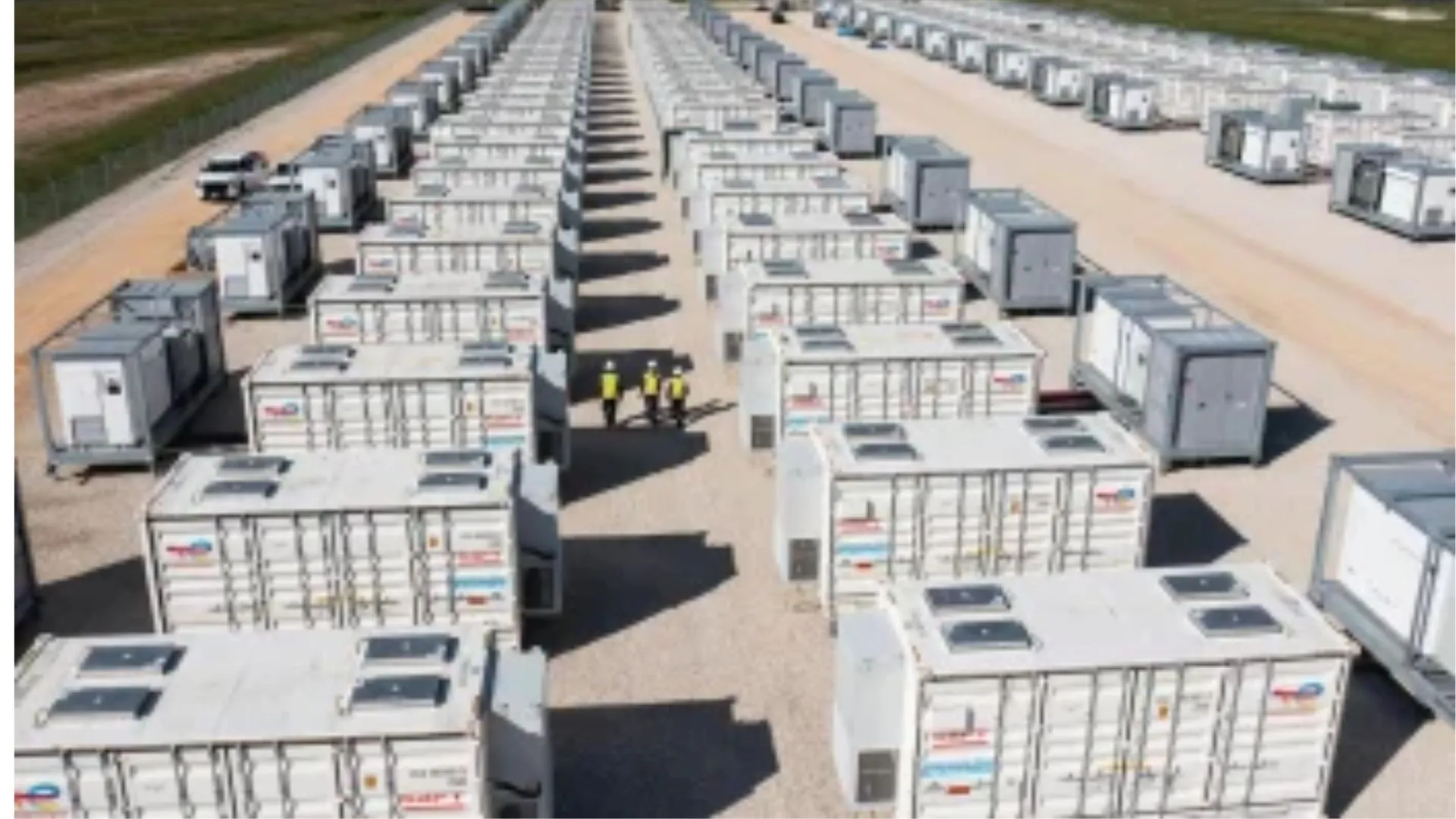
TotalEnergies and Allianz Global Investors announced a partnership to develop 11 battery storage projects with a total capacity of nearly 800 MW. The initiative represents an investment of €500 million and will help optimize the country’s electrical system in response to the growth of renewable sources.
The alliance involves AllianzGI, through its European infrastructure fund, acquiring 50% of a project portfolio developed by Kyon Energy, a TotalEnergies subsidiary. Despite the partial sale, the French firm will continue operating the assets, ensuring technical and strategic continuity of the deployment.
Battery Storage and Grid Flexibility
Most of the BESS systems will be equipped with high-tech batteries supplied by Saft, also part of the TotalEnergies ecosystem. These solutions will manage the variability of solar and wind generation, while providing grid response capacity and helping to prevent congestion.
The 11 projects are expected to become operational in 2028. With a total storage capacity of 1,628 MWh, they will play a decisive role in stabilizing the national energy system, strengthening security and operational efficiency.
Germany, a Priority Focus for TotalEnergies
With a presence spanning from refineries to electric vehicle charging infrastructure, Germany is one of the pillars of TotalEnergies’ European strategy. This collaboration with AllianzGI reinforces its commitment to sustainable and flexible electrification, complementing other investments in wind, solar, and liquefied natural gas.
The transaction also allows TotalEnergies to optimize its capital allocation in electrical energy, while for Allianz it represents its first direct foray into energy storage assets, expanding its exposure to critical solutions for the low-carbon future.
Key Infrastructure for a Solid Transition
Both TotalEnergies and AllianzGI agree that the deployment of storage infrastructure is essential to support the accelerated pace of renewable integration in Europe. The structured financing with 70% debt highlights the financial maturity of the model and its large-scale viability.
The agreement is subject to standard regulatory approvals, but already sets an important precedent in collaboration between energy and financial players to strengthen European electrical system infrastructure.
Source and photo: TotalEnergies