Electrical decoupling in corrosion protection
Electrical decoupling is emerging as an essential tool to improve safety and corrosion control in sectors such as oil & gas, pipelines, and rail. At the AMPP Annual Conference + Expo 2026, Tony Castillo, International Senior Account Manager at Dairyland Electrical Industries, discusses its impact and evolution.
A proposal focused on specialized electrical solutions
Dairyland Electrical Industries positions itself as a global leader in the development of electrical decoupling technologies. The company designs and manufactures solid-state devices aimed at solving complex problems in industrial environments, especially those related to electrical interference and asset protection.
Likewise, its solutions are present in critical industries such as hydrocarbon transportation and the rail sector, where electrical current control is crucial to prevent structural failures. In this context, the company has built its offering on reliability and adaptation to multiple operational scenarios.
Electrical decoupling in industrial applications
Electrical decoupling plays a crucial role in current management in both direct current and alternating current.
These systems ensure the necessary DC isolation in infrastructure such as pipelines, while facilitating AC interference mitigation.
As Tony Castillo explains.
In this way, the devices developed by Dairyland maintain electrical continuity when necessary and block unwanted currents that can accelerate corrosion processes. This capability is especially relevant in environments where different electrical sources and variable operating conditions coexist.
Furthermore, the versatility of these solutions facilitates their implementation in multiple configurations, expanding their use in projects of varying scale and complexity.
Reliability and certification as differentiating factors
Regarding performance, one of the most notable aspects is the low failure rate of the devices. Tony Castillo notes that Dairyland products have a failure rate of 0.01%, a figure that reinforces their positioning in applications where reliability is critical.
Likewise, the company holds a wide range of international certifications, allowing its solutions to be used in different markets and under different regulatory frameworks. This combination of technical robustness and regulatory compliance facilitates their adoption in demanding projects.
Therefore, electrical decoupling provides operational efficiency while also reducing risks associated with electrical failures and extending infrastructure service life.
Technical training as a strategic pillar
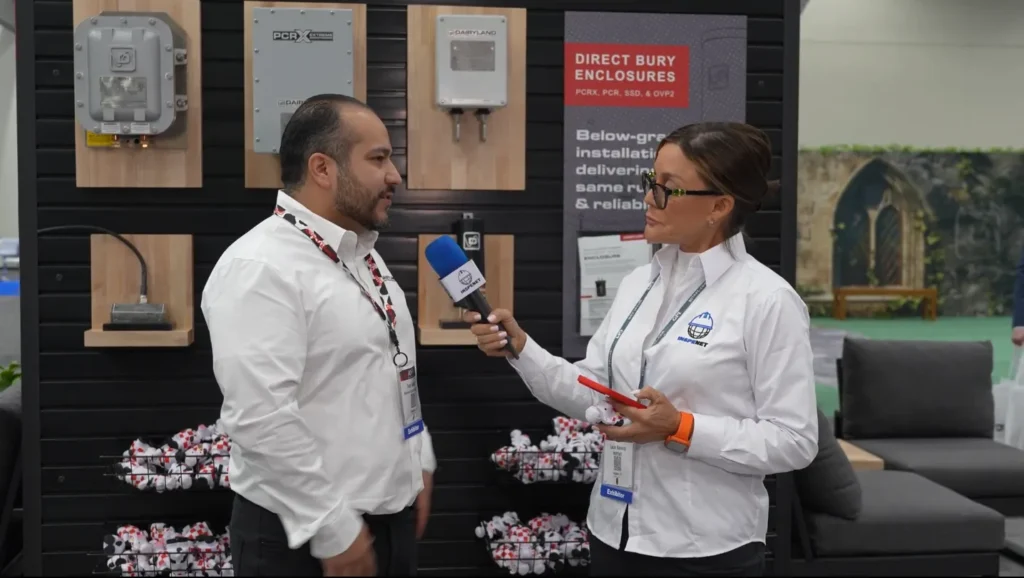
In this scenario, technical training takes on a fundamental role. Dairyland is committed to sharing knowledge with its customers, with the goal of improving the design and implementation of corrosion control systems.
According to Castillo, the company seeks to position itself as a technical resource for operators and engineers, offering detailed information that enables more precise decision-making. This approach strengthens customer relationships and contributes to optimizing the performance of installed solutions.
Likewise, this educational approach responds to the increasing complexity of industrial environments, where proper interpretation of electrical variables is crucial to ensuring safety.
New challenges: the impact of reconductoring
One concept gaining relevance is reconductoring, a phenomenon linked to changes in how electrical systems operate.
As Tony Castillo warns, this evolution may affect the effectiveness of current AC mitigation systems, which in some cases may no longer be adequate. Therefore, engineers must anticipate these changes and evaluate new solutions that respond to emerging conditions.
In this context, electrical decoupling will continue to evolve to adapt to these risks and ensure infrastructure integrity.
A technical partner in an increasingly demanding environment
Finally, Dairyland reinforces its positioning as a technical partner beyond product supply. The combination of experience, innovation capability, and customer focus enables the company to address current industry challenges.
Likewise, Tony Castillo's vision reflects an industry in transformation, where technology and technical knowledge become decisive factors. In this environment, electrical decoupling remains a key element for improving the safety and efficiency of industrial systems.
For more content about AMPP 2026, please visit our LinkedIn profile.
Source: Inspenet.