
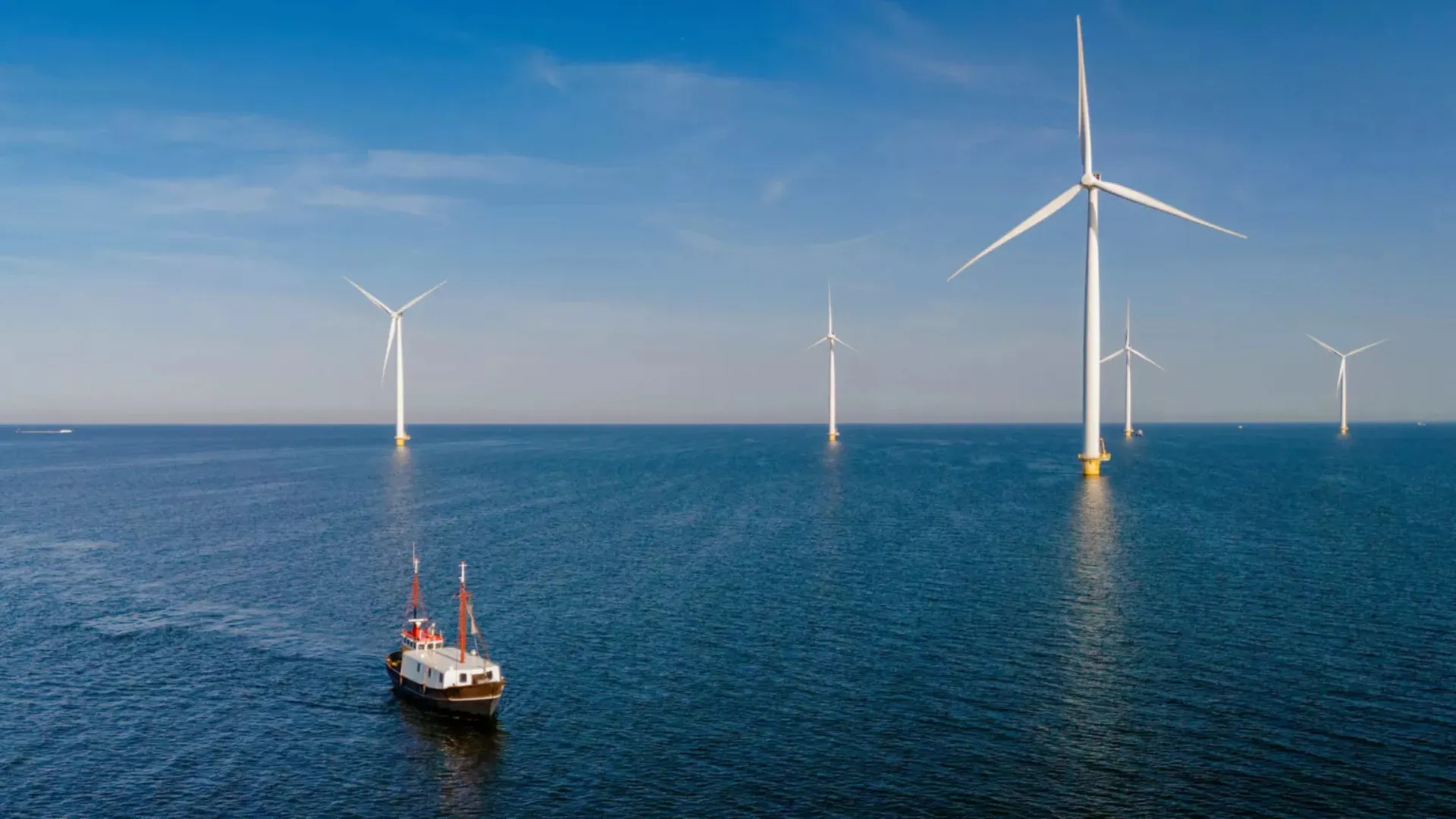
A recent study published in Science Advances warns of the deeper climatic and ecological effects of offshore wind farms, which go far beyond clean energy generation. Led by oceanographer Hyodae Seo, the report reveals that these infrastructures generate persistent warming in both the sea surface and the atmosphere, directly affecting regional climate and marine biodiversity.
Wind does not flow equally close to the turbines
The research was based on oceanographic and atmospheric data sets obtained in areas with high turbine density. The results indicate that the turbines generate turbulent vortices that alter the natural mixing of the air layers, which interferes with the oceanic cooling process.
As a consequence, there is a thermal increase that can extend up to 200 meters in height and more than 100 kilometers from the point of origin. This phenomenon not only modifies the temperature, but also changes the behavior of ocean currents, waves and heat flows between the ocean and the atmosphere.
Simulations at Cornell University support these results and show how the effects can be displaced to areas away from the original wind farm. However, induced heating is not the only problem.
Visible effects on marine and coastal life
Thermal feedback cycles cause alterations in the distribution of plankton, which is critical in the marine food chain. In addition, increases in bird and bat mortality have been documented, as well as disturbances in the habitats of benthic organisms due to sediment modification.
The changes affect the health of ecosystems already overburdened by climate stress. Habitat fragmentation and loss of sensitive species are consequences that are beginning to be documented in areas near these facilities.
Release of microplastics
Another worrying finding of the study is the constant release of microplastics, due to the constant friction to which the turbine blades are subjected to. These are ingested by mussels, oysters and other marine filter feeders, affecting their metabolism and accumulating in the food chain.
As the water warms, the degradation of these plastics accelerates, spreading the pollution to new areas. The result is a cycle that further aggravates the ecological impacts of the system.
Infrasound, a silent risk
Turbines also generate low-frequency infrasound that, although imperceptible to the human ear, alters atmospheric pressure and affects the orientation of marine animals. Some coastal residents have reported sleep disturbances and a feeling of persistent restlessness, symptoms that coincide with exposure to these sounds.
In addition, the thermal rise of air alters the way sound propagates, amplifying some acoustic effects in certain weather conditions.
A call to reassess the impacts of clean energy
Although offshore wind farms are important in the transition to renewable sources, the findings of the study by Seo and his team call for a more comprehensive analysis. It is not enough to measure energy efficiency: it is also necessary to assess the climatic, ecological and social consequences of these technologies.
The researchers conclude that these effects can no longer be treated as external or marginal. Their scale, persistence and complexity place them at the center of the energy sustainability debate.
Source: Science Advances
Photo: Blackout News