
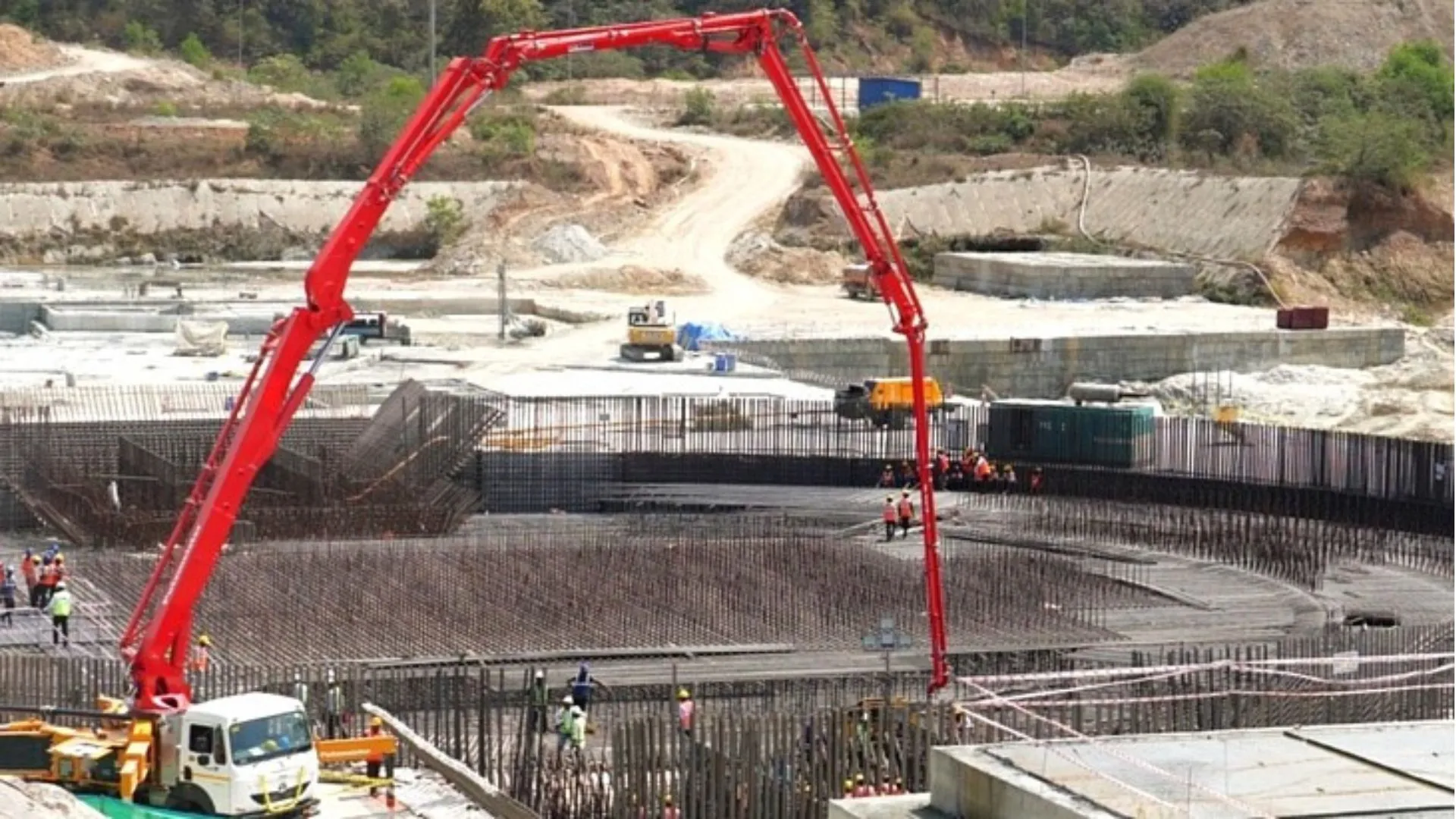
India’s nuclear program advances with the start of construction of 2 new nuclear reactors at the Kaiga plant, located in the state of Karnataka. The project took a decisive step following the first concrete pour for units 5 and 6, a milestone that officially marks the beginning of the facility’s construction phase.
This process took place a few days after the Atomic Energy Regulatory Board of India authorized the start of construction. With this step, the Kaiga plant incorporates two new 700 MWe pressurized heavy water reactors (PHWR), a technology developed within the country’s own nuclear program.
Additionally, the project’s goal is for the first of the new reactors to reach criticality in approximately 5 years, which would strengthen the country’s power generation capacity with low-emission energy.
700 MW Nuclear Reactors Developed in India
The new nuclear reactors to be built at Kaiga belong to the latest generation of 700 MW PHWR reactors developed by India. This design incorporates various advanced safety features and is part of a planned fleet of 10 reactors of this type across the country.
Likewise, the project is being executed through a strategy based on EPC megapackages that group engineering, procurement, and construction. This model seeks to accelerate project execution and reduce coordination issues among contractors.
According to Nuclear Power Corporation of India Limited (NPCIL), the systems and equipment used in the project come largely from domestic industrial companies, aligning with the government’s technological self-sufficiency policies.
Economic Impact and Regional Development
The construction of these nuclear reactors will also have effects on the local economy. The project will generate new employment and business opportunities in the Uttara Kannada region, where the plant is located.
Likewise, the activity associated with construction is expected to drive the development of infrastructure and services in areas near the plant. Site excavation work began in May 2022, preparing the ground for the start of construction of the nuclear complex.
The Role of Nuclear Energy in India’s Energy Strategy
The development of new nuclear reactors is part of a broader strategy by the Indian government to increase the country’s nuclear capacity. Currently, 2 700 MW reactors at the Kakrapar plant in the state of Gujarat are already in commercial operation, while another reactor of the same type in Rajasthan recently reached full power.
Furthermore, India has approved new nuclear projects in Haryana, Madhya Pradesh, and Rajasthan, following a serial construction model to accelerate the deployment of this technology. The country’s goal is to achieve at least 100 GW of nuclear capacity by 2047, which will support the energy transition and diversify the national power system.
Kaiga Nuclear Plant Expands Its Capacity
The Kaiga nuclear plant already has four 202 MWe pressurized heavy water reactors, which were connected to the grid between 1999 and 2011.
With the construction of the new 700 MW nuclear reactors, the complex will significantly increase its generation capacity, strengthening the role of nuclear energy within India’s energy system.
Source: Government of India
Photo: World Nuclear News