
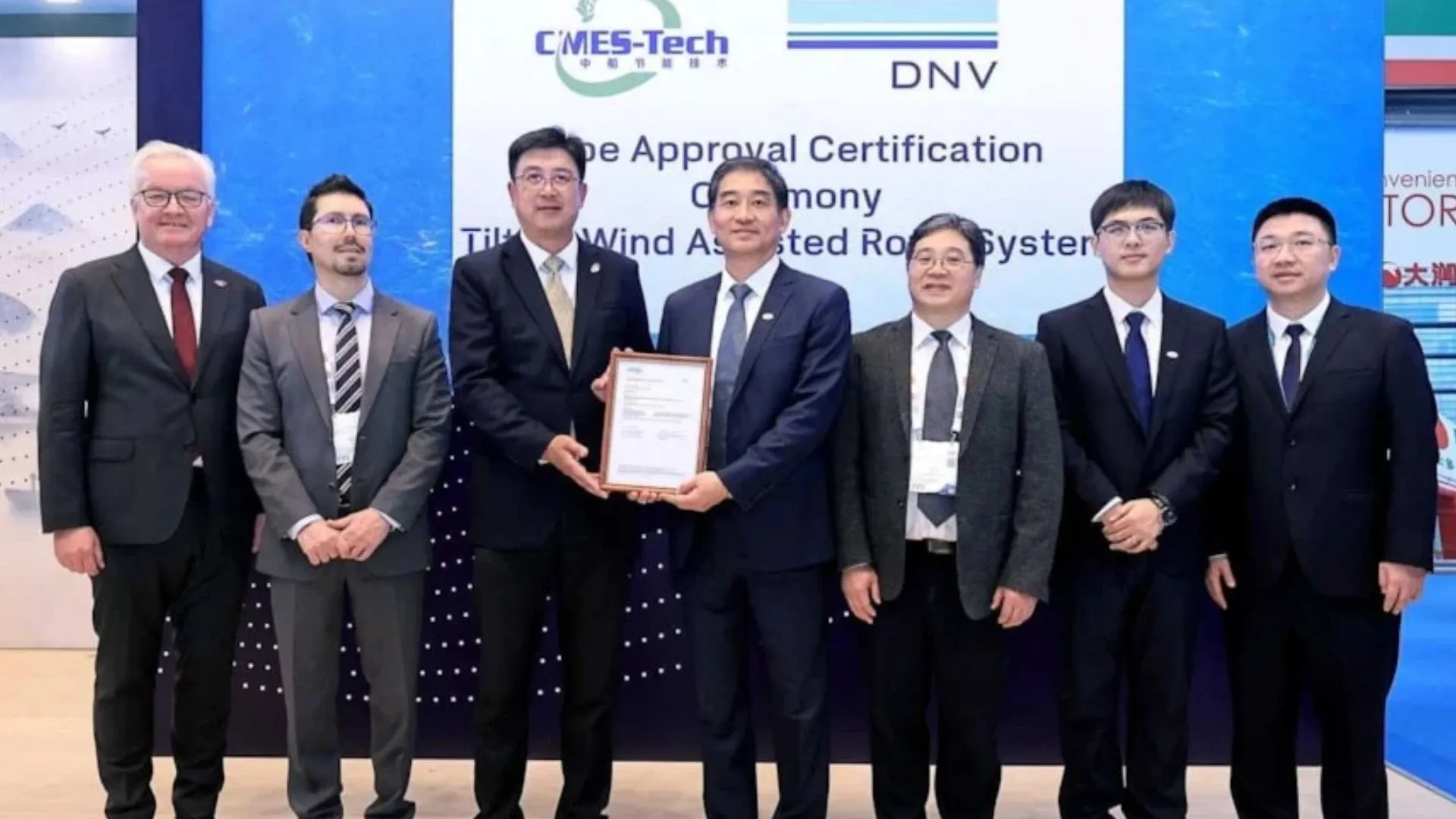
With the official handover during Marintec 2025 in Shanghai, CSSC Shanghai Marine Energy Saving Technology (CMES-Tech) registered the development of energy-efficient technologies for shipping. The Chinese company submitted its technology to DNV, which awarded the Type Approval Certificate (TADC) to the 35-meter tilting rotor sail system designed by the company.
This recognition, issued under the WAPS ST-0511 standard, validates that the system meets the most stringent requirements for installation on commercial vessels. It is also the first system of its kind developed in China to receive this certification, paving the way for its implementation in fleets focused on emissions reduction and fuel savings.
DNV certification for the tilting rotor sail
The system developed by CMES-Tech is distinguished by its retractable and adjustable design, which allows it to adapt to different draft and port operating conditions. In addition, it integrates intelligent sensors and automatic algorithms that adjust rotor operation according to wind direction and speed, optimizing thrust and ensuring safe operation.
During the certification process, DNV analyzed the system’s technical documentation, including mechanical, structural and electrical aspects. The design successfully passed a 120% overload test, demonstrating its resistance under extreme conditions.
Dr. Huang Guofu, general manager of CMES-Tech, mentioned that this achievement validates the technical maturity of the system, and positions China as a relevant player in the development of clean ship technologies. The company is part of the state-owned CSSC Group, with expertise in shipbuilding and development of sustainable solutions.
The TADC certification of this system offers a new alternative in the growing market for wind-assisted systems, which includes solutions such as fixed rotors, wing sails and suction sails.
After obtaining certification, CMES-Tech plans to move forward with installation on operational vessels and conduct tests in real sailing conditions. This step allows validation of offshore performance and project its integration on a larger scale in commercial fleets seeking to comply with stricter environmental regulations.
Source and photo: DNV