
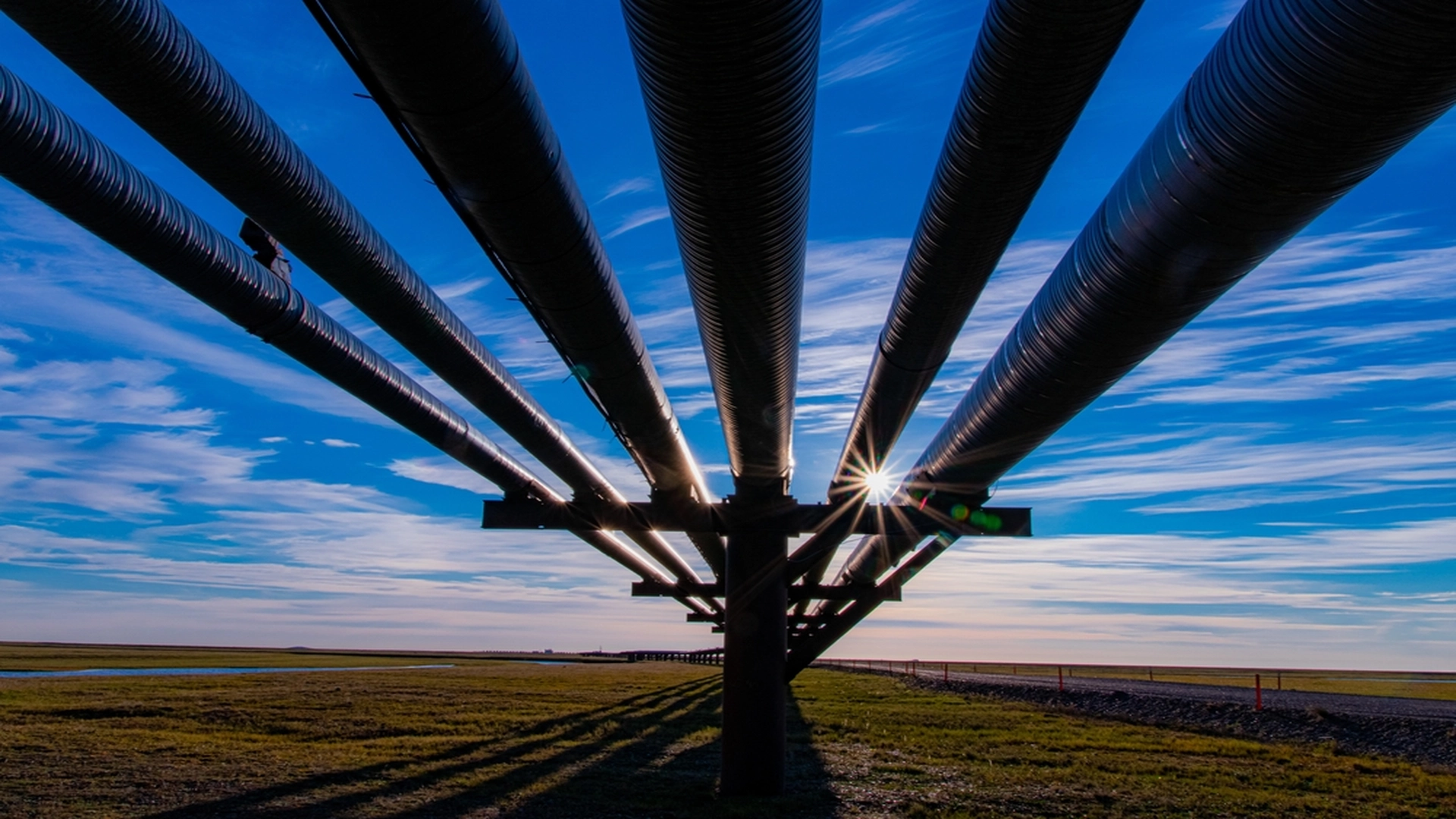
The Canadian province of Alberta has reignited the debate over developing a pipeline to the Pacific coast, a move aimed at increasing crude oil exports to Asia and diversifying its markets away from the United States.
Alberta Premier Danielle Smith confirmed that the provincial government is analyzing several routes that would connect the producing region to Northwest British Columbia, from where oil could be shipped to markets such as China, India, Japan, and South Korea.
Capacity and Routes Under Review
The project under discussion aims to add up to 1 million barrels per day (bpd) of additional export capacity. Among the alternatives being evaluated is Prince Rupert, a port with logistical advantages due to its relative proximity to Asia and shorter sailing times compared to other North American Pacific routes.
The choice of the route will be a critical factor from both a technical and environmental perspective, given the geographical and regulatory complexity of the region.
Political and Regulatory Framework
The debate is unfolding alongside discussions with the Canadian federal government, which has expressed its willingness to streamline regulatory processes for strategic energy infrastructure projects, although a formal construction decision has not yet been reached.
Authorities emphasize that the project is currently in the evaluation phase, though they acknowledge a strong political and technical determination to move forward with economic, environmental, and social feasibility studies.
Technical Context of Alberta Crude
From a technical standpoint, the crude produced in Alberta, primarily sourced from the oil sands, is heavy oil that requires diluents and transport systems designed to handle higher viscosities. Developing a pipeline to the Pacific coast involves significant challenges, such as traversing mountainous terrain, meeting strict environmental standards, and ensuring operational integrity over long-distance routes.
While these factors increase the project’s technical complexity, they are well within Canada’s extensive experience in hydrocarbon transportation infrastructure.
Market Strategy and Industrial Impact
Currently, the vast majority of Canadian crude is exported to the United States, exposing producers to logistical bottlenecks and price differentials compared to international benchmarks. Direct access to Pacific ports would allow for destination diversification, improved commercial margins, and a stronger position for Canada as a global energy supplier, particularly in Asian markets with sustained demand for heavy crudes.
For infrastructure operators, engineering firms, and service providers, a project of this magnitude would represent a significant opportunity in the design, construction, inspection, and operation of large-scale pipelines.
What’s Next?
In the coming months, the focus will be on feasibility studies, dialogue with communities and environmental authorities, and defining the federal regulatory framework. Any concrete progress will be closely monitored by producers, investors, and energy operators, given the project’s potential impact on trade flows and the long-term competitiveness of Canadian crude.
Source: Energy Now
Photo: Shutterstock