
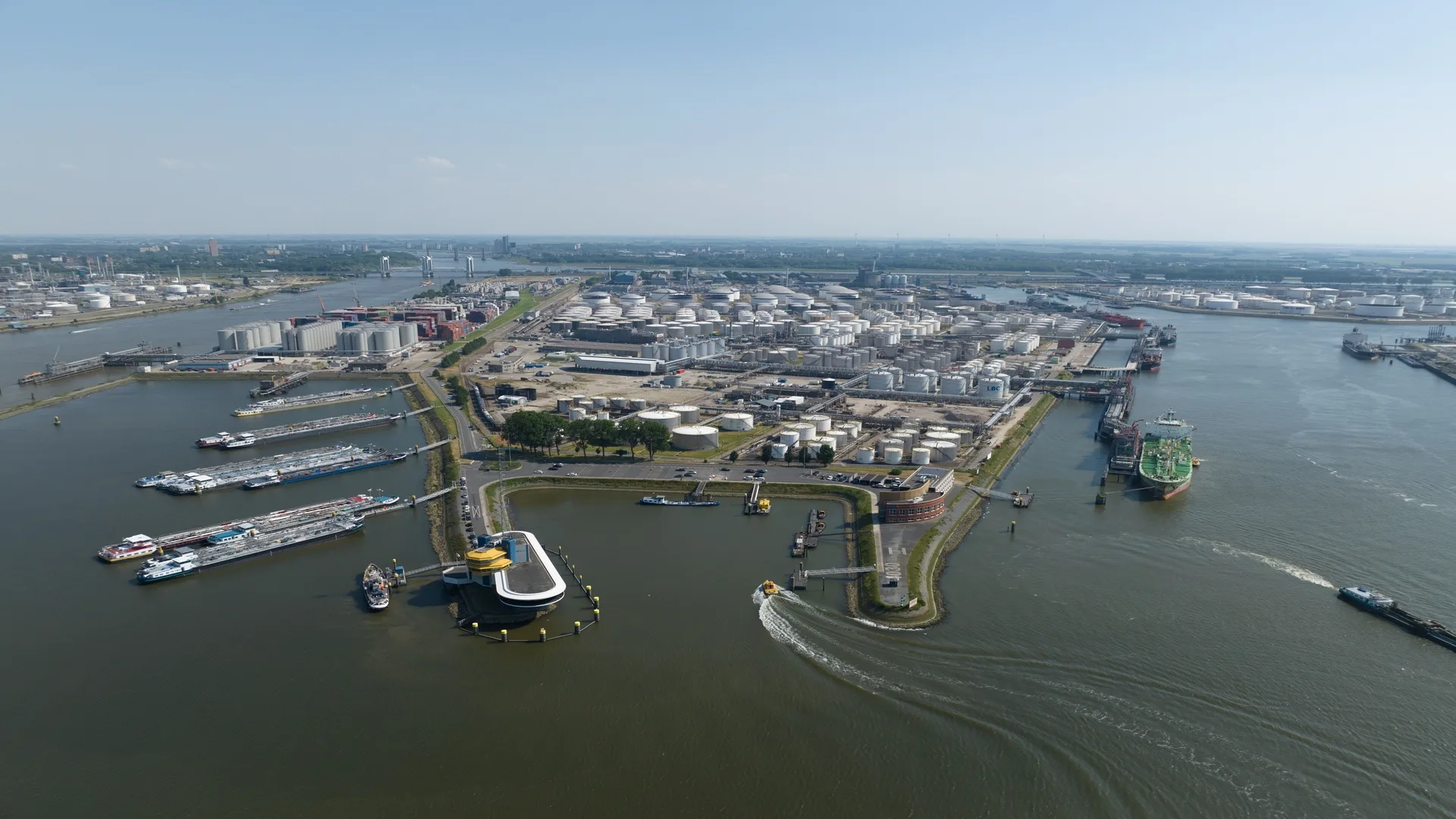
With the aim of strengthening its infrastructure and responding to the growing demand for low-carbon fuels, Evos Rotterdam has officially begun the execution of an ambitious expansion project for methanol and ethanol storage at the Port of Rotterdam.
Description of the expansion project
The project includes the construction of 5 new tanks with a total gross capacity of 67,500 cubic meters, in addition to a new pumping station and a completely new jetty, which will be built by the Port Authority itself. This infrastructure will not only increase Evos Rotterdam’s operational capacity but also allow it to handle higher volumes of low-emission methanol and ethanol, destined for both traditional industrial markets and the maritime sector.
The project’s execution involves the active collaboration of the Port of Rotterdam Authority, which has committed investments in the development of the new jetty and containment structures.
A commitment to the energy transition
The expansion directly responds to changes in energy demand in Europe, where the use of biomethanol and e-methanol is increasing, especially as a cleaner marine fuel alternative. In fact, low-carbon methanol consumption is projected to grow significantly over the next decade, driven by environmental regulations and decarbonization policies.
Meanwhile, the market for renewable ethanol is also on the rise, largely due to increased use in transportation fuels and the emerging production of sustainable aviation fuel (SAF) from alcoholic feedstocks.
Committed business leadership
During the signing ceremony that formalized the start of the project, Daan Vos, CEO of Evos, stated:
This is a strategic investment by Evos that reinforces the role of our Rotterdam terminal as a central hub for methanol and ethanol today, while preparing our infrastructure for the rapid expansion of low-carbon marine fuels in the future.
Daan Vos, CEO of Evos.
For his part, Boudewijn Siemons, CEO of the port, affirmed:
Evos’ investment in expanding its facilities is an important step towards the port’s sustainability. By investing in the construction of a new jetty and a retaining wall, the Port of Rotterdam Authority is creating the essential infrastructure for the safe and efficient handling of cleaner fuels, such as methanol.
Boudewijn Siemons, CEO of the Port of Rotterdam Authority.
Long-term perspective
The new infrastructure will become operational in 2028 and aligns with Evos’ long-term strategy called “partnerships for transition”, which seeks to generate progress and shared benefits with its partners and customers.
With this investment, Evos Rotterdam strengthens its position as a leading logistics platform for methanol and ethanol in Europe, in a context where energy security and sustainability have become central axes of industrial decisions.
Source: Evos