
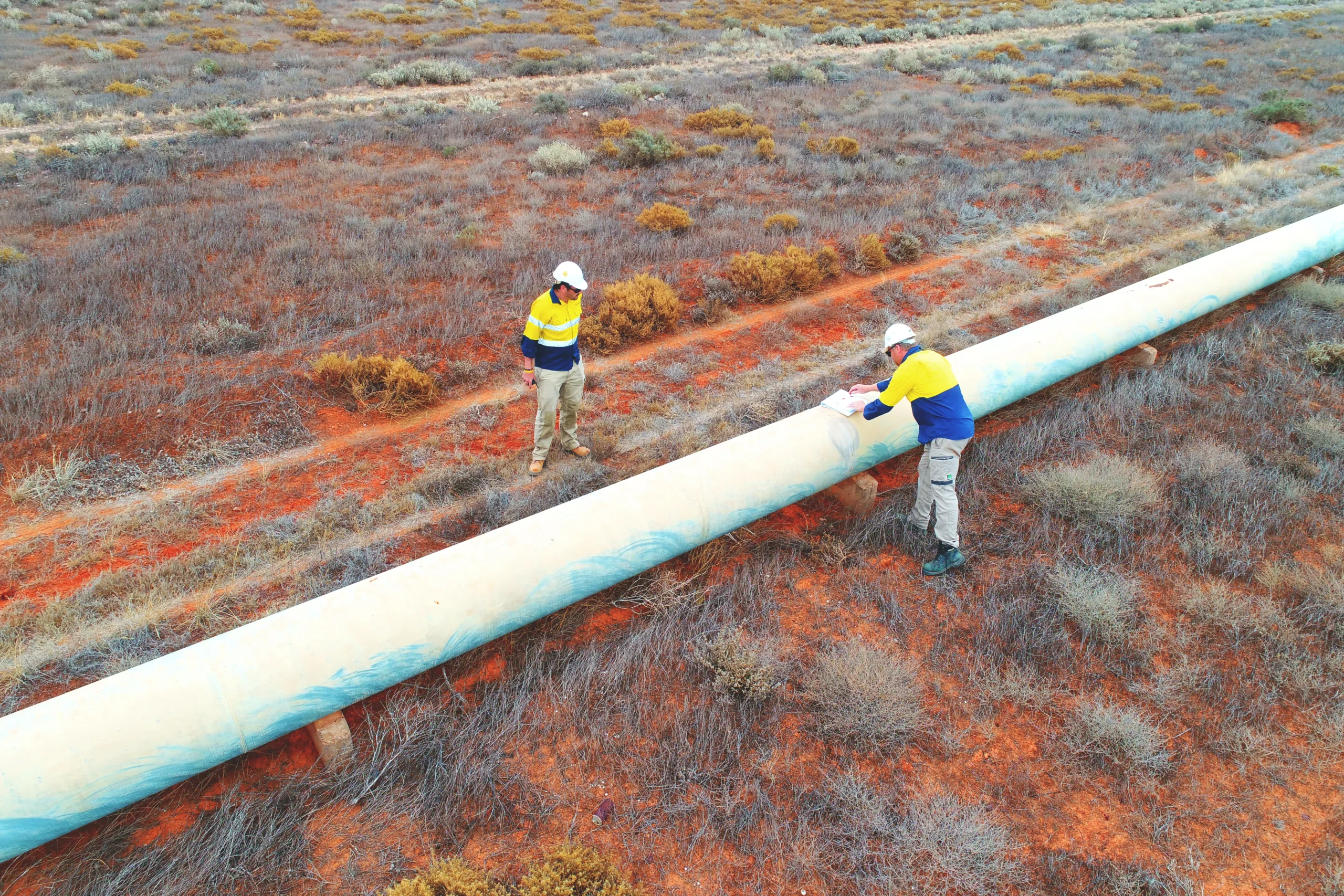
Over the last decade, the regulatory framework applicable to pipeline integrity in the United States has significantly increased the technical, documentary, and traceability requirements demanded of operators. In this context, the ability to integrate specialized engineering, traceable, verifiable, and complete (TVC) data management, and regulatory compliance into a single operating scheme has become a critical differentiator within the sector.
Vecor Pipeline Integrity has developed its business model around this structural market need: to bridge the gap between technical execution in the field and comprehensive regulatory compliance. In this interview, the company outlines the fundamentals of its approach as a Comprehensive Integrity Partner, the evolution of its capabilities in cathodic protection, ECDA/ICDA, and alternating current mitigation, as well as its integration of digital tools, quality assurance, and technical training strategies to meet the current and future demands of the industry.
Vecor Pipeline Integrity celebrates a significant milestone in its history. Looking back, what key decisions or innovations have defined the company’s identity and sustained its growth in such a competitive U.S. energy market?
Reaching our tenth year in the competitive U.S. energy market is a testament to two foundational pillars:
- Market- driven problem solving.
- An unwavering commitment to our human capital.
- Identifying the market gap
Vecor’s identity was forged by listening to client feedback while serving as consultants within the industry. We identified a recurring pain point shared by operators across the country: the lack of a reliable, comprehensive supplier capable of navigating the labyrinth of modern regulatory demands.
While many firms offered specialized technical services, few could bridge the gap between complex engineering and the stringent documentation required by PHMSA and state regulators. We made the strategic decision to build Vecor as a “Full-Spectrum Integrity Partner”, capable of managing the entire lifecycle of regulatory compliance. By simplifying the complexity of the “Mega Rule” and other federal mandates for our clients, we transformed from a service provider into an essential extension of their compliance and safety departments.
- The engine of growth: Our “Expert-first” culture
We recognized early on that in the niche field of pipeline integrity, technology is only as good as the minds operating it. Sustaining growth in a volatile market required us to rethink how we attract and retain the industry’s most respected individuals.
We have implemented internal policies designed to foster intellectual challenge, incentivize innovation and sustain motivation. By creating a culture of transparency and professional growth, we ensure our experts remain inspired to solve the “unsolvable” problems for our clients.
Your portfolio includes extensive work in cathodic protection, ECDA/ICDA programs, and AC mitigation. How has Vecor evolved these capabilities to meet today’s stricter regulatory and environmental expectations?
Meeting today’s stricter expectations is no longer just about performing field surveys; it is about mastering the complex variables of the PHMSA “Mega Rule” and building a system that guarantees 100% compliance through every phase of the asset lifecycle.
Vecor has evolved its capabilities by moving away from isolated service lines and toward an Integrated Integrity Ecosystem. The following pillars define this high-impact approach:
- Deep regulatory fluency
The primary driver of Vecor’s evolution is a comprehensive understanding of the current regulatory landscape. We don’t just “do” CP; we align our cathodic protection surveys with the Traceable, Verifiable, and Complete (TVC) records standard. By understanding the minute variables from soil resistivity shifts to shielding effects, we ensure that every data point collected satisfies federal and state audits the first time.
- The “Compliance-in-time” workflow
To meet stricter timelines, we have implemented a proprietary system that automates the transition from field data to comprehensive regulatory reporting.
Real-Time Data Integration: Our field teams use digital tools that sync directly with our centralized risk models and data processing centers, allowing for expedited data management and faster delivery of mitigation recommendations.
- Advanced modeling
As the U.S. electrical grid expands, AC interference has become a critical environmental and safety threat. Vecor has evolved its AC Mitigation services from simple grounding to Advanced Computational Modeling.
Using complex AC modeling software to predict steady-state induced currents and fault conditions before they cause accelerated corrosion. This proactive approach ensures personnel safety and asset longevity even in dense “utility corridors.”
Ultimately, Vecor’s identity is built on the expertise of our Subject Matter Experts (SMEs) who have turned the “burden” of stricter regulations into a streamlined, high-efficiency machine. By setting up a system that integrates deep domain knowledge with digital precision, we provide our clients with the ultimate peace of mind: total compliance, delivered in time.
With projects for leading industrial clients like Linde and DOW, Vecor has demonstrated strong technical credibility. What distinguishes your engineering methodology or project execution model from other service providers in the integrity sector?
Vecor provides a tailored, agile framework that aligns with the rigid safety standards of global clients.
What distinguishes Vecor’s engineering methodology is our “Agile Compliance” execution model based on three key components: Adaptive Lifecycle Methodology, Integrated Quality & Safety Controls and Rapid Response & Technical Credibility.
While many service providers are slowed down by rigid, bureaucratic structures, Vecor has optimized a workflow that balances rapid adaptability with the stringent quality controls required by Tier-1 industrial clients.
Our methodology succeeds because we treat every project as a unique engineering challenge rather than a repetitive task. By combining timely delivery with uncompromising safety controls, we have earned our reputation as the preferred integrity partner for some of the world’s most demanding industrial leaders.
Digitalization and predictive analytics are reshaping asset integrity. How is Vecor integrating data-driven tools, such as remote monitoring, modeling, or risk-based assessment, to optimize pipeline reliability and lifecycle performance?
That is correct. Our success is driven by a team of high caliber professionals and industry recognized Subject Matter Experts (SMEs) who relentlessly pursue operational efficiency. Beyond standard practices, our experts have developed proprietary tools and rigorous controls to ensure precision in data collection. This foundation of reliable, expedited data management allows us to deliver the high-level analysis and actionable recommendations our clients depend on.
Vecor is moving away from “snapshot” inspections and toward a continuous integrity lifecycle. By integrating remote monitoring with advanced risk modeling, Vecor essentially creates a “living” safety profile for every mile of pipe.
As regulations and ESG standards become more demanding, how do you balance technical compliance, sustainability goals, and operational efficiency in your projects?
Vecor manages every single project with an integrated approach that balances safety, sustainability, and performance.
At Vecor, we view the intersection of regulatory compliance, ESG standards, and operational efficiency as an opportunity for innovation rather than a conflict of interest. Our strategy is built on the principle that a well-maintained pipeline is inherently the most sustainable and efficient asset.
We don’t just help our clients comply with the law; we help them prove to their stakeholders that they are responsible stewards of the environment. By leveraging our high-level SMEs and proprietary data tools, we turn the ‘burden’ of compliance into a competitive advantage of efficiency.
Vecor’s staff is certified by organizations such as NACE, API, and ASNT. What is your strategy to maintain high professional standards and continuous training among your engineers and field technicians?
Professional certification can’t just be seen as a “requirement,” but as the backbone of Vecor’s technical excellence strategy.
At Vecor Pipeline Integrity, we recognize that in a high-stakes industry, a certification is more than just a credential or a regulatory requirement, it is a guarantee of safety and technical precision. Our strategy for maintaining elite standards is built on eliminating barriers to entry and fostering a culture of lifelong mastery.
By removing financial barriers to excellence, we believe that our engineers’ focus should be on technical proficiency, not the financial burden of professional development. To ensure our team remains at the vanguard of the industry, Vecor has implemented formal policies to fully burden the costs of all relevant certifications.
Our strategy includes a) internal mentorship programs where we pair junior technicians with our most senior Subject Matter Experts (SMEs); b) field training, to ensure our team is prepared for scenarios that standard certification exams might not cover; and c) regulatory Cross-Training, because codes like 49 CFR Part 192 and 195 are constantly evolving.
We invest in our people so they can invest their best efforts into our customers. By assuming the costs of professional excellence, Vecor ensures that our clients never have to worry about the competency of the team on their right-of-way.
Quality assurance is central to long-term client trust. How does Vecor ensure consistency, precision, and reliability across all its service lines, from field inspections to engineering assessments?
At Vecor we understand that we must connect the technical rigor of the data to the human expertise that validates it; therefore, we view Quality Assurance not as a final checklist, but as the foundational framework of every project we undertake. Our clients trust us with the safety of their assets and we honor that trust by ensuring that every data point and engineering recommendation is defensible, repeatable, and accurate.
Our QA process is integrated across all service lines, ensuring a seamless transition from field data collection to final engineering assessment.
While in the field we utilize standardized digital collection protocols and real-time validation tools eliminating “human error”, in the Office, our data management teams employ multi- tier review cycles. Every report undergoes a rigorous peer-review process where senior Subject Matter Experts (SMEs) verify that the technical analysis aligns with both regulatory requirements and physical field conditions.
To further solidify our commitment to international excellence standards, Vecor is currently in the process of achieving ISO 9001 certification. This milestone is a formal recognition of the rigorous internal controls we have practiced for the past decade.
For our clients, this certification serves as an independent guarantee that our quality management systems are world-class, focused on continuous improvement, and designed to deliver consistent results across every project, regardless of scale or complexity.
We understand quality as the bridge between raw data and safe operations. By pursuing ISO 9001 certification while empowering our SMEs to set the highest possible standards, we ensure that our clients receive a peace of mind on each report that their asset integrity is in the most capable hands in the industry.
Finally, as Vecor celebrates this new chapter, what are your expectations for the future in terms of innovation, market expansion, and contributions to the evolving field of pipeline integrity management?
As we look toward this next chapter, we see it as a transition from being a premier service provider to becoming the ideal partners to ensure a more resilient energy infrastructure.
Our vision for the future is built on three specific pillars:
First, innovation through prescriptive intelligence, where we are moving beyond just ‘detecting’ issues to ‘predicting’ them with absolute precision. The industry is flooded with data, but it lacks actionable clarity. Our goal is to provide our clients with prescriptive analytics, not just telling them where a problem might occur, but exactly when and how to intervene to prevent it, effectively aiming for a ‘zero-incident’ reality.
Second, strategic market expansion to the Hydrogen and Carbon Capture (CCUS) sectors, while our foundation remains in oil and natural gas. The physics of hydrogen embrittlement and CO2 transport present unique challenges that the industry is still grappling with. Our goal is positioning Vecor as the leading technical authority in these new energy frontiers, ensuring that the ‘Green Transition’ is built on a foundation of safety and proven engineering.
Third, keep committed to fostering a culture where our professionals are constantly challenging themselves. We believe that complacency is the greatest risk in our industry.
At Vecor, we don’t just hire experts; we empower them to strive for the absolute best outcome for every single project. We’ve built an environment where our SMEs are inspired to out-think the problem, stress-test their own conclusions, and push the boundaries of what ‘technical compliance’ looks like. We want our team to feel that their most significant professional challenge is always the project currently on their desk.
Finally, our expectation for the future is to become the ‘Gold Standard’ in the U.S. market. By blending cutting-edge data tools with a team that is never satisfied with good enough, we ensure that Vecor isn’t just reacting to the evolving field of pipeline integrity, we are the ones defining its next decade.
This article was developed by specialist Jorge Vásquez and published as part of the seventh edition of Inspenet Brief February 2026, dedicated to technical content in the energy and industrial sector.