
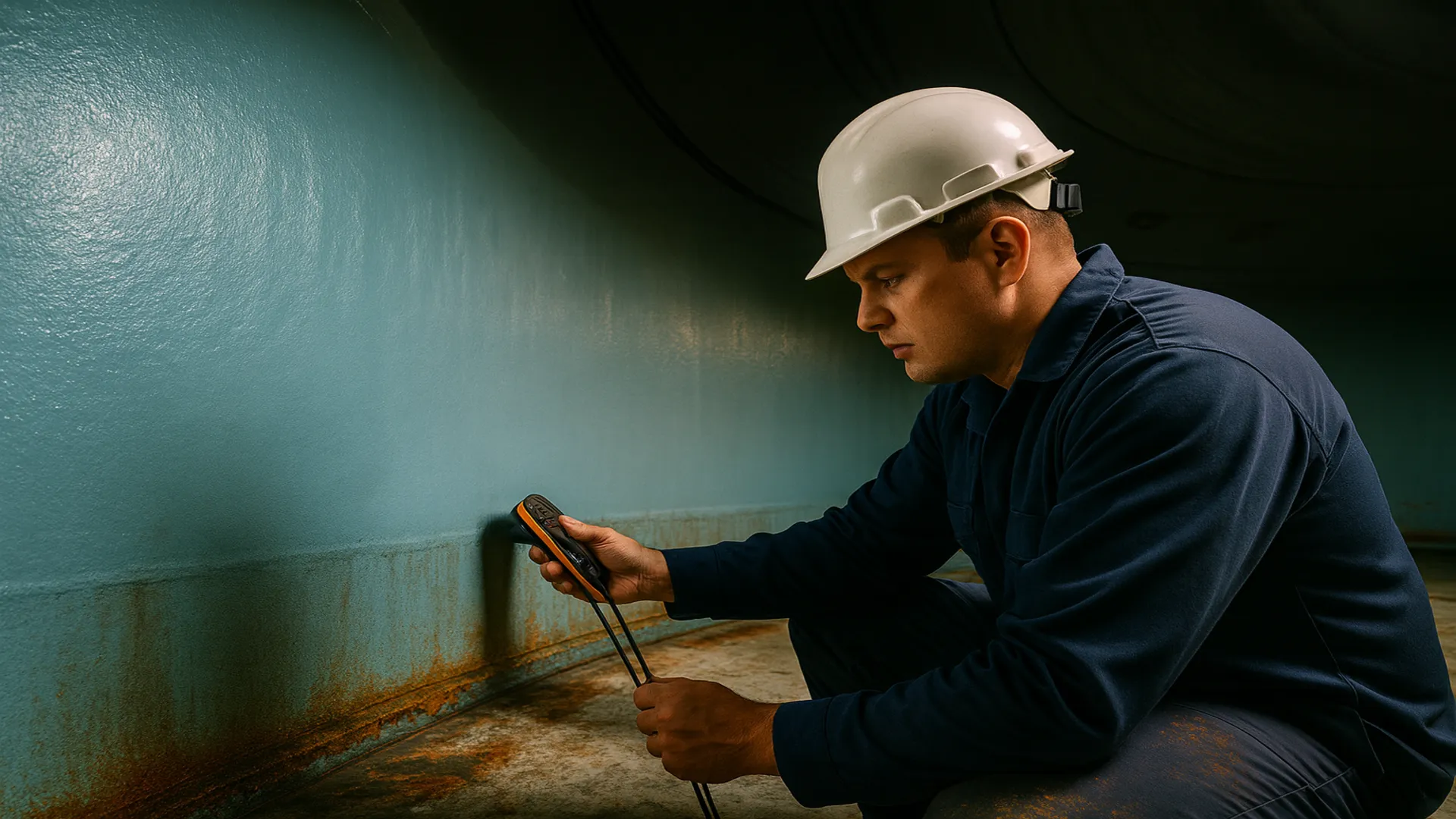
In the liquid storage industry, Aboveground Storage Tanks (AST) represent a critical link for operational safety and product reliability. Internal coatings are decisive in preventing corrosion, leaks, and structural failures that can result in costly incidents or environmental risks. With a projection towards 2026, understanding failure modes and applying advanced diagnostics is essential to maintain asset integrity.
Most frequent failure modes and determining factors
The most recurrent failure modes in internal coatings include partial or total detachment, blistering, cracking, chemical dissolution, and deterioration due to localized attack. The speed and severity of these phenomena depend on the type of coating, chemical compatibility with the stored product, operating temperature, and cleaning and maintenance conditions. For example, epoxy coatings may degrade when exposed to fuels with polar additives, while polyurethanes are sensitive to thermal variations and acidic vapors. Detecting failures is crucial, as any progressive degradation can expose the underlying steel and generate localized corrosion points.
Advanced diagnostics: from NDT to intelligent monitoring
Non-Destructive Testing (NDT) has advanced significantly in recent years. Techniques such as ultrasonic thickness measurement, fluorescence for defects, and infrared thermography allow precise identification of detachment, blistering, and cracks. The integration of digital twins and smart sensors makes it possible to monitor the evolution of deterioration in real time. Correlating operating conditions, such as filling and emptying cycles, internal cleaning, or exposure to different products, with failure patterns is essential to prioritize interventions and optimize maintenance programs.
Coating innovation and trends towards 2026
Growth is projected in hybrid materials that combine epoxy polymers with ceramic layers, offering greater chemical and thermal resistance. Smart coatings with integrated sensors will enable the detection of micro-leaks and loss of adhesion in real time, strengthening predictive maintenance strategies. The standardization of inspection and maintenance protocols, aligned with international standards such as API 650 and 653 and ASTM D6090, will allow performance comparison across facilities and consolidate best practices in internal corrosion management.
Comprehensive corrosion management: prevention, monitoring, and action
Corrosion management is not limited to diagnostics. Preventive planning, which includes coating selection according to the product, humidity control, application of compatible inhibitors, and continuous monitoring, ensures that tanks maintain their integrity, reduce environmental risks, and comply with regulatory and corporate standards. During the NISTM 2025 event, it was highlighted how the combination of advanced materials, state-of-the-art NDT techniques, and predictive monitoring consolidated a proactive approach to corrosion challenges.
Conclusion
Internal coatings in AST tanks are a critical component of the asset integrity strategy towards 2026. Identifying failure modes, implementing advanced diagnostics, and adopting innovative materials and techniques will allow anticipating problems, extending tank service life, and maintaining operational safety. Preparing today with these tools ensures that AST tanks continue operating reliably, efficiently, and safely in the face of the industry’s future challenges.
This article was developed by specialist Yolanda Reyes and published as part of the seventh edition of Inspenet Brief February 2026, dedicated to technical content in the energy and industrial sector.