
Table of Contents
- Storage tanks and their critical importance
- Corrosion in tanks: critical areas and main mechanisms
- Other relevant mechanisms
- Major failures in storage tanks
- Root causes of storage tanks failures
- 7 Early signs of failure (Practical checklist)
- Practical solutions to ensure tank integrity
- Conclusions
- Frequently Asked Questions (FAQs)
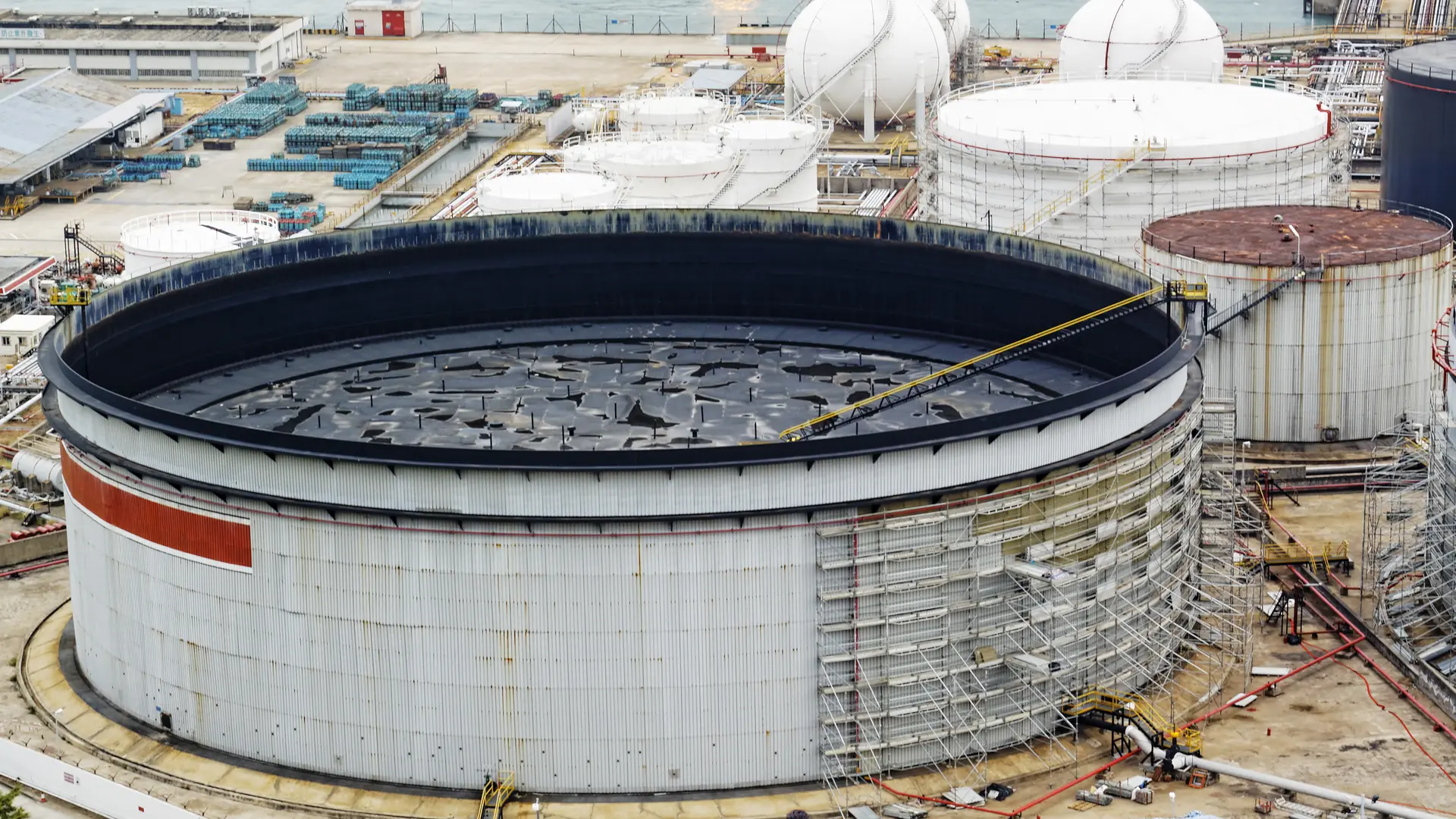
Storage tanks are part of the fundamental infrastructure of the oil, petrochemical, energy, and process industries. Through their design and proper operation, they contribute to operational continuity, industrial safety, and environmental compliance. However, their exposure to aggressive environments, thermal variations, operating cycles, and, in most cases, decades of service, promotes deterioration mechanisms that can evolve silently until they trigger critical failures.
Bottom leaks, hull deformations, floating roof failures, and accelerated corrosion are some of the most common failure modes in above-ground storage tanks (ASTs). Understanding their root causes and applying mitigation practices based on standards such as API 650, API 653, API 580, and API 579 is strategic for preserving mechanical integrity, extending asset life, and reducing operational and environmental risks.
This article consolidates the most relevant damage mechanisms and presents practical solutions in accordance with international best practices.
Storage tanks and their critical importance
Atmospheric carbon steel tanks, regulated by API 650, are welded cylindrical vessels consisting of a bottom, ring plate, shell, roof, and operating accessories. The standard establishes minimum requirements for materials, thicknesses, geometric tolerances, and design configurations (fixed, dome, or floating roof) to ensure structural strength and stability.
In practice, many tanks operate under conditions more severe than those anticipated in their original design: higher environmental loads, wider temperature variations, cumulative settlements, and service changes that introduce unanticipated stresses. This phenomenon is accentuated in tanks with 30–60 years of operation, in which the cumulative deterioration of the bottom, shell, fittings, and floating roof significantly increases the probability of failure.
In service, tanks experience filling and emptying cycles, corrosive vapors, and mechanical stresses that accelerate degradation. For this reason, API 653 regulates external and internal inspections, repair criteria, dimensional evaluations, and service limits, emphasizing that reliability depends on planned inspection programs, continuous monitoring, and disciplined operation.
Corrosion in tanks: critical areas and main mechanisms
Corrosion is the most decisive mechanism of deterioration in the integrity of storage tanks. It affects the bottom, shell, roof, and accessories, progresses gradually and is difficult to detect until it causes leaks, loss of thickness, or structural failures. API 653 establishes a tank inspection approach based on damage mechanisms to detect it in a timely manner.
Soil-side corrosion of the bottom
This is the most frequent cause of leaks. It occurs when the underside of the bottom comes into contact with moisture, contaminated soil, anoxic zones, poor drainage, or a degraded foundation ring. Water retention causes deep pitting and accelerated loss of thickness, especially in tanks without a separation membrane, without cathodic protection, or with deteriorated coatings.
Internal corrosion of the bottom and first ring
Internal corrosion depends on the product stored, the presence of free water, and sediments that generate concentration cells. The product/vapor interface, especially in fixed roofs without an internal membrane, is one of the most aggressive areas due to the combination of moisture, oxygen, thermal variations, and corrosive compounds such as CO₂, H₂S, or chlorides.
In heavy products, biofilms can form that promote microbiological corrosion (MIC), affecting the bottom and first ring.
External and atmospheric corrosion
This affects exposed surfaces such as the roof, hull, deck, welds, and bottom flange. Rain, humidity, solar radiation, and industrial pollutants accelerate deterioration. The most relevant mechanisms are: COB (corrosion under coating), which is when the paint peels off and allows moisture to infiltrate; while CUI (corrosion under insulation) is when the insulation absorbs water, causing hidden corrosion in areas that are difficult to access.
The video explains the most common failures in storage tanks—such as corrosion in the bottom and hull, leaks in the bottom, structural deformations, and problems with floating roofs—and describes their causes: wet soil, thermal variations, sediments, lack of maintenance. It also addresses the need for regular inspections (such as those defined by API 653) to detect damage early and prevent critical failures, operational losses, or environmental risks.

Other relevant mechanisms
Although less frequent, the following should be included in inspection plans:
- Crevice corrosion (flange joints and supports).
- Galvanic corrosion due to contact between different metals.
- Erosion-corrosion in drains, nozzles, or recirculation lines.
- SCC (stress corrosion cracking) in environments with H₂S or amines.
Major failures in storage tanks
Tanks can fail due to corrosion mechanisms, geotechnical problems, structural degradation, adverse operating conditions, service changes, or defects inherited from the original design. API 653 and API 579-1/ASME FFS-1 provide criteria for assessing the severity of damage and determining whether the tank can remain in service, requires repair, or must be rebuilt.
As tanks age, the likelihood of failures associated with cumulative deterioration, loads not anticipated in the original design, and fatigue of components such as the floating roof, bottom, or shell increases.
Leaks through the tank bottom
These represent critical failures due to their environmental, operational, and economic impact. Typical causes include:
- Soil-side or internal corrosion in the ring plate or center plates.
- Deep pitting due to sediment, free water, or MIC.
- Failures in circumferential and longitudinal welds.
- Differential settlement causing cracks in the bottom-shell joint (corner weld).
Early detection requires API 653 inspections with high-resolution UT, MFL, sump evaluation, and geometric analysis of the bottom.
Structural failures of the hull
The hull may deform due to:
- Uneven settlement.
- Unbalanced loads.
- Thermal variations.
- Extreme winds.
- Degradation of the foundation.
API 653 defines acceptable limits for ovality and buckling. When these limits are exceeded, FFS analysis according to API 579 determines whether the tank can continue to operate safely.
Failures in floating roofs and fixed roofs
Floating roofs (IFR/EFR)
May present:
- Loss of buoyancy due to water or product ingress.
- Perforated pontoons or loss of tightness.
- Damage to primary or secondary seals.
- Misalignment of the guide tube.
- Failure of the drainage system (valve, sump, or pivot master).
Evolution of damage and additional failures:
- Accelerated corrosion of the central deck.
- Deformations around the guide tube.
- Loosening of structural joints.
- Deterioration at support or pivot points.
These mechanisms are often related to water accumulation, cyclic loads, roof settlement, roof support failures, and lack of maintenance of the floating system.
Fixed roofs
These can deform due to external loads, corrosion, thermal fatigue, or structural aging. Vacuum collapse, documented in multiple incidents, is also common and occurs when vents are blocked during rapid emptying.
Floating roof drainage: a recurring failure mode
Floating roof drainage is one of the most vulnerable components due to continuous movement and cyclic stresses. Common failures include:
- Obstruction due to sediment or corrosion.
- Fatigue of the flexible pipe.
- Leaks at joints.
- Loss of mobility.
- Overloads due to water accumulation.
To prevent sinking or deformation, the drainage must be designed considering:
- Historical maximum rainfall.
- Severe weather events.
- Total freedom of movement.
- Geometric compatibility with the API 650 tank.
In this case, specialized companies such as MESA Industries – MESA ETP offer drainage systems and flexible pipes manufactured in a single continuous length, guided by tensioners and without intermediate joints. These solutions, used in terminals and refineries worldwide, reduce potential points of leakage or fatigue and are integrated with API 650 design criteria and API 653 inspection guidelines.
During major maintenance, they also perform drainage modernization or redesign, ensuring compatibility with geometric tolerances and specific tank operating conditions.
Operational and external failures
Even with good corrosion management, failures can occur due to external conditions:
- Overfilling (API 2350): causes roof deformation and spills.
- Vacuum due to clogged vents: can cause fixed roofs to collapse.
- External fires: induce thermal buckling.
- Industrial vibrations: cause fatigue in welds and nozzles.
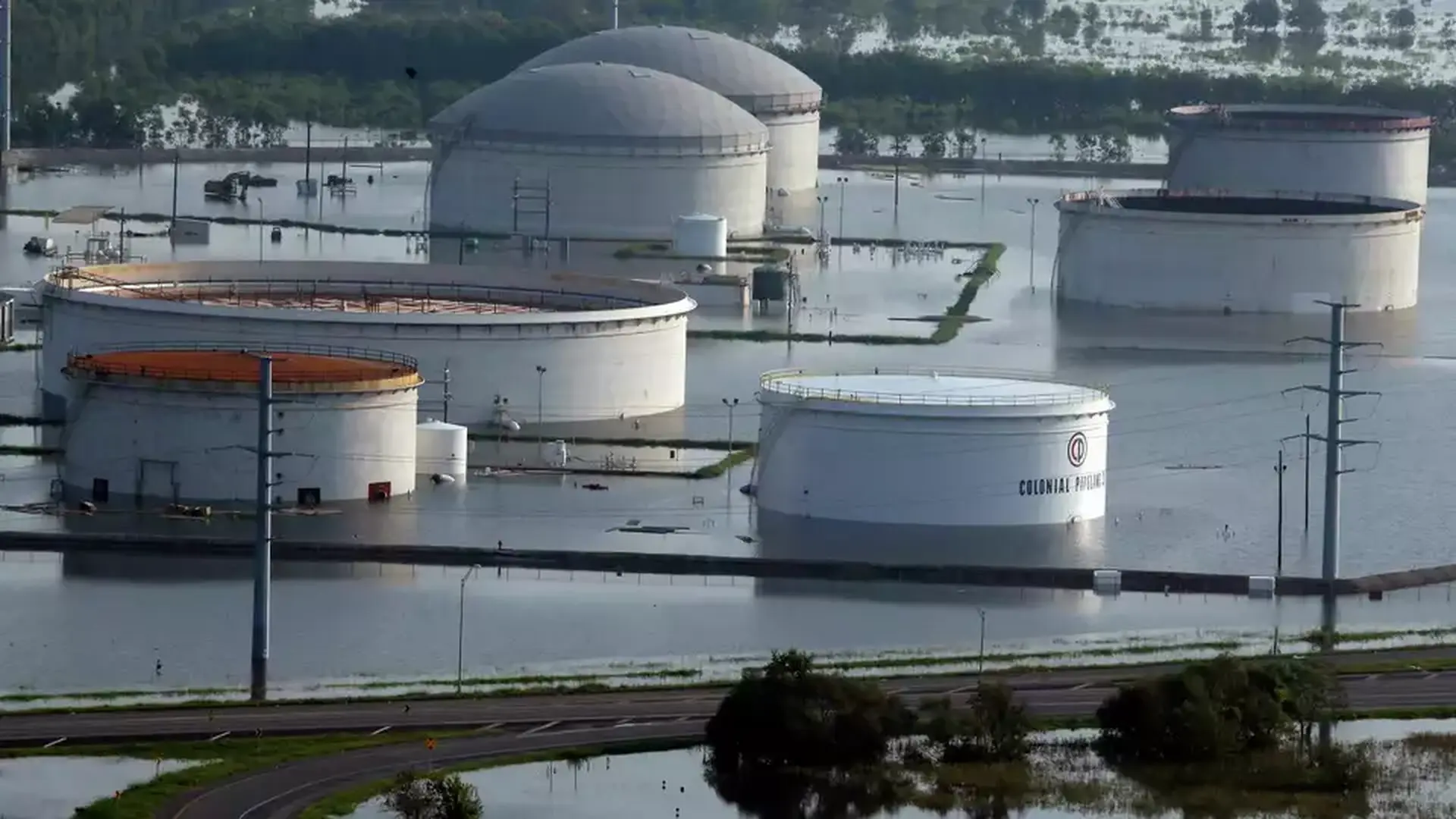
- Severe weather events: deform the hull or affect the foundation.
- Internal overpressure: due to PVRV valve failures or vent blockages.
Root causes of storage tanks failures
Design and construction outside API 650 specifications
Failures associated with:
- Thicknesses not suitable for the specific gravity of the product.
- Welds with lack of fusion.
- Geometric tolerances outside limits.
- Ring plate omitted or undersized.
Although API 650 defines minimum requirements, many tanks today face loads greater than those originally considered: extreme winds, extraordinary rainfall, progressive settlement, or greater thermal variations, all of which induce deformation or loss of buoyancy.
Operational degradation and service conditions
Thermal cycles, level variations, sediments, free water, and corrosive fluids accelerate fatigue, corrosion, and loss of thickness. Service changes without API 579/API 653 analysis increase the risk of unforeseen damage mechanisms that were not contemplated in the original design, accelerating damage mechanisms.
Poor foundation and differential settlement
The use of non-compliant materials, inadequate or poor compaction, insufficient drainage, or erosive processes or scouring in the foundation ring generate uneven settlements that deform the bottom and hull, affecting the bottom-hull connection.
Lack of timely inspection and maintenance
The absence of API 653 inspections, limited use of advanced NDT, lack of operation and maintenance history, and disregard for early warning signs (stains, leaks, deformations, or active corrosion) allow damage mechanisms to progress until they cause leaks or structural failures.
7 Early signs of failure (Practical checklist)
- Wet spots or leaks in the ring plate or hull rings, indicating initial loss of containment.
- Persistent accumulation of water in the central area of the floating roof, indicating blocked drainage.
- Accumulation of product in pontoons or seals, which may indicate loss of tightness, cracks, or buoyancy problems.
- Visible deformation of the floating roof, difficulty in completing the travel, or abnormal changes in the deck inclination.
- Visible buckling or bulging in the hull.
- Active corrosion on welds, sharp edges, or under the coating, evidenced by blistering, paint peeling, or the presence of fresh rust.
- Unusual variations in level, indicating sinking or buoyancy problems.
Practical solutions to ensure tank integrity
Comprehensive inspection according to API 653
This standard is the central reference for evaluating tanks in service, defining scopes, frequencies, and acceptance criteria. A complete program should include:
- Visual inspection of the shell, ring plate, and roof.
- Settlement measurement and dimensional analysis.
- High-resolution UT.
- Evaluation of welds, nozzles, and reinforcements.
- For floating roofs, inspection of the seal, pontoons, and drainage.
- Verification of the foundation ring and retaining wall.
Corrosion management and protection systems
Controlling corrosion is one of the most decisive actions in preventing failures due to leaks, loss of thickness, and structural degradation. Strategic measures include:
- High-performance internal and external coatings.
- Cathodic protection (CP) with continuous monitoring.
- Continuous drainage to remove free water at the bottom.
- Continuous and priority inspection of the annular plate.
- Periodic evaluation of the floating system.
- Use of VCI according to API TR 655 in funds without effective CP.
Predictive maintenance and advanced NDT
- Automated ultrasonic testing (AUT).
- Guided waves and MFL for bottom and hull.
- Internal robots in confined spaces.
- Drones for roofs and atmospheric corrosion.
- Thermal cameras and permanent sensors.
- Continuous radar or laser-based monitoring systems to detect subsidence, tilting, or anomalies in the movement of the floating roof.
The current trend is to migrate toward predictive monitoring, reducing uncertainty and unexpected failures.
Risk-Based Inspection (RBI)
The risk-based inspection (RBI) methodology in accordance with API RP 580 and API RP 581 allows the risk of tank failure to be calculated (Risk = PoF × CoF). This assessment quantifies the probability (PoF) and consequence (CoF) of failure, optimizing inspection frequencies and prioritizing the most critical assets.
Structural Integrity and FFS Analysis (API 579-1)
The Fitness-For-Service (FFS) analysis according to API 579-1 evaluates the suitability of the tank against general or localized corrosion damage, buckling, dents, cracks, and loss of thickness. It determines whether the equipment:
- Can continue to operate safely.
- Requires immediate repair or mitigation.
- Must be removed or rebuilt.
FFS avoids unnecessary repairs and allows decisions to be based on engineering criteria, not conservative assumptions.
Conclusions
The integrity of storage tanks depends on proper design under API 650, inspections established by API 653, disciplined corrosion management, and operation within safe limits.
The most common failures—soil-side corrosion, bottom leaks, hull deformations, floating roof failures, and operational failures—can be controlled through risk-based inspection, predictive maintenance, FFS analysis, and systematic review of drainage, foundations, and coatings.
Applying these practices reduces risks, prevents catastrophic failures, and extends the service life of tanks, strengthening the overall reliability of facilities.
Frequently Asked Questions (FAQs)
What are the most common tank failures?
Soil-side corrosion, bottom leaks, hull deformations, and floating roof failures.
How often is an API 653 tank inspected?
Every 3 to 5 years, adjusted by RBI.
What causes bottom leaks?
Soil-side corrosion, internal pitting, weld failures, or differential settlement.
What standards regulate design and inspection?
API 650 for design and construction; API 653 for inspection and repair; API 579 for FFS.
How can overfilling be prevented?
With calibrated alarms, redundant level systems, and safe operating procedures.