
Table of Contents
- Quality control in sacrificial anode production
- Anode types and selection in marine environments
- Why sacrificial anodes and not impressed current?
- Key electrochemical parameters in sacrificial anode CP systems
- Technical-scientific evidence and regulatory support
- Standards for Sacrificial Anode Quality Control in Seawater
- Conclusions
- References
- Frequently Asked Questions (FAQs)
- Why are aluminum anodes preferred in seawater?
- When are zinc anodes used in marine environments?
- Why are magnesium anodes not used in seawater?
- How does marine biofouling influence the selection of the cathodic protection system?
- How is the performance of sacrificial anodes controlled in service?
- Why is the use of indium important in aluminum anodes for seawater?
Sacrificial anode control in marine infrastructure is an indispensable technical practice to ensure the effectiveness of cathodic protection systems in structures permanently or intermittently exposed to seawater. The high conductivity of the electrolyte, the presence of chlorides, dissolved oxygen, and variable hydrodynamic conditions create a highly aggressive environment for carbon steel and other structural alloys.
Offshore platforms, piles, piers, subsea pipelines, port systems, and coastal structures directly depend on the correct performance of sacrificial anodes to preserve their mechanical integrity. In this context, sacrificial anode control in marine infrastructure is not limited to visual inspection but encompasses manufacturing quality, alloy selection, electrochemical design parameters, and continuous system monitoring.
Quality control in sacrificial anode production
The electrochemical performance of an anode begins during its manufacturing process. Strict quality control in the production of sacrificial anodes is a determining factor in ensuring the material delivers the intended protection current throughout its service life. Minor variations in chemical composition or metallurgical defects can lead to premature passivation, irregular consumption, or loss of efficiency.
During quality control, parameters such as the following are evaluated:
- Chemical composition of the alloy.
- Open-circuit potential.
- Electrochemical capacity (Ah/kg).
- Current efficiency.
- Microstructural homogeneity and absence of segregation.
These controls validate that the anode meets the requirements for sacrificial anode control in marine infrastructure defined during the design stage.
Anode types and selection in marine environments
Types of anodes used in seawater
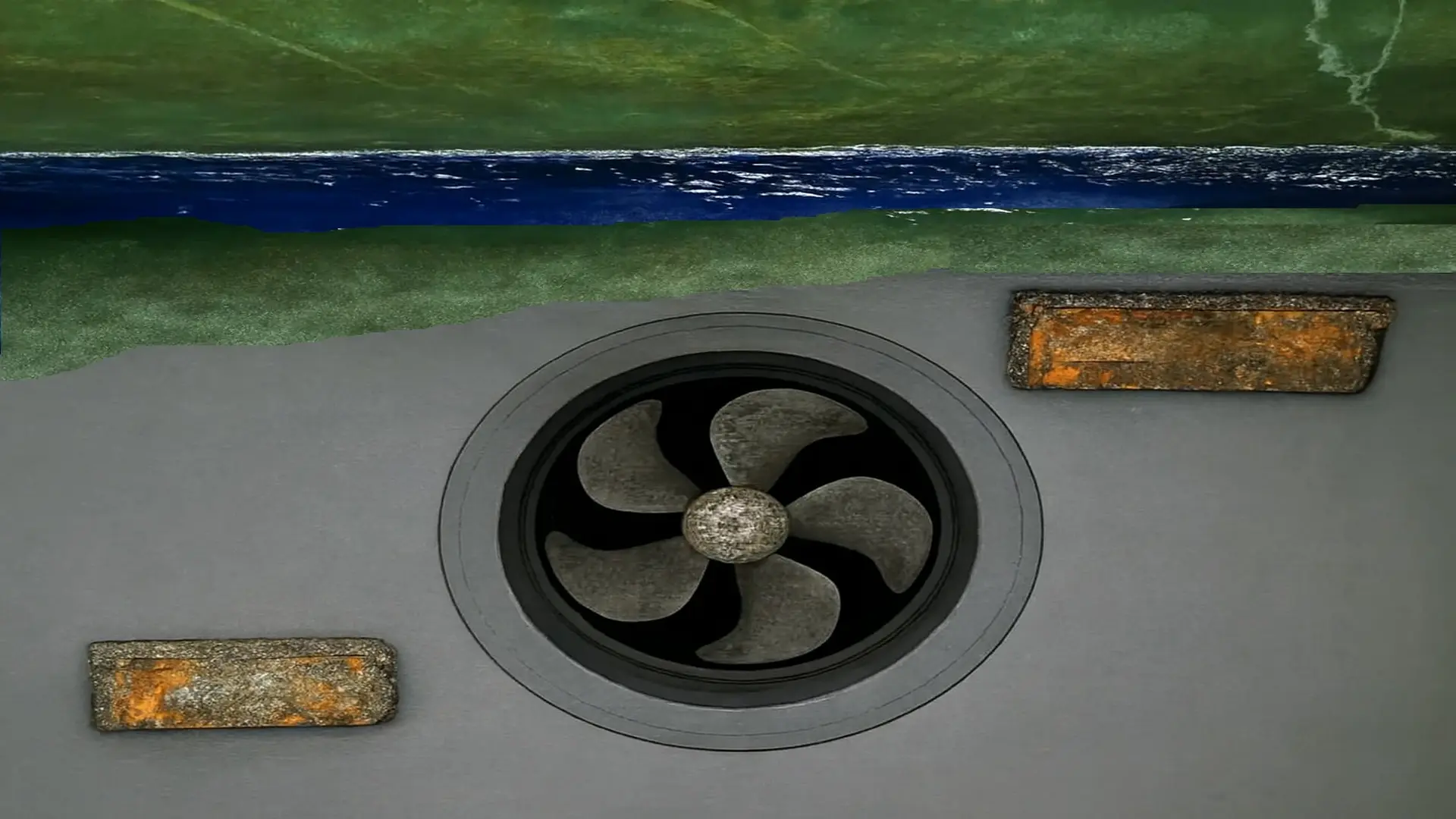
In seawater, sacrificial anode cathodic protection systems are based on the use of alloys that present an adequate electrochemical potential, high current efficiency, and stable consumption behavior. In this context, aluminum anodes, generally formulated as Al–Zn–In alloys, constitute the predominant choice for marine infrastructure. These alloys feature high electrochemical capacity, typically in the range of 2,500 to 2,800 Ah/kg, allowing for a longer service life with less installed mass.
Their operating potential, situated approximately between –1.05 and –1.10 V relative to $Ag/AgCl$, is suitable to guarantee steel polarization without inducing overprotection. When the alloy is correctly activated, anode consumption is uniform and predictable, which has consolidated aluminum anodes as the current standard in offshore applications, including marine platforms, FPSO units, subsea pipelines, and piles exposed to the marine environment.
On the other hand, zinc anodes remain technically valid for use in seawater, although their application has progressively declined. These anodes present a lower electrochemical capacity, on the order of 780 Ah/kg, which implies higher mass requirements to achieve the design life. Their typical potential, ranging between –1.00 and –1.05 V vs Ag/AgCl, is sufficient to provide effective cathodic protection in marine structures. However, environmental restrictions associated with cadmium content and their lower efficiency compared to aluminum alloys have limited their use in modern projects, although they remain an acceptable alternative under certain design conditions.
Selection according to marine conditions
The selection of the anode type within the scope of sacrificial anode control in marine infrastructure constitutes a critical engineering decision, as it directly conditions the system’s capacity to supply protection current adequately, ensures a homogeneous distribution over the metal surface, and reach the design service life under defined environmental conditions. This process must consider variables such as electrolyte resistivity, water temperature, immersion regime, local hydrodynamics, the use of coatings, and the geometry of the protected structure.
In seawater environments with low and relatively stable resistivity, aluminum anodes (formulated as Al–Zn–In activated alloys) represent the preferred technical solution. Their high electrochemical capacity and current efficiency make them especially suitable for permanently submerged structures, such as fixed offshore platforms, FPSO floating units, subsea pipelines, risers, and marine piles. In these applications, the operating potential of aluminum allows for the required steel polarization without inducing overprotection, while its uniform consumption facilitates long-term performance prediction.
Zinc anodes have been used historically in seawater, particularly in port structures, vessels, and smaller-scale metal components where required protection currents are moderate. However, their lower electrochemical capacity implies greater installed masses to achieve comparable design lives, and environmental restrictions associated with their chemical composition have reduced their adoption in new projects. Currently, their use is limited to specific applications where compatibility restrictions or particular regulatory requirements exist.
In port structures and piers, anode selection must adjust to more variable conditions, including splash zones, tides, partial immersion, and the presence of organic coatings. In these cases, aluminum anodes are usually preferred in permanently submerged zones, while the system design must contemplate an adequate spatial distribution of anodes to compensate for local resistivity variations and ensure the continuity of cathodic protection.
In all cases, selection must be integrated into the global design and monitoring criteria defined within sacrificial anode control in marine infrastructure, guaranteeing reliable performance throughout the asset’s operational life.
Why sacrificial anodes and not impressed current?
In marine infrastructure exposed to seawater, cathodic protection via sacrificial anodes is usually preferred over Impressed Current Cathodic Protection (ICCP) systems due to electrochemical, operational, and long-term reliability considerations. While ICCP systems allow for active control of the applied current, their performance can be compromised in marine environments where the structure’s surface is subject to biological growth, calcareous scaling, and marine deposits.
These phenomena, commonly grouped under the term biofouling, tend to shield the impressed current, limiting the effective distribution of electrical flow toward the steel being protected. As a result, underprotected zones may be generated, particularly in complex geometries, shaded areas, or regions of low circulation, where the applied current fails to penetrate uniformly. This condition reduces the global efficiency of the ICCP system and complicates the precise control of the electrochemical potential throughout the structure.
In contrast, sacrificial anode cathodic protection offers a more passive and distributed response, as the current is generated directly at the points where the anode is in contact with the electrolyte. This mechanism favors more uniform steel polarization, even in the presence of biofouling, deteriorated coatings, or local variations in seawater resistivity. Additionally, these systems do not depend on external power sources, rectifiers, or subsea electrical cables, significantly reducing the risks associated with electrical failures, interference, and loss of protection in severe offshore environments.
From an operation and maintenance perspective, sacrificial anode control in marine infrastructure is more robust against dynamic conditions, such as changes in temperature, salinity, or hydrodynamics, and presents lower operational complexity throughout the asset’s life cycle. For these reasons, sacrificial anode systems remain the preferred solution for offshore platforms, subsea structures, piles, and components permanently exposed to the marine environment, where reliability and performance predictability are critical factors.
Key electrochemical parameters in sacrificial anode CP systems
In sacrificial anode cathodic protection systems, performance control is not based on the active adjustment of variables, but on verifying that the anode–structure galvanic coupling operates within the criteria defined by technical standards. Some parameters constitute direct evidence of protection and are measured routinely in the field, while others are evaluated indirectly based on the system’s electrochemical behavior or through physical inspection of the anodes. Additionally, there are parameters that, while not monitored during operation, are essential in the design and validation stage to ensure a predictable service life and reliable performance of the cathodic protection system.
Protection potential (primary criterion)
This is the imposed potential (generally more negative) applied to the metal to bring it to a state where it does not oxidize. It represents the fundamental electrochemical parameter to verify the effectiveness of a sacrificial anode cathodic protection system. It is measured as the potential of the material being protected relative to a reference electrode, normally Ag/AgCl in seawater, and confirms that the metal surface has been polarized to a level that inhibits the anodic dissolution reaction. This parameter is not controlled or adjusted in the field; it is verified as a system acceptance condition and as direct evidence that cathodic protection is effective.
For carbon steel exposed to marine environments, international standards ISO 15589-2 and DNV-RP-B401 establish a protection potential of –0.80 V vs. Ag/AgCl or more negative as the protection criterion. More positive values indicate insufficient protection, while excessively negative potentials can induce hydrogen embrittlement, increase coating disbondment, and accelerate anode consumption.
Galvanic current supplied by the anode
In galvanic systems, the current flowing from the anode to the protected structure is generated naturally by the potential difference between the two materials and the electrolyte resistivity. The evaluation of this current is important to ensure that the protection potential remains stable over time. Unlike impressed current systems, the current is not actively regulated; its sufficiency is inferred from the stability of the measured potential and the anode’s consumption behavior. In advanced evaluations, galvanic current can be estimated through potential drop measurements or design models established by standards such as DNV-RP-B401 and ISO 15589-2.
Electrolyte resistivity and its influence on protection
Electrolyte resistivity represents the medium’s capacity to allow galvanic current flow between the anode and the protected structure. This parameter directly influences current distribution and the effective range of cathodic protection. In low-resistivity environments, such as open seawater, current tends to distribute uniformly; however, in confined zones, sediments, deadlegs, annular spaces, or low-flow areas, higher electrolyte resistance can limit the system’s effectiveness. For this reason, standards recommend considering local resistivity and geometric conditions during design and in-service evaluation.
ISO 15589-2 recognizes that marine environments with low resistivity facilitate the propagation of protective current, while local variations caused by sediments, biofouling, or thermal stratification can alter electrochemical behavior.
Correct characterization of the medium’s resistivity is essential during the design phase, as it impacts anode spacing, required current, and the projected service life of the cathodic protection system.
Metal polarization as functional verification
Steel polarization reflects the progressive displacement of the potential from its free-corrosion value toward the protection potential. In sacrificial anode systems, this process occurs naturally and confirms that the supplied galvanic current is sufficient to reduce the corrosion rate. Polarization verification is performed through in-service potential measurements and historical data comparison, accounting for possible ohmic drop (IR drop) effects and actual operating conditions. Stable polarization is indicative of a functional and correctly dimensioned system.
Consumption and condition of the sacrificial anode
Monitoring anode consumption is fundamental to confirm that the system is active and performing according to design. This follow-up includes evaluating mass loss, remaining geometry, and the uniformity of anode wear. Homogeneous consumption indicates proper performance, while localized consumption, surface passivation, or partial detachment of the anode are red flags that can compromise protection. Analyzing the anode’s condition allows for the estimation of the system’s remaining service life and the planning of interventions before cathodic protection is lost.
Electrochemical efficiency of the anode (design parameter)
The electrochemical efficiency of the anode represents the fraction of the consumed material that is effectively transformed into useful current for cathodic protection. This parameter is inherent to the system design and is not adjusted in the field, but it is a determining factor for the service life and reliability of the protection. DNV-RP-B401 technical standards establish efficiency values based on the anode type and exposure environment, with common efficiencies around 90% for aluminum anodes and approximately 95% for zinc anodes, while magnesium anodes show greater variability.
High efficiency ensures uniform consumption, stable current, and predictable system life. Conversely, phenomena such as passivation, irregular consumption, or metallurgical defects reduce efficiency and compromise system reliability, integrity, and life, leading to premature failure or unprotected areas.
Comparative table of electrochemical parameters in sacrificial anode CP
| Electrochemical parameter | What is monitored | Technical objective | Regulatory reference |
| Steel potential | Potential vs Ag/AgCl | Confirm effective cathodic protection | ISO 15589-2 / DNV-RP-B401 |
| Galvanic current | Natural anode–steel current | Maintain adequate polarization | DNV-RP-B401 |
| Anode consumption | Mass loss and geometry | Estimate service life and activity | AMPP SP0176 |
| Steel polarization | Potential displacement | Confirm corrosion reduction | AMPP |
| Electrolyte resistivity | Conductivity of the medium | Guarantee current distribution | ISO 15589-2 |
| Anode efficiency | Useful generated current | Reliable design and service life | DNV-RP-B401 |
The following video highlights the importance of each of these electrochemical parameters in the proper performance of cathodic protection systems using sacrificial anodes.
Technical-scientific evidence and regulatory support
Hien (2024) emphasizes the need to follow international standards such as DNV‑RP‑B401 and practices recommended by AMPP/NACE for the design, installation, and monitoring of sacrificial anodes. Regulatory compliance guarantees not only electrochemical efficiency but also operational reliability and the sustainability of protected marine infrastructures1.
Studies by Bell et al. (2020) and Wen et al. (2020) demonstrate that aluminum alloys activated with Zn and In offer consistent and efficient performance in marine environments, ensuring uniform protection of steel even in the face of variations in resistivity and biofouling. This confirms that aluminum anodes remain the preferred choice for offshore platforms, subsea pipelines, and piles2.
Silva Campos et al. (2022) highlight that the correct selection of alloys and the addition of activating elements, such as indium, is critical to avoid surface passivation and maintain uniform anode consumption. This aspect ensures a more predictable service life and reduces risks of overprotection or premature system failures3.
Wen and collaborators developed a numerical modeling study using the MIKE21 hydrodynamic software, integrating representative oceanic parameters such as waves and tidal currents, with the objective of evaluating the dispersion and diffusion range of materials released by aluminum sacrificial anodes. The results confirmed that the diffusion behavior of aluminum anode corrosion products is strongly controlled by local hydrodynamic conditions, providing a technical basis for evaluating their environmental impact and compatibility with energetically active marine environments4.
Standards for Sacrificial Anode Quality Control in Seawater
The reliable performance of sacrificial anodes depends on rigorous quality control, ensuring chemical composition, density, purity, electrochemical efficiency, and uniform consumption. The most relevant standards for the manufacturing and verification of marine anodes include:
- ISO 15589‑2: Petroleum and natural gas industries: Cathodic protection of pipeline transportation systems . Part 2: Offshor pipeliness:
- Defines current density criteria, protection potential, and minimum service life for subsea structures protected by sacrificial anodes.
- It establishes design parameters and tests to ensure that anodes maintain effective protection under severe marine conditions.
- DNV‑RP‑B401: Cathodic Protection Design:
- Offers practical guidelines for the selection, installation, and monitoring of anodes.
- It includes recommendations on mass, geometry, and distribution of anodes to achieve uniform protection in complex structures.
- AMPP (formerly NACE) SP0176 and SP0169:
- SP0176 addresses practices for corrosion control under coatings and cathodic protection applicable to marine and offshore environments.
- SP0169 provides guidelines for the design and verification of cathodic protection systems in submerged and buried structures, including efficiency tests and service life monitoring.
- ASTM B418 and ASTM G97:
- Establish specifications for the chemical composition of aluminum, zinc, and magnesium alloys used as sacrificial anodes.
- They include tests for density, purity, and electrochemical potential to ensure uniformity and current efficiency.
Compliance with these standards allows sacrificial anodes installed in marine infrastructures to meet recommended current and voltage parameters, reach their design life, and provide reliable corrosion protection, even in severe environments where biofouling and electrolyte variability could affect less robust systems.
Conclusions
The performance and reliability of cathodic protection systems using sacrificial anodes depend directly on compliance with recognized international standards, such as DNV-RP-B401 and AMPP/NACE recommended practices. Systematic application of these regulatory frameworks not only ensures the electrochemical efficiency of the system but also reduces operational uncertainty, improves service life predictability, and contributes to the long-term sustainability of marine infrastructure.
Technical evidence confirms that aluminum alloys activated with zinc and indium constitute the most robust solution for marine environments, providing uniform protection of steel even under varying conditions of resistivity, biofouling, and electrolyte dynamics. This consistent behavior reinforces their use as the preferred option for offshore platforms, subsea pipelines, and load-bearing structures exposed to seawater.
Furthermore, the correct selection of the anode’s chemical composition and the control of activating elements are critical to avoid passivation phenomena, irregular consumption, or overprotection. The proper incorporation of activators such as indium allows for maintaining homogeneous anode consumption, improving system reliability, and minimizing the risk of premature failure, consolidating cathodic protection as an integrity management tool rather than just a design requirement.
References
- Hien, N. T. L. (2024). VPI’s sacrificial anodes for protection against corrosion. Petrovietnam Journal. https://doi.org/10.25073/petrovietnam%20journal.v6i0.320.
- Bell, A. M., Regnery, J., Schmid, M., Reifferscheid, G., & Ternes, T. (2020). Does galvanic cathodic protection by aluminum anodes impact marine organisms? Environmental Sciences Europe, 32, Article 157. https://doi.org/10.1186/s12302-020-00441-3.
- Silva Campos, M. R., Blawert, C., Scharnagl, N., Störmer, M., & Zheludkevich, M. L. (2022). Cathodic Protection of Mild Steel Using Aluminium‑Based Alloys. Materials, 15(4), 1301. https://pmc.ncbi.nlm.nih.gov/articles/PMC8878858/.
- Wen, C.‑C., et al. (2020). Sacrificial anode cathodic protection in marine environments. Journal of Environmental Protection, 11, 622–635.
Frequently Asked Questions (FAQs)
Why are aluminum anodes preferred in seawater?
Because they offer high electrochemical capacity, good current efficiency, and an appropriate potential to protect steel without the risk of overprotection.
When are zinc anodes used in marine environments?
They are used in specific applications with moderate current requirements, although their use has decreased compared to aluminum alloys.
Why are magnesium anodes not used in seawater?
Due to their excessively negative potential, which can cause overprotection and accelerated anode consumption.
How does marine biofouling influence the selection of the cathodic protection system?
Biofouling can limit the effectiveness of impressed current systems, while sacrificial anodes maintain more uniform protection.
How is the performance of sacrificial anodes controlled in service?
Through subsea inspections, electrochemical potential measurements, and evaluation of anode consumption.
Why is the use of indium important in aluminum anodes for seawater?
Indium prevents aluminum passivation, stabilizes the potential, and improves the efficiency and uniformity of anode consumption.