
Table of Contents
- What is corrosion under insulation and why is it a risk?
- At what temperature does corrosion under insulation occur?
- Damage mechanisms associated with corrosion under insulation
- How is CUI detected without removing the insulation?
- Advanced technologies for in-field CUI inspection
- What is the best way to prevent corrosion under insulation?
- Conclusions
- References
- Frequently asked questions (FAQs)
- What are the first indirect field indicators of CUI?
- Can corrosion under insulation develop in new systems?
- How often should CUI risk be evaluated in an insulated asset?
- Is it possible to prioritize critical CUI areas without removing insulation?
- How does CUI impact the remaining life of industrial piping?
Corrosion under insulation (CUI) is one of the most complex and underestimated damage mechanisms in industrial facilities. It develops outside the visual field, progresses silently, and when it becomes evident, it often does so through sudden failures with direct impact on safety, the environment, and operational continuity. In industrial piping and thermally insulated equipment, the combination of moisture, temperature, and design creates ideal conditions for accelerated material degradation.
From a mechanical integrity perspective, CUI represents a critical risk because it bypasses traditional inspection and maintenance schemes. Systematic removal of insulation is costly, intrusive, and in many cases impractical. As a result, the evolution of non destructive testing and the adoption of advanced technologies have become a strategic axis to identify, assess, and manage this hidden damage, transforming how organizations address corrosion under insulation in complex industrial environments
What is corrosion under insulation and why is it a risk?
Technical definition of corrosion under insulation (CUI)
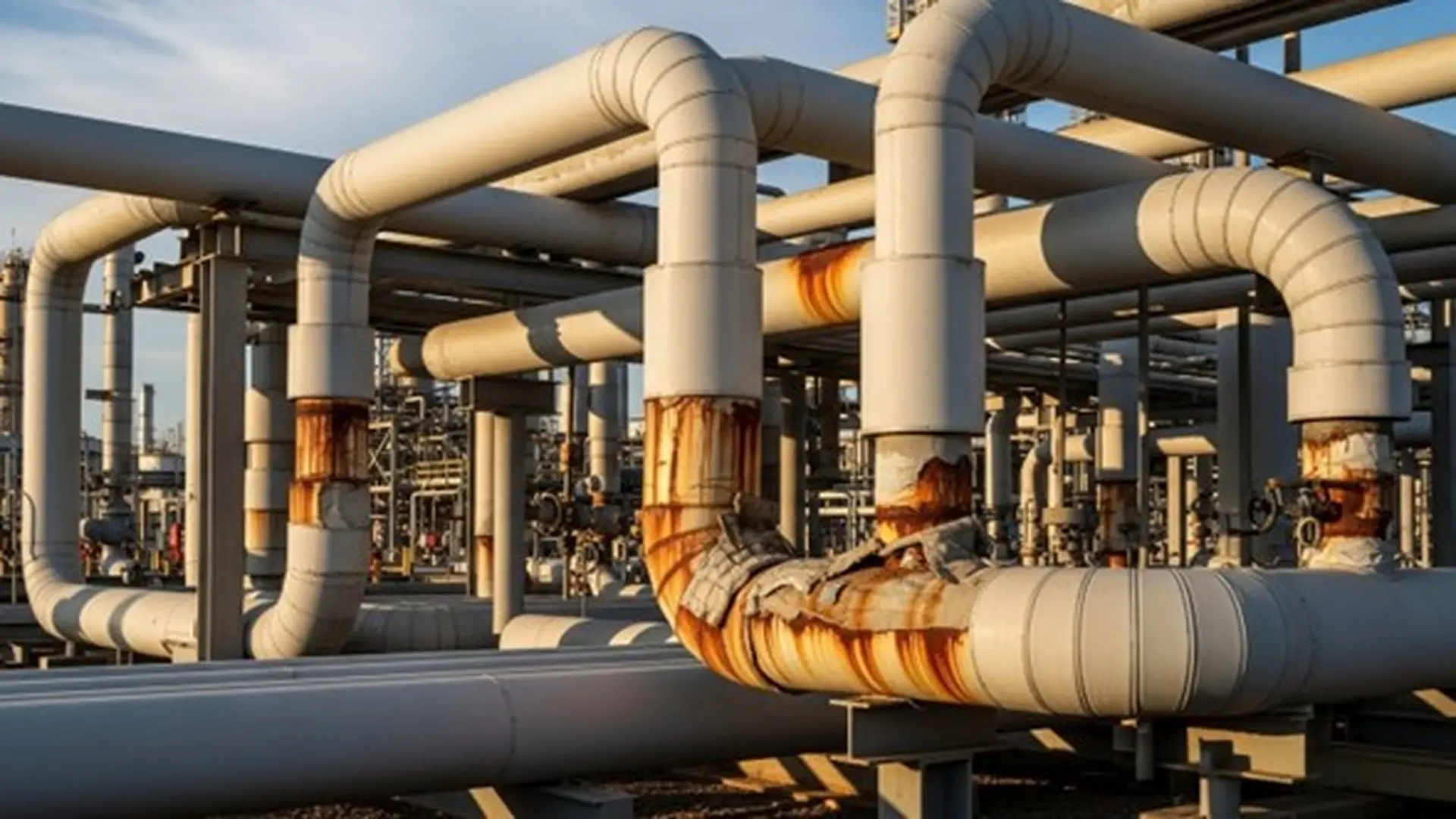
Corrosion under insulation, commonly referred to as CUI (Corrosion Under Insulation), is a damage mechanism that occurs on the external surface of pipes, vessels, and metallic equipment covered with thermal insulation. It develops when moisture, originating from rain, condensation, wash-down activities, or process leaks, penetrates the insulation system and becomes trapped between the insulating material and the metal surface.
Because it is not visible, corrosion progresses silently, driven by operating temperature, oxygen availability, and in some cases contaminants such as chlorides or sulfur compounds. This phenomenon may manifest as general corrosion, localized pitting, or accelerated attack in specific areas such as welds, supports, and insulation penetrations.
Why CUI is a challenge for mechanical integrity
From a mechanical integrity standpoint, CUI represents a high-impact hidden risk. Developing outside the visual field, it often escapes conventional inspection programs based on direct observation. Standards such as API 570 recognize corrosion under insulation as a critical damage mechanism in piping systems. In practice, API 570 provides specific guidance for identifying, assessing, and managing CUI in insulated lines, while API 581 incorporates it as a relevant factor in Risk Based Inspection (RBI) analyses.
The difficulty in detecting CUI in a timely manner significantly increases the likelihood of catastrophic failures, including leaks, ruptures, and loss of containment, with severe consequences for safety, the environment, and operational continuity
At what temperature does corrosion under insulation occur?
Critical temperature ranges in thermally insulated systems
Corrosion under insulation does not occur uniformly across all temperatures; instead, it is concentrated within specific thermal ranges where the presence of moisture is more likely. In carbon steels, CUI tends to develop most severely between approximately 25 °C and 120 °C, a range in which evaporation is not rapid enough to eliminate trapped moisture. In stainless steels, particularly those susceptible to stress corrosion cracking, the critical range may extend up to 150 °C, especially in the presence of chlorides. These temperature intervals make equipment operating intermittently or subject to thermal fluctuations especially vulnerable to CUI.
Influence of insulation type and operating cycles
The type of thermal insulation plays a decisive role in the severity of CUI. Materials with high water absorption capacity or poor drainage characteristics promote retained moisture against the metal surface. In addition, operating cycles involving heating and cooling encourage condensation within the insulation system, creating repetitive wet–dry conditions that accelerate corrosion processes. For this reason, effective CUI management requires understanding not only the operating temperature, but also the thermal and environmental behavior of the system over time.
Damage mechanisms associated with corrosion under insulation
General and localized corrosion under insulation
Corrosion under insulation may manifest through different damage mechanisms, the severity of which depends on system geometry, material composition, and environmental conditions. General corrosion occurs when moisture is distributed relatively uniformly beneath the insulation, leading to progressive and widespread wall-thickness loss.
In contrast, localized corrosion, such as pitting or concentrated attack, develops at specific locations where water remains trapped for longer periods, for example, at supports, welds, insulation penetrations, or areas with mechanical damage. These localized attacks are particularly dangerous because they can rapidly reduce remaining wall thickness without obvious external indications, significantly increasing the risk of unexpected leaks.
CUI in carbon steels and stainless steels
In carbon steels, CUI typically evolves as uniform or localized corrosion, accelerated by the presence of oxygen and contaminants dissolved in the retained moisture. In stainless steels, the issue takes on an additional dimension: the presence of chlorides beneath insulation can induce stress corrosion cracking (SCC), even in materials generally considered corrosion resistant. From a Risk Based Inspection (RBI) and Asset Integrity Management (AIM) perspective, understanding these mechanisms is essential to prioritize equipment, define inspection intervals, and prevent degradation that could compromise the mechanical integrity of the system.
How is CUI detected without removing the insulation?
Limitations of traditional visual inspection
Visual inspection, although a fundamental tool in maintenance programs, presents significant limitations when dealing with corrosion under insulation. Because the damage is hidden behind thermal insulation, external signs are often delayed or completely absent. Partial removal of insulation, in addition to being costly and disruptive, provides only localized information and may overlook critical areas where corrosion progresses silently, highlighting the technical challenges associated with assessing CUI. These limitations have driven the adoption of techniques capable of assessing the condition of the metal without compromising operations or the integrity of the insulation system.
Non destructive testing applied to CUI
Non destructive testing (NDT) and advanced inspection technologies have evolved to address this challenge by incorporating methods that allow the detection of CUI indicators without removing insulation.
- Infrared thermography in thermal insulation: It is used to identify thermal anomalies on the surface of insulation that may indicate the presence of moisture, loss of thermal efficiency, or conditions conducive to CUI, and is particularly useful as a screening tool.

- Pulsed Eddy Current inspection: Pulsed Eddy Current (PEC) techniques enable the evaluation of wall-thickness loss through insulation, providing quantitative information on metal condition in specific areas without dismantling the insulation.
- Advanced ultrasonics: PAUT and TOFD: Advanced ultrasonic techniques such as PAUT and TOFD, widely used within modern mechanical integrity programs, facilitate the detection and characterization of localized damage, delivering detailed images of material condition and strengthening decision-making within mechanical integrity programs.
The following video provides a practical overview of how multiple non destructive testing techniques are applied in the field to detect and manage corrosion under insulation, including Pulsed Eddy Current (PEC), guided ultrasonic inspection, computed radiography, fluoroscopy, and API 570 visual inspection. Video courtesy of MISTRAS Group, one source for asset protection solutions. All rights reserved to the original content owner.

Corrosion Under Insulation (CUI) Program.
Advanced technologies for in-field CUI inspection
Guided ultrasonic monitoring in industrial piping
Why is guided ultrasonics a key technology for CUI detection? Guided ultrasonic monitoring enables long-range inspection of insulated industrial piping, allowing early detection of corrosion under insulation (CUI) without removing insulation or disrupting operations.
Guided ultrasonic monitoring, also known as Guided Wave Testing (GWT), represents one of the most mature and robust solutions for detecting corrosion under insulation (CUI) in long runs of industrial piping. Unlike point-based inspection methods, this technology enables long-range inspections through the controlled propagation of low-frequency ultrasonic waves along the pipe axis, identifying areas of wall-thickness loss, localized corrosion, or geometric defects without removing the insulation.
Within this field, specialized companies such as Guided Ultrasonics Limited have developed guided wave inspection systems using two complementary approaches:
- Screening systems, focused on the rapid identification of areas showing signs of degradation over long pipe lengths, making them ideal for prioritization within RBI programs.
- Scanning systems, including short-range quantitative methods that enable precise measurement of remaining wall thickness and detailed corrosion characterization in specific areas, even with limited access and minimal surface preparation.
This combination of extended-range inspection and quantitative verification makes guided ultrasonics a strategic tool for managing CUI in insulated, elevated, or difficult-to-access lines, reducing costs, intervention time, and overall risk exposure.
Computed radiography and emerging techniques
As a complement to guided ultrasonics, computed radiography applied to insulated industrial piping has gained relevance in scenarios requiring detailed volumetric assessment of damage. These techniques allow the identification of localized corrosion, section loss, and density variations associated with CUI without fully removing the insulation. Although their field application remains selective due to operational and safety considerations, their integration with guided techniques and digital analysis expands the range of solutions available for advanced in-field inspection.
Moisture monitoring and embedded sensors in insulation
Humidity sensors and continuous remote monitoring
Beyond periodic inspection, the shift toward continuous monitoring has redefined how corrosion under insulation is managed. The use of humidity sensors and permanently installed systems enables the detection of CUI precursor conditions, such as water ingress or prolonged moisture retention, before significant wall-thickness loss occurs. In advanced solutions, these sensors are integrated with permanent transducer rings, capable of generating and collecting structural condition data continuously, even in harsh operating environments.

Integration with predictive maintenance
When data from sensors and monitoring systems, including humidity sensors embedded in insulation systems, are connected to digital platforms, the approach evolves toward predictive maintenance. In architectures such as those implemented by GUL, collected information can be transmitted wirelessly, processed using specialized analytical software, and correlated with operating variables such as temperature, pressure, or changes in operating regime.
This integration enables the anticipation of degradation trends, optimization of inspection intervals, and support for risk-based decision-making within mechanical integrity and RBI programs, transforming CUI from a reactive issue into a condition that can be managed in near real time.
What is the best way to prevent corrosion under insulation?
Selection of coatings for CUI
Effective prevention of corrosion under insulation (CUI) begins with the correct selection of coatings specifically designed to operate in humid environments with temperature variations and limited access. The most commonly used coatings for CUI include high thermal resistance epoxies, glass flake reinforced systems, phenolics, and protective coatings for CUI capable of maintaining their adhesion and barrier properties even under repetitive wet and dry cycles.
These systems must exhibit low water permeability, chemical resistance, and thermal stability within the equipment’s operating range. Beyond the coating type itself, surface preparation quality and correct application are decisive factors, particularly when combined with screening methods such as infrared thermography to identify areas susceptible to moisture ingress.
Insulation design, drainage, and management
The design of the insulation system is as critical as the coating selection. Effective management includes efficient vapor barriers, proper slopes, and drainage systems that prevent water accumulation, as well as reliable sealing at penetrations, supports, and discontinuities. Selecting insulation materials with low moisture absorption and implementing periodic inspections of the insulation system significantly reduce the likelihood of water ingress and retention. Together, these practices transform CUI prevention into an integrated approach where design, materials, and operation act in a coordinated manner.
Managing corrosion under insulation within RBI programs
Integration of CUI in API 581 and quantitative RBI
In modern Risk Based Inspection (RBI) programs, corrosion under insulation should not be treated as a generic damage mechanism, but as one with distinct behavior and a high level of associated uncertainty. API 581 recognizes this complexity by modeling CUI through specific factors that directly influence the probability of failure, such as temperature range, insulation type, environmental exposure, coating effectiveness, and moisture ingress history.
Within a quantitative RBI framework, these factors allow degradation curves and damage scenarios to be adjusted, differentiating assets with seemingly similar insulation but vastly different risk profiles. The inclusion of data from advanced inspection and continuous monitoring reduces reliance on conservative assumptions, improves analytical accuracy, and enables dynamic prioritization based on actual condition rather than age or service alone.
CUI as a critical variable in mechanical integrity
From a mechanical integrity perspective, CUI acts as a hidden risk multiplier, as it can evolve outside normal inspection cycles and manifest abruptly. Proper management of CUI within RBI directly affects the reliability of inspection intervals, mitigation planning, and maintenance resource allocation. Treating CUI as a critical variable requires linking inspection, monitoring, coatings, and insulation design within a unified decision framework. This integrated approach enables early anticipation of significant wall-thickness loss, reduces unexpected leak events, and aligns integrity strategies with long-term safety, availability, and asset performance objectives.
Conclusions
Corrosion under insulation is not merely a technical issue; it is a measure of maturity in mechanical integrity programs. Its hidden nature, silent progression, and potential to trigger sudden failures force organizations to move beyond reactive approaches and adopt a more comprehensive view of risk. It is now clear that CUI cannot be effectively managed through sporadic inspections or isolated solutions alone, but through the intelligent combination of sound design, appropriate coatings, advanced non destructive testing, and continuous monitoring.
The true differentiator lies in the ability to anticipate, to identify precursor conditions, interpret data within the operational context, and make informed decisions before degradation compromises safety or operations. Integrating CUI into quantitative RBI frameworks and predictive maintenance strategies transforms a historically underestimated damage mechanism into a controllable variable. In this balance between technology, engineering, and expert judgment lies the foundation of effective and sustainable corrosion under insulation management.
References
- API (American Petroleum Institute). (2021). API Recommended Practice 583: Corrosion Under Insulation and Fireproofing. American Petroleum Institute.
- NACE International. (2016). Corrosion Under Insulation (CUI): Guidelines for Inspection and Mitigation. NACE International.
Frequently asked questions (FAQs)
What are the first indirect field indicators of CUI?
Early indicators are typically external to the metal, such as deterioration of the insulation jacketing, rust staining, persistent moisture, loss of thermal efficiency, or abnormal changes in surface temperature. While these signs do not confirm corrosion, they justify a more in-depth technical evaluation.
Can corrosion under insulation develop in new systems?
Yes. CUI can initiate shortly after commissioning if there are installation defects, inadequate insulation sealing, poor drainage, or early exposure to moisture. Asset age alone is not a determining factor.
How often should CUI risk be evaluated in an insulated asset?
CUI risk should be reviewed periodically within the RBI program, particularly when operating conditions, environment, insulation systems, or inspection history change. There is no single fixed interval; frequency depends on the asset’s risk profile.
Is it possible to prioritize critical CUI areas without removing insulation?
Yes. Through non destructive testing techniques, risk analysis, and historical data, it is possible to identify areas with a higher likelihood of CUI, such as supports, penetrations, diameter changes, or zones with frequent thermal cycling, optimizing inspection resources.
How does CUI impact the remaining life of industrial piping?
CUI can significantly accelerate wall-thickness loss without being detected, reducing remaining life in a non-linear manner. Effective CUI management is therefore essential to avoid overly optimistic assessments that could compromise system safety and reliability.