
Table of Contents
- What Causes Corrosion Under Insulation in ASTs?
- Applicable Standards for CUI Control in ASTs
- How Can CUI Be Detected Without Removing Insulation?
- Solutions and Strategies to Control Corrosion Under Insulation
- Critical CUI Areas in ASTs
- Example of an Integrated CUI Control Program for Tanks
- Conclusions
- References
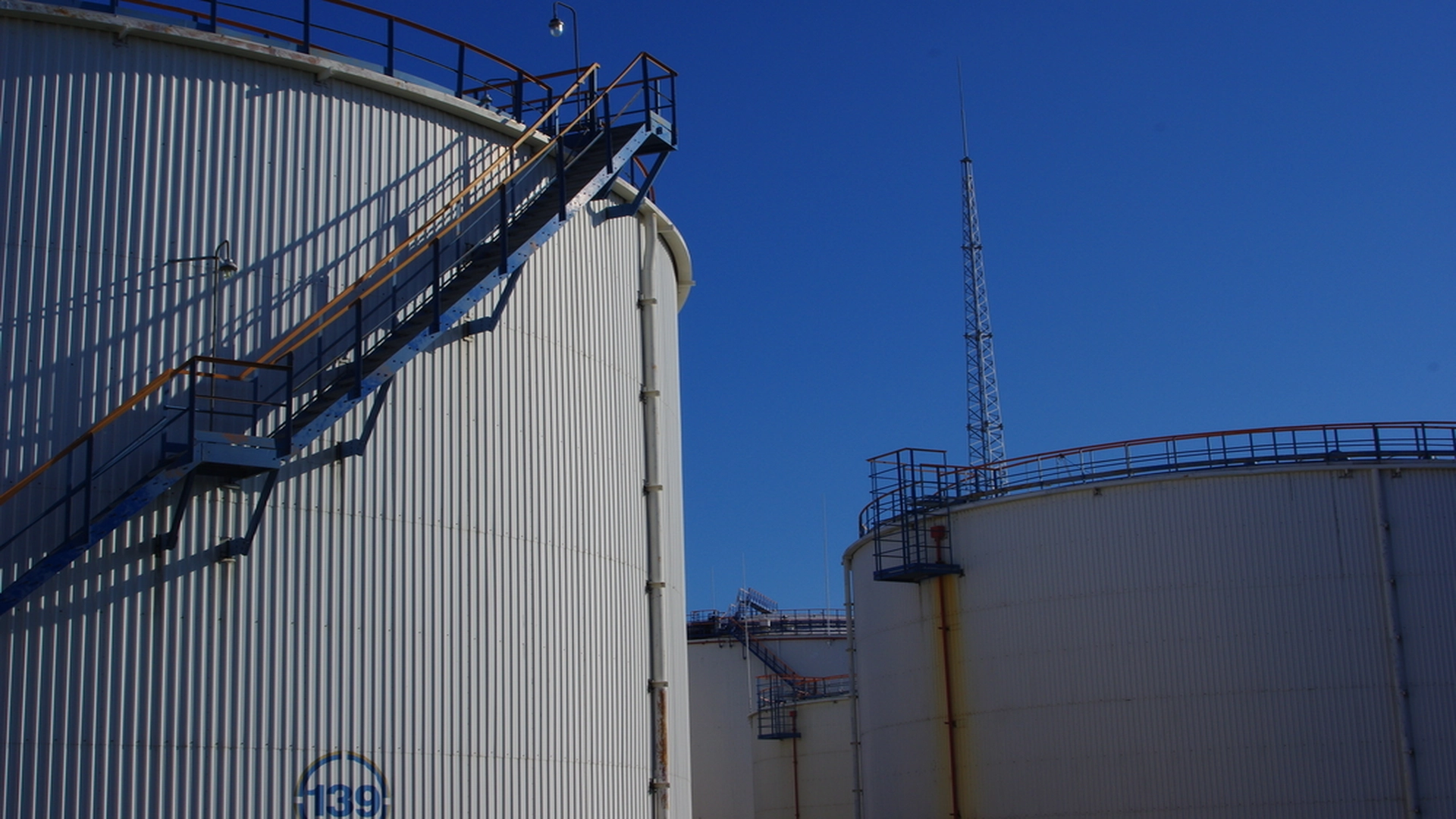
Corrosion under insulation has become one of the most critical failure mechanisms in the oil, gas, and chemical industries, affecting equipment such as aboveground storage tanks (ASTs). Damage associated with CUI leads to economic losses, operational risks, and compromised mechanical integrity. This article analyzes its causes, mechanisms, advanced detection methods without insulation removal, and solutions based on API 575, API 653, and NACE SP0198, providing a practical and up-to-date guide for operators, inspectors, and reliability professionals.
What Causes Corrosion Under Insulation in ASTs?
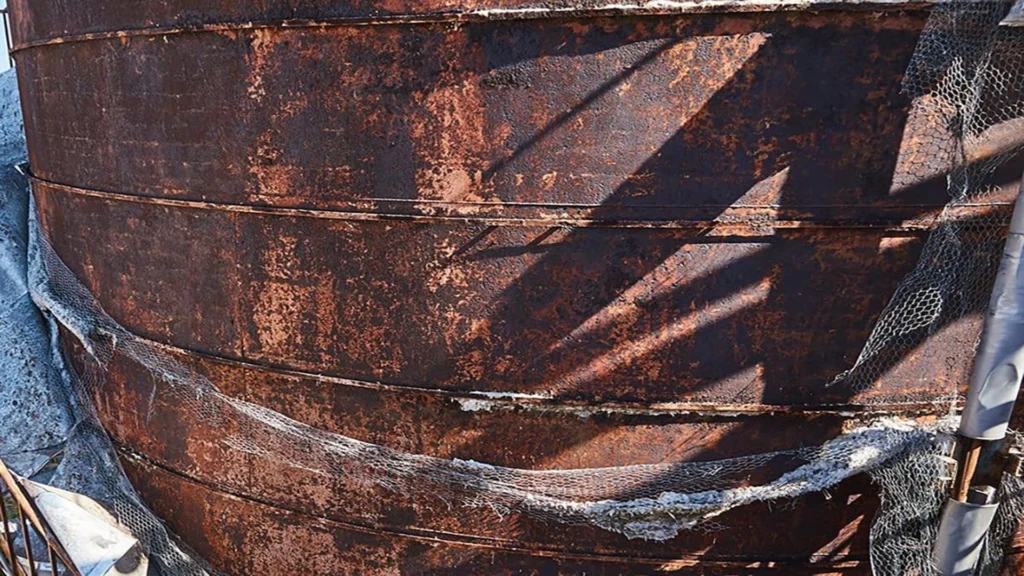
Corrosion under insulation (CUI) in aboveground storage tanks (ASTs) is an aggressive and silent phenomenon that occurs when moisture, salts, or contaminants penetrate the tank’s thermal insulation and become trapped against the metal surface. Although tanks are designed for harsh conditions, the combination of metal, water, air, and temperature transforms the environment beneath the insulation into a highly corrosive one.
The main factors that trigger CUI in aboveground storage tanks are described below.
Moisture Ingress and Sealing Failures
Thermal insulation is exposed to rain, dew, industrial washing, condensation, and spills. When vapor barriers degrade or seals crack, water penetrates and becomes trapped, especially in low-slope areas such as the roof or the upper shell of the tank. Over time, this moisture, combined with oxygen, accelerates the corrosion process.
Critical Temperature Range
CUI is most severe in carbon steel operating at external temperatures between –4 °C and 175 °C, and in austenitic and duplex stainless steels between 50 °C and 175 °C, or under cyclic conditions that reach the atmospheric dew point. Many ASTs operate within this range, particularly those storing hot hydrocarbons, asphalt, sulfur, or refined products.
Effect of Thermal Cycles
Temperature fluctuations cause expansion and contraction of the insulation, creating micro-openings through which moisture enters. These thermal cycles also generate internal condensation, a key factor identified in API 575 as one of the main triggers of CUI.
Presence of Chlorides and Sulfates
Salts increase the conductivity of trapped water and accelerate corrosion. Coastal environments or industrial areas with chemical aerosols show significantly higher deterioration rates.
Inadequate Insulation Materials
Hygroscopic insulation materials, such as mineral wool without proper jacketing, retain water and prolong steel exposure to humid conditions. NACE SP0198 details which materials reduce CUI risk and which increase it.
Designs That Promote Water Accumulation
Poorly drained trays, improperly designed supports, penetrations, nozzles, and welded joints in the insulation system create areas where water stagnates and corrosion initiates.
Lack of Preventive Inspections
CUI progresses undetected. By the time it is identified externally, the metal may have already lost 30 % to 80 % of its thickness. This directly affects mechanical integrity and can lead to deformation, local buckling, or leaks.
Applicable Standards for CUI Control in ASTs
The industry has developed specific standards defining how to control and mitigate corrosion under insulation in aboveground storage tanks. The main ones include:
API 575: Inspection of Atmospheric Storage Tanks
API 575 establishes clear guidelines for inspection, damage evaluation, deterioration mechanisms, and CUI considerations in ASTs. Its scope includes inspection frequency, thickness evaluation criteria, and recommended procedures for thermally insulated tanks.
API 653: Tank Inspection, Repair, Alteration, and Reconstruction
This standard complements API 575 by defining mandatory requirements for internal and external inspections and tank repairs. In the context of CUI, API 653 specifies the minimum insulation removal required and acceptance criteria when thickness loss due to corrosion is detected.
NACE SP0198: Control of Corrosion Under Thermal Insulation
This is the most specific standard for CUI control. It describes recommended insulation materials, surface treatments, CUI-resistant coatings, drainage systems, moisture barriers, and inspection methods. It also identifies critical temperature ranges for CUI and risk factors by tank type.
How Can CUI Be Detected Without Removing Insulation?
Inspecting corrosion under insulation without disturbing the thermal insulation is essential to avoid high costs and downtime. Thanks to advanced NDT technologies, it is possible to evaluate metal thickness and detect affected areas without dismantling insulation.
Infrared Thermography
One of the most widely used predictive monitoring methods. It identifies abnormal thermal patterns associated with trapped moisture, hot spots, thermal bridges, and insulation degradation.
Localized Ultrasonic Inspection with External Scanners
Although it requires small insulation windows, it allows validation of PEC findings and detailed inspection of critical areas identified during screening.
Pulsed Eddy Current (PEC)
Pulsed Eddy Current is one of the most effective technologies for measuring steel thickness through insulation without removing it.
Guided Wave Ultrasonics (GWUT)
These waves travel long distances and detect corrosion or discontinuities remotely from the measurement point. GWUT is useful for early detection of CUI. Guided wave–based methods (Pipescan, Ringscan, and other industrial variants) complement infrared thermography and PEC in detecting corrosion under insulation. Companies with consolidated experience in these techniques, such as Guided Ultrasonic, have improved assessment accuracy in insulated and hard-to-access areas, making a significant contribution to AST mechanical integrity programs.
Profile Radiography
Similar to conventional radiography, but it produces images that reveal geometry and corrosion profiles or material loss along a surface.
Fluoroscopic Imaging
A radiographic variant that provides real-time images of the internal structure of pipes or tanks. It can detect corrosion, erosion, or sediment buildup in real time using analytical software.
Moisture Meters
Measure water content within insulation or base material, generally using non-invasive methods or insertable probes.
Neutron Backscatter Devices
Emit neutrons that interact with hydrogen in water, indicating the presence of moisture and allowing determination of water content within insulation layers.
Integrated Predictive Monitoring
For high-value tanks, technologies may be integrated, including:
- Embedded moisture sensors.
- Smart coatings with visual indicators.
- Corrosion models based on operational data.
Predictive monitoring improves reliability and reduces costs associated with unplanned failures.
Solutions and Strategies to Control Corrosion Under Insulation
Managing CUI in aboveground storage tanks requires an integrated approach combining design, inspection, advanced coatings, and predictive maintenance.
Proper Thermal Insulation Selection per NACE SP0198
NACE SP0198 recommends moisture-resistant, non-hygroscopic insulation materials such as:
- Reinforced calcium silicate.
- Cellular glass insulation.
- Treated aerogels.
- Insulation systems with multilayer vapor barriers.
Proper selection drastically reduces the probability of moisture ingress.
Design to Prevent Water Accumulation
Best practices include:
- Adequate slopes on trays.
- Hermetic sealing of nozzles and penetrations.
- Use of jacketed top covers
- Incorporation of drains and vents.
These recommendations are also discussed in API 575.
CUI-Resistant Coatings
Applying coatings for CUI protection in insulated tanks provides superior protection in high-temperature areas. Coatings must be selected according to substrate temperature and materials exposed to CUI. Tables 1 and 2 of NACE SP0198 specify these parameters.
Recommended coatings include:
- High thermal resistance coatings.
- Coatings suitable for thermal cycling.
- Materials compatible with temperatures above 200 °C.
- Thick-film systems (modified epoxies, silicates, phenolic epoxies)
Applying certified coatings can reduce CUI damage by up to 80 %.
Inspections per API 653
API 653 establishes inspection frequency and scope for ASTs, including:
- Detailed external inspection every 5 years.
- CUI evaluation in high-risk areas.
- Validation of results using PEC and UT.
- Repairs based on minimum thickness criteria and structural calculations.
Predictive Monitoring Programs
These programs may include:
- Periodic infrared thermography.
- Pulsed eddy current mapping.
- Digital moisture detection.
- Predictive corrosion models.
This approach optimizes inspection budgets and reduces unnecessary interventions.
Risk-Based Inspection and Integrity Management (RBI / RBIM)
RBI prioritizes inspections based on probability and consequence of failure, focusing on what, when, and how to inspect. RBIM is a comprehensive risk-based integrity management system that addresses why, for what purpose, and what comes next, identifying priority areas based on failure probability and consequences. Tanks exposed to CUI under cyclic temperatures should be inspected more frequently.
Timely Replacement of Thermal Insulation
Degraded insulation should be replaced before it loses functionality. It is recommended to use CUI-certified materials and reinforced vapor barriers with multilayer aluminum.
Critical CUI Areas in ASTs
The highest CUI incidence is found in:
- Upper zones exposed to rain.
- Roof-to-shell interfaces.
- Nozzles, penetrations, and supports.
- Ladders and platforms attached to tanks.
- Firefighting foam rings.
- Drainage zones and horizontal trays.
Example of an Integrated CUI Control Program for Tanks
A comprehensive program includes:
- Initial assessment per API 575.
- Identification of insulation materials and condition.
- Thermographic mapping to identify internal moisture.
- 100 % tank screening using PEC.
- UT validation in critical areas.
- Application of CUI-resistant coatings.
- Insulation replacement per NACE SP0198.
- API 653 inspection plan every 5 years or less based on risk.
- Annual predictive monitoring.
This approach ensures safety and optimizes costs.
Conclusions
Corrosion under insulation is one of the most severe deterioration mechanisms in aboveground storage tanks and can compromise mechanical integrity if not properly controlled. The application of API 575, API 653, and NACE SP0198, together with technologies such as infrared thermography and pulsed eddy current (PEC), enables detection and management of CUI without insulation removal. Proper insulation selection, the use of modern CUI-resistant coatings, and predictive monitoring implementation ensure safer and more reliable operation.
References
- American Petroleum Institute. (2020). API 653: Tank Inspection, Repair, Alteration, and Reconstruction (5th ed.). API Publishing Services.
- American Petroleum Institute. (2014). API 575: Inspection of Atmospheric and Low-Pressure Storage Tanks (3rd ed.). API Publishing Services.
- NACE International. (2017). NACE SP0198: Control of Corrosion Under Thermal Insulation and Fireproofing Materials. NACE International.
- American Petroleum Institute. (2014). API RP 583 – Corrosion Under Insulation and Fireproofing.
- De Landtsheer, G. (Ed.). (2020). Corrosion Under Insulation (CUI) Guidelines: Technical Guide for Managing CUI (3rd ed., Vol. 55). Elsevier. https://shop.elsevier.com/books/corrosion-under-insulation-cui-guidelines/de-landtsheer/978-0-12-823332-0