codes and standards
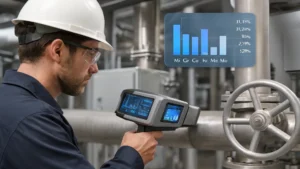
API 578 for material verification and metallurgical control
API 578 establishes a standardized framework for positive material identification (PMI) in the process and petroleum industries.
Codes and standards establish minimum requirements for the design, fabrication, inspection, and operation of industrial equipment. They constitute the technical framework that ensures uniformity, safety, and mechanical performance in energy infrastructure.
Their function is to define verifiable criteria to manage risks and ensure regulatory compliance. Organizations such as ASME, API, ASTM, ISO, and NFPA influence these guidelines, with broad adoption in the U.S. and Europe, and progressive expansion in LATAM driven by regulatory strengthening and operational maturity.
This section gathers technical information for professionals who need to interpret, apply, and compare industrial standards.
Key topics include:
Codes and standards are essential to ensure safe design and reliable operation. Challenges include proper interpretation, continuous updating, and alignment with regional regulatory frameworks.
Expert interviews, technical conversations and leadership insights