equipment inspection
Rope access inspection in critical Oil & Gas assets
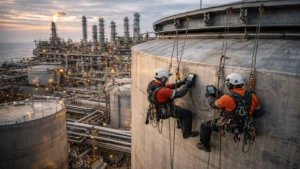
Rope access inspection allows critical assets in Oil & Gas to be assessed by integrating NDT, risk control, and operational efficiency.
Equipment inspection involves assessing the physical condition and structural performance of components and systems to determine operational fitness. It is a cornerstone of integrity management, enabling detection of damage, degradation mechanisms, and deviations from design.
In the energy sector, inspection supports maintenance decisions, RBI intervals, and operational continuity. Globally, it evolves toward advanced techniques, remote inspection, automation, and digitalization, with wide adoption in the U.S., Europe, and LATAM.
This section gathers content for inspectors, engineers, and integrity specialists.
Key topics include:
Inspection is essential to validate equipment integrity and prevent failures affecting safety, environment, and production. Challenges include adequate coverage, interpretation of results, regulatory compliance, and adoption of new technologies.
Expert interviews, technical conversations and leadership insights