
Table of Contents
- Pre-startup diagnostics for aging refinery assets
- Mechanical integrity in aging assets with no historical records
- Rebuilding the RBI program from minimal information
- CAPEX vs OPEX in legacy refinery reactivation
- Accelerated corrosion driven by obsolescence and aging
- Technological obsolescence and legacy control systems
- Reactivating tanks and terminals
- Structural and civil evaluation
- Utilities and services
- Workforce and generational gap
- Brownfield modernization and digitalization
- Industrial cases and lessons learned
- Conclusions
- References
- Frequently Asked Questions (FAQs)
- What is a brownfield restart in refining?
- Why do aging refineries require Risk-Based Inspection (RBI) during restart?
- What factors determine CAPEX vs OPEX decisions in refinery reactivation?
- How does the energy transition affect brownfield refinery restarts?
- What are the main technical risks during refinery restart after decades idle?
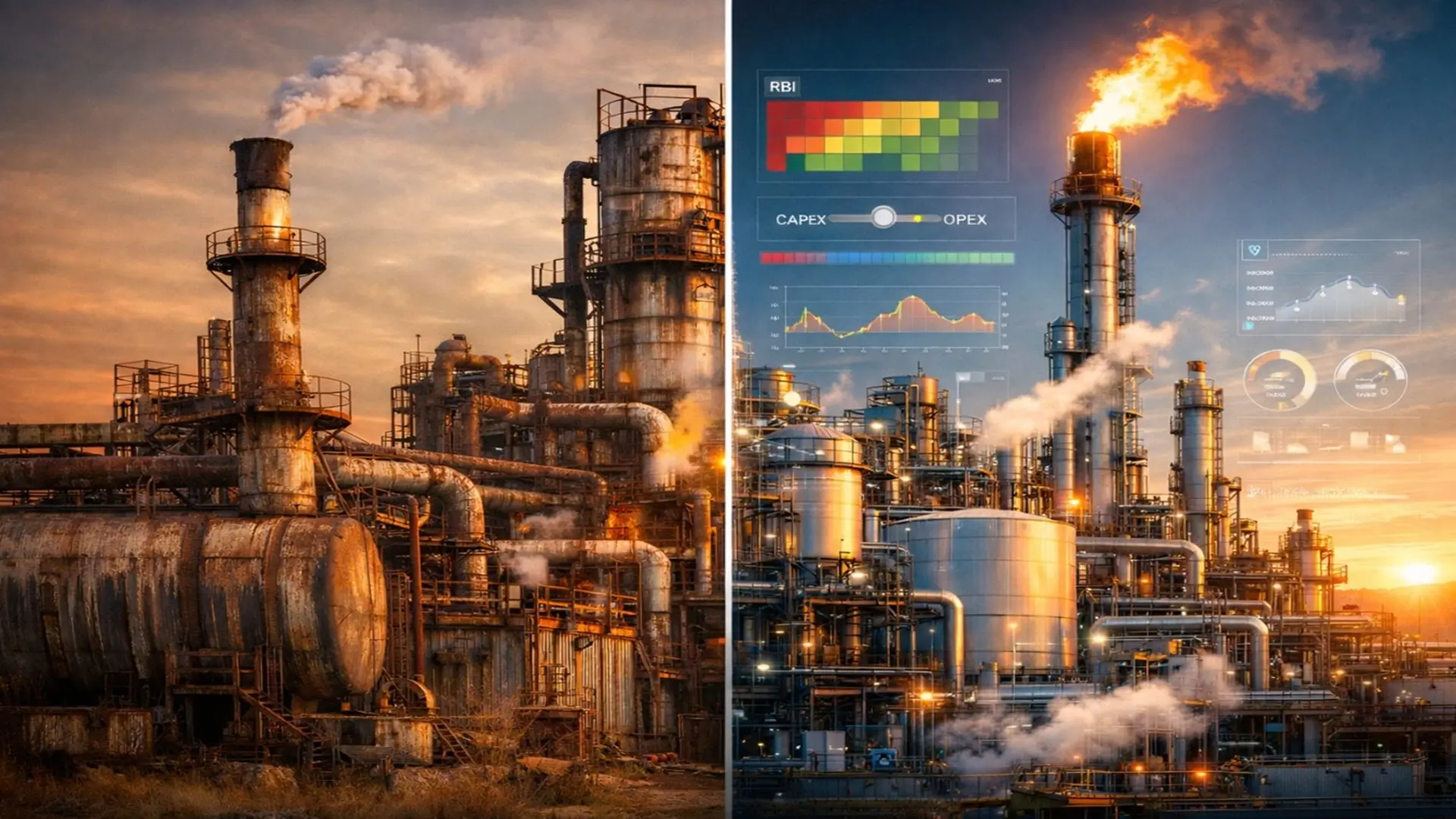
Reactivating refining assets that have been idle for more than three decades poses a deep industrial challenge. It is not merely about powering up equipment, but about restoring entire system’s energy, mechanical, integrity, control, and processes, that were originally designed to operate in an interdependent manner.
In many brownfield facilities with 25 to 40 years of deferred activity, major turnarounds were postponed or executed only partially, RBI was never implemented, records were fragmented, and operational continuity vanished along with the senior talent that oversaw the original construction and startup.
Today, the market drivers behind these restarts are clear: pressure for clean fuel availability, favorable refining margins, capacity deficits in distillation and conversion units, and an energy transition that demands greater flexibility and efficiency. In LATAM, the brownfield phenomenon is mainly driven by deferred CAPEX and technological lag; in the USA, by asset aging and environmental and integrity compliance, within an energy transition in which refining must demonstrate competitiveness, a lower environmental footprint, and operational adaptability.
This document approaches refinery restart through the lenses of maintenance, mechanical integrity, and management, recognizing that reactivation requires both technical and strategic decisions before authorizing any startup. Mechanical integrity becomes the dominant variable when aging assets must be restarted under uncertainty, while risk based inspection (RBI) provides a structured way to classify damage mechanisms, failure potential, and repair prioritization. In practical industrial terms, the brownfield restart becomes a balance between restoring functionality and justifying modernization under CAPEX–OPEX constraints.
Pre-startup diagnostics for aging refinery assets
Before any repair, investment, or commissioning effort, the first critical step in reactivating a refinery is a comprehensive asset diagnosis. This diagnosis must answer three essential questions: what exists, what works, and what can be safely started up without compromising mechanical integrity or process safety.
This requires a physical and functional survey covering piping, pressure vessels, heaters, columns, exchangers, pumps, tanks, flare systems, instrumentation, energy services, and auxiliary systems that will sustain operations once the unit is online. The absence of continuous records often forces teams to rely on detailed walkdowns, photogrammetry, document reviews, and interviews with former senior personnel—when available.
Diagnostics must also identify operational “showstoppers,” systems whose deterioration or unavailability would halt the restart: flare and burners, nitrogen inerting, startup steam, drainage, ventilation, blowdown, and control systems. These elements are frequently underestimated because they are not part of the core process, yet they ultimately determine whether a startup is viable. This is compounded by the evaluation of critical utilities—steam, water, nitrogen, fuel gas, instrument air, and electrical power—which, in real industrial practice, define restart feasibility more than distillation or cracking capacity.
Finally, diagnostics must reconstruct the asset’s industrial history: service changes, upset conditions, repairs, major failures, and exposure to corrosive environments. In assets older than 30 years, the quality of the initial diagnostic has the greatest influence on subsequent CAPEX (capital expenditures associated with modernization or replacement) and integrity risk. In LATAM, limitations are mostly documentaries; in the USA, challenges lie in asset age and environmental compliance
Physical and functional inventory of the asset
The physical and functional inventory establishes the baseline for restart: what equipment exists, what its original function was, and whether that function can be restored. The survey must cover piping, vessels, columns, heaters, exchangers, pumps, tanks, flare systems, instrumentation, and auxiliary systems, including information gaps caused by dismantling, modifications, or loss of documentation. When reliable data is missing, walkdowns, photogrammetry, and visual mapping serve as substitutes. Piping inspection may reference API 574 and operating condition API 570.
Document audit and historical traceability
The document audit reconstructs the industrial life of the asset: original service, service changes, materials, operating conditions, upset conditions, repairs, failures, previous turnarounds, and MOC (Management of Change). Correlating this information with corrosion loops, data sheets, and inspection reports allows engineers to infer expected damage mechanisms. For risk-based integrity assessment, API 580 provides the methodological framework, while ISO 14224 supports reliability data structuring. In assets idle for 30+ years, reconstruction is fragmented but indispensable.
Critical risks and operational “showstoppers”
Showstoppers are systems whose unavailability stops the restart even if the core process is intact. Typical examples include flare and burners, thermally degraded heaters, nitrogen inerting, blowdown systems, drainage, ventilation, fire protection, and Class A leaks. In LATAM, they are more common due to deferred CAPEX; in the USA, due to environmental compliance, flare performance, and fugitive emissions control. Identifying showstoppers defines restart viability.
Mechanical integrity in aging assets with no historical records
In refining assets older than thirty years with little or no documentation continuity, mechanical integrity becomes the defining variable for a restart. The lack of service history, undocumented service changes, repairs with no follow-up, discontinuous turnarounds, and the loss of senior operational talent make it difficult to reconstruct the true condition of the asset.
Technical risk does not necessarily originate from major equipment, these units are visible and often prioritized, but from latent damage mechanisms accumulated in piping, vessels, fittings, welds, coatings, joints, supports, and areas exposed to thermal cycling or environmental degradation. Evaluation must rely on direct and indirect inspection, inference from historical corrosivity, service analysis, and operational validation of the system rather than on a single documentary source.
Mechanical integrity cannot be evaluated in isolation from functionality; an asset may be mechanically sound in terms of wall thickness or stress, yet incapable of delivering the required process performance, which can compromise the restart just as severely. This duality is one of the most underestimated complexities in brownfield reactivation. A brownfield restart refers to the reactivation of an existing industrial facility, typically aging, deteriorated, or idle, whose design, infrastructure, layout, utilities, and physical limitations are already set and cannot be easily modified.
In refineries and petrochemical plants, the brownfield restart implies reintegrating assets, processes, and utilities that were designed decades ago under different regulatory, technological, and integrity paradigms.
Damage mechanisms in legacy refineries
Expected damage mechanisms in legacy refineries, aging facilities with inherited technologies and partial modernization, and with operational, documentation, and integrity constraints tied to asset age, depend on original service, corrosivity, temperature, H2/H2S exposure, and the history of upset conditions (operational deviations where the process temporarily leaves its design or operating envelope).
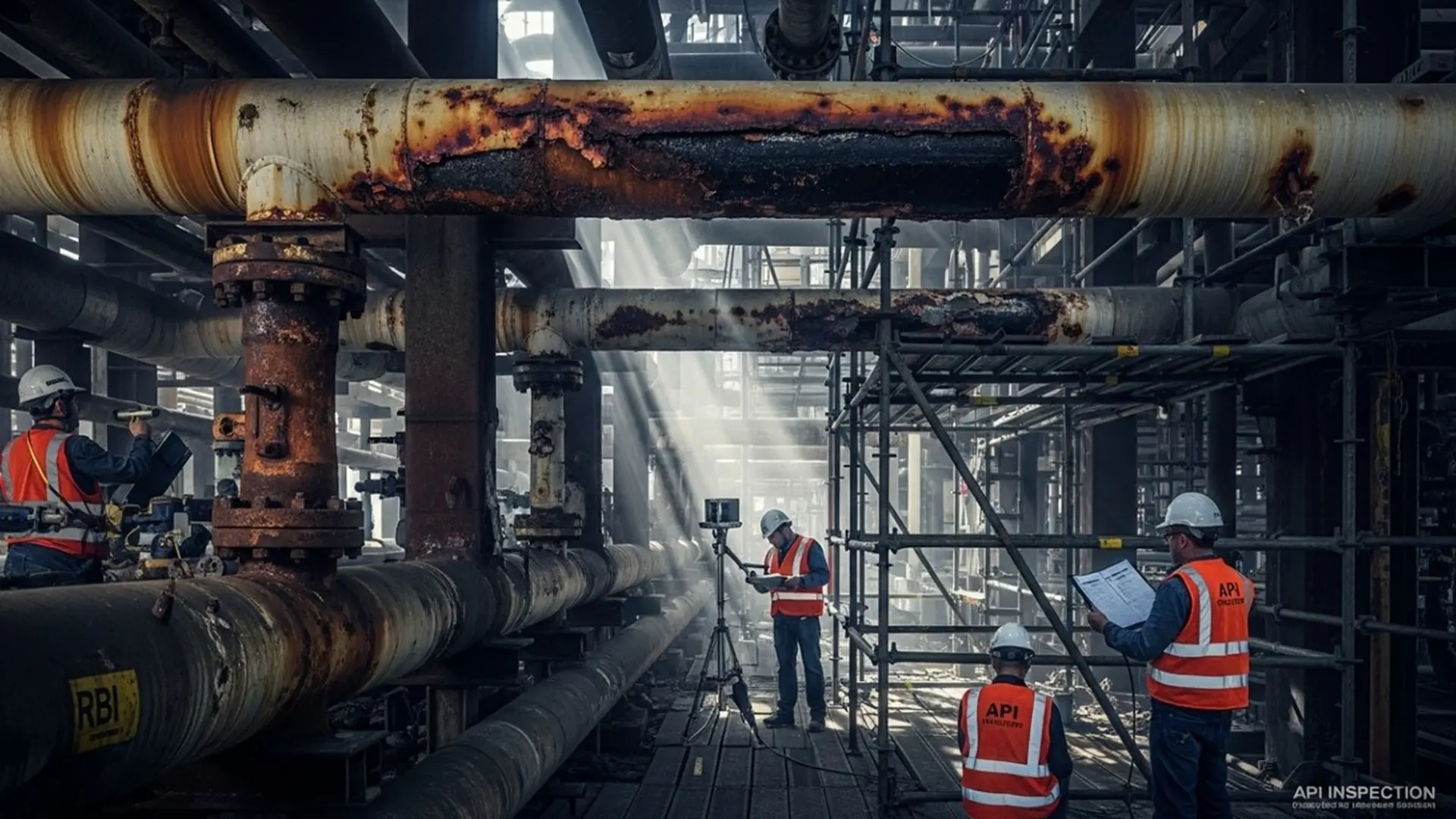
Typical mechanisms include sulfidation, naphthenic corrosion, HTHA (high-temperature hydrogen attack), CUI (corrosion under insulation), SSC (sulfide stress cracking), erosion–corrosion, degraded fireproofing, and damage from thermal cycling or prolonged leaks. The absence of records increases uncertainty and forces engineers to infer likely damage based on service exposure.
API 571 provides a descriptive framework for mechanism-based analysis, while API 574 guides piping inspection. AMPP practices support atmospheric corrosion, coatings, and mitigation. Sulfur-rich and naphthenic circuits tend to be particularly critical during restart.
Remaining life and remaining functionality
The distinction between Remaining Life (RL) and Remaining Functionality (RF) is essential for prioritizing decisions. RL defines whether the asset retains mechanical integrity (thickness, corrosion, stress, and accumulated damage), whereas RF defines whether it can deliver the required process performance. It is common to find towers, columns, and exchangers with acceptable RL but insufficient RF due to fouling, thermal losses, or poor separation efficiency. During restart, functionality often becomes the true bottleneck rather than integrity.
Repair, replace, or run-to-failure
The decision to repair, replace, or pursue a directed run-to-failure strategy is a classic CAPEX–OPEX discussion in brownfield restart. Key drivers include lead time, supply chain, availability, risk acceptance, equipment criticality, and environmental sensitivity. In the USA, replacement is favored due to regulatory, environmental, and availability pressures; in LATAM, repair prevails due to constrained CAPEX and aggressive timelines. Run-to-failure may be viable for non-critical equipment, provided contingency capacity exists.
Rebuilding the RBI program from minimal information
When a refinery has been idle for decades and documentation traceability is incomplete, rebuilding the Risk Based Inspection (RBI) program must begin from a minimum viable dataset. The objective is not to produce a perfect RBI, but one sufficiently robust to guide integrity decisions, prioritize equipment, allocate resources, and define initial inspection frequencies.
Under these conditions, risk based inspection becomes a controlled-uncertainty tool: it operates on hypotheses, inference, and bounded risk rather than deterministic data. This approach is industrially valid in brownfield restart scenarios, provided that assumptions are explicit and that risk is continuously updated as the plant recovers operation and generates new observations.
Minimum data required to initiate an effective RBI
The minimum dataset to initiate a risk based inspection includes materials, service conditions (fluid, temperature, pressure, and corrosivity), expected damage mechanisms by unit or circuit, relevant failure history, repairs, MOC records, previous inspections, and asset age. When complete information is not available, inference from service conditions and analysis of off-design or upset conditions serve as partial substitutes. API 580 and API 581 provide the methodological framework to rank equipment and prioritize inspection under uncertainty.
API 581 in aging and high-risk assets
In aging refineries, API 581 enables risk modeling by integrating Probability of Failure (PoF) and Consequence of Failure (CoF), including QRA approaches and bounding cases when information is limited. Unknown or undocumented damage mechanisms increase PoF dispersion and demand targeted inspections to calibrate the model. In brownfield restart, risk based inspection behaves less like a prediction model and more like an iterative process corrected by operation.
CAPEX vs OPEX in legacy refinery reactivation
Reactivating aging refineries raises a recurring dilemma: how much to invest in rehabilitation and modernization (CAPEX—capital expenditures intended to extend asset life or replace equipment) and how much to sustain through maintenance, repairs, and adjusted operation (OPEX—operating expenditures required to keep the asset running). This balance defines the restart sequence, the criticality of replacements, operational capacity, and future reliability.
A CAPEX-oriented strategy improves environmental compliance, reduces integrity risk, and enables technological modernization, but demands financing, longer timelines, and economic risk absorption. An OPEX-oriented strategy allows operation to continue through repairs, adjustments, and corrective or preventive maintenance, at the cost of greater exposure to failures, rework, and lower efficiency.
In the USA, environmental compliance, competitiveness, and reliability pressures favor CAPEX-heavy strategies. In LATAM, deferred CAPEX and the need for immediate availability led to decisions where OPEX sustains equipment and systems until economic return, financing, or investment justification appears. This asymmetry explains why two aging refineries facing the same restart scenario may adopt different paths: one replaces flare systems, heaters, and instrumentation; the other repairs and operates with adjustments until production stabilizes.
Risk–return investment prioritization
Investment prioritization during restart follows a risk–return logic: risk understood as PoF×CoF, and return as throughput, refining margin, and environmental compliance. Equipment with high impact on availability or safety justifies early CAPEX, while marginal-impact assets can be sustained with OPEX. Operational sequencing reshapes criticality: flare, steam, nitrogen, control, and instrumentation often take precedence because they enable the rest of the plant.
Minimum Viable Refinery Restart in brownfields
One strategy used in reactivation is the Minimum Viable Refinery Restart (MVRR), defined as a minimum viable restart in which the plant is started partially and in stages to validate integrity, functionality, and economics before committing major CAPEX. In the USA, this approach is modular and allows successive ramps; in LATAM, with constrained CAPEX and availability pressure, there is usually a single restart attempt, reducing flexibility but accelerating initial productive capacity.
Hidden costs of deferring integrity
Deferring integrity introduces hidden costs that emerge after startup: CUI collapsing supports, degraded fireproofing, coating failures, Class A leaks, and utility repairs. These costs begin as OPEX but become unplanned CAPEX when they affect availability or safety
Accelerated corrosion driven by obsolescence and aging
Aging refinery assets after decades of discontinuous operation generate corrosion mechanisms that no longer follow the original design envelope, but rather the accumulated effects of obsolescence, deferred major maintenance, and coating degradation.
In legacy refineries it is common to find CUI, sulfidation, naphthenic corrosion, erosion–corrosion, and degraded fireproofing coexisting within the same unit, increasing risk dispersion and reducing the reliability of Remaining Life estimates. These conditions often remain unnoticed in environments with incomplete documentation or intermittent turnarounds and tend to manifest critically after startup.
In brownfield restart scenarios, accelerated corrosion is amplified by three factors: (1) absence of major maintenance and systematic risk based inspection (RBI) programs; (2) sustained environmental degradation in piping, supports, and structures; and (3) loss of senior talent who knew the real operational history of the asset. Atmospheric and under-insulation corrosion are particularly critical in LATAM due to environmental exposure and cementitious fireproofing, while in the USA sulfidation and naphthenic corrosion dominate due to variations in crude slate and service changes.
The combination of obsolescence and aging shifts the risk signal, moves criticality toward utilities, flare systems, and structures, and forces targeted inspection before restart. API 571 and AMPP provide useful technical frameworks, but in restart the analysis becomes less normative and more pragmatic: identifying what is likely to fail immediately after startup.
CUI and degraded fireproofing
Corrosion under insulation (CUI) and degraded fireproofing are among the most recurrent findings in aging refineries. The combination of moisture, salts, thermal cycling, and degraded cementitious or intumescent coatings drives accelerated corrosion in piping, structures, and supports, often hidden for years. Degraded fireproofing also masks damage mechanisms and reduces fire performance. API 583 and AMPP standards provide guidance for inspection and mitigation of CUI, but in brownfield restart the issue becomes quantifying damage before startup, since many failures emerge hot rather than cold.
Sulfidation and naphthenic corrosion
Sulfidation and naphthenic corrosion are classic refining mechanisms associated with service, temperature, and crude composition. In legacy refineries, undocumented crude changes and off-design conditions increase uncertainty regarding real severity. API 571 describes these mechanisms and their critical temperature ranges, but historical data is often insufficient during restart. Sulfur- and naphthenic-rich circuits exhibit high criticality and demand targeted inspection, particularly at welds, elbows, high-velocity zones, and thermal equipment. Inference from service conditions and crude data becomes essential when documentation is limited.
Erosion–corrosion in desalting and fractionation
Erosion–corrosion typically occurs in desalting and fractionation units due to solids, salts, or localized high velocities. The damage may remain silent for years and manifest only after startup as leaks or accelerated wall loss. In aging refineries, this mechanism is often masked by fouling, making targeted inspection and solids–velocity analysis key before restart
Technological obsolescence and legacy control systems
Technological obsolescence is another major constraint in brownfield restart. Many control and automation systems were installed decades ago under proprietary architectures and now lack spare parts, vendor support, or compatibility with modern platforms. Legacy Foxboro, Honeywell, and YOKOGAWA systems are common in aging refineries, and their obsolescence affects not only operations, but also safety and environmental compliance.
In these cases, the question is not simply whether to modernize or maintain, but whether the system can operate within an acceptable risk envelope during restart. Obsolescence also affects instrumentation, critical valves, rotating equipment, and SIS systems, whose lack of integration can limit thermal transients, load changes, and event response.
Outdated control and automation systems
Legacy control systems often run on discontinued hardware and software with no vendor support and limited compatibility with modern protocols. The lack of options, spare parts, and integration capability restricts operational response and restart stability. The dilemma becomes whether to sustain them through OPEX or modernize through CAPEX.
SIS integration and modern instrumentation
Integrating modern instrumentation and SIS into legacy plants may require temporary bypasses, safety validation, and contingency testing. These elements condition restart more through functionality than integrity.
Critical valves and rotating equipment
Critical valves and rotating equipment exhibit both technological and spare-part obsolescence. Lead time and availability shape restart decisions and may force mixed strategies involving repair, partial replacement, or controlled run-to-failure
Pre-commissioning and commissioning of dormant assets (200–240 palabras)
Pre-commissioning and commissioning in brownfield restart scenarios require a different approach than in greenfield projects. In an aging refinery with assets that have been “dormant” for decades, the priority is not merely to ensure that equipment operates, but to validate that the process system and its associated utilities can support startup without compromising integrity, safety, or functionality.
The process begins prior to energization and may include mechanical cleaning, flushing, chemical cleaning, inerting, selective hydrotesting, vacuum tests, seal checks, instrument calibration, valve verification, gasket integrity checks, and testing of heaters, columns, tanks, and flare systems.
The lack of historical traceability increases commissioning uncertainty and forces the design of safe operational windows, especially during thermal or pressure transients. Aging assets tend to fail not due to lack of mechanical capacity, but due to accumulated degradation at uninspected points or incompatibility between utilities and process load. Brownfield commissioning is less ceremonial and more iterative; it is about gaining real knowledge of the assets under operation through controlled ramps.
Flushing, chemical cleaning, and inerting
Flushing, chemical cleaning, and inerting are essential steps to remove deposits, contaminants, and residual fluids that may compromise startup. In dormant assets it is common to find fouling, sludge, salts, trapped water, light hydrocarbons, and oxidation-induced degradation.
Thermal or chemical flushing helps restore thermal and hydraulic efficiency in exchangers and piping, while nitrogen inerting reduces ignition risk and allows for safe atmosphere handling prior to startup. Method selection depends on service, materials, temperature, and contamination level. Cleaning is not an operational luxury: it conditions both functionality and initial process performance.
Verification of heaters, columns, and tanks
Verification of heaters, columns, and tanks is critical during restart because these units combine mechanical integrity with process performance. Heaters require inspection of burners, refractory linings, air leakage, thermal efficiency, and instrument calibration. Columns require validation of internals, trays, packing, levels, vacuum performance, and thermal distribution. Tanks require inspection of bottoms, roofs, seals, coatings, and breathing systems. The objective is not only to verify that the equipment can operate, but that it can operate within its expected process window
Reactivating tanks and terminals
Reactivating tanks and terminals in aging refineries require consideration of integrity, environmental containment, and compatibility with current fuel specifications. Tanks that have been out of service for decades typically exhibit degradation in bottoms, roofs, seals, coatings, and drainage systems, along with loss of documentation traceability. The absence of periodic inspections increases uncertainty regarding internal and external corrosion, leaks, differential settlement, and water- or residue-induced damage.
Reactivation also demands validation of secondary containment and associated systems such as feed and dispatch lines, pumps, manifolds, grounding, and ventilation. At terminals, current operational and environmental requirements force evaluation of whether tanks can operate under present fuel specs, especially for clean products.
The repair-versus-replacement decision is a classic CAPEX–OPEX dilemma. In LATAM, the analysis often favors structural repairs, coatings, and partial modernization; in the USA, replacement tends to prevail due to environmental compliance and lifecycle cost. Successful tank reactivation is a critical brownfield restart enabler because it governs storage, dispatch, and availability.
API 653, secondary containment, and fuel specs
Tank rehabilitation is governed primarily by API 653 for inspection, repair, and alteration of API 650 tanks, but restart introduces additional environmental and operational requirements. Secondary containment (dikes, berms, and drainage) must meet current regulatory standards and volumetric capacity, while fuel specifications determine whether a tank can handle clean products without contamination risk. Compatibility with gasoline, diesel, jet, or fuel oil depends on internal coatings, seals, and vapor pressure. In aging terminals, this is often the most complex obstacle.
Repairing or replacing critical tanks
The decision to repair or replace critical tanks depends on internal corrosion, bottom corrosion, structural integrity, deformation, remaining life, lifecycle cost, and availability. Repairing implies lower CAPEX but higher exposure to risk and rework, while replacement implies higher CAPEX but superior environmental compliance and lifecycle performance. In brownfield restart scenarios, availability pressure makes deep repairs and coating systems common, particularly in LATAM, while in the USA, replacement often yields better lifecycle justification.
Structural and civil evaluation
Structural and civil evaluation in aging refineries is critical during brownfield reactivation, as these facilities combine atmospheric corrosion, thermal cycling, differential settlement, coating failures, and concrete degradation. Unlike process equipment inspection, structural deterioration progresses silently and often manifests during restart under thermal or vibratory transients. Exposed steel structures exhibit section loss, joint corrosion, CUI damage, and degraded fireproofing, while concrete shows cracking, carbonation, chloride penetration, delamination, and reinforcement corrosion. Partial or full recovery of platforms, supports, stairs, and access points are often required to enable integrity and maintenance work.
Civil evaluation must also consider drainage, secondary containment, access, and dynamic loads induced by operation. Documentation uncertainty forces teams to combine visual inspection, mapping, non-destructive testing, and structural engineering to establish repair criteria. In LATAM, structural repair typically precedes restart; in the USA, modernization and selective replacement are more common.
Structural pathologies in steel and concrete
Primary structural pathologies include atmospheric corrosion, section loss, deformation, joint degradation, and degraded fireproofing in steel, and cracking, carbonation, chloride penetration, delamination, and reinforcement corrosion in concrete. Environmental exposure, salt fog, thermal cycling, and leaks accelerate these mechanisms. Many failures remain undetected until coatings or fireproofing are removed. During restart, these pathologies condition operational safety and access for integrity work, making them a critical project enabler.
Aging refractories and coatings
Aging refractories and coatings affect heaters, stacks, ducts, and thermal equipment. Degradation includes cracking, spalling, loss of adhesion, moisture absorption, and chemical or mechanical damage. Prolonged aging increases the risk of hotspots, thermal inefficiency, and structural damage during restart. In legacy refineries, the combination of aged refractories and degraded fireproofing is one of the most recurrent findings during turnarounds and pre-commissioning. Rehabilitation is typically CAPEX-enabling.
Utilities and services
Utilities and energy services are the true enablers of brownfield restart. Steam, water, nitrogen, instrument air, fuel gas, and electrical power must be available in sufficient flow, pressure, purity, and continuity to support commissioning and initial operation. Unlike process equipment, utilities do not directly increase productive capacity, but they determine startup feasibility.
In aging refineries, these systems often exhibit atmospheric corrosion, CUI, technological obsolescence, leaks, and instrument failures. The lack of historical data forces functional testing, controlled ramps, and temporary strategies with auxiliary equipment or bypasses. Utility prioritization shapes commissioning sequence and replacement criticality, particularly in LATAM, where CAPEX constraints favor temporary solutions, while in the USA structured modernization tends to prevail.
Steam, water, nitrogen, and fuel gas
Steam feeds heaters, columns, desalting units, and thermal equipment; cooling water ensures heat transfer; nitrogen enables inerting and safe atmosphere handling; and fuel gas supplies heaters and flare systems. The availability of these services defines the operational window of the restart. In legacy refineries, steam and nitrogen often become the true bottlenecks rather than distillation. Evaluation requires functional testing, targeted inspection, and flow–pressure analysis to anticipate hot failures.
Temporary solutions and operational bypasses
Temporary solutions and operational bypasses enable restart using auxiliary equipment, quick connections, and portable steam, nitrogen, or electrical systems. These strategies are common in LATAM and in CAPEX-constrained restarts, while in the USA they serve as a bridge toward definitive modernization. The objective is to ensure temporary functionality without compromising safety or environmental compliance.
Workforce and generational gap
Reactivating aging refineries exposes a significant generational gap between senior personnel who participated in the original construction and operating phases, and younger professionals trained under different technologies and methodologies. The loss of senior talent, discontinuity of documentation, and fragmentation of operational knowledge increase uncertainty during brownfield restart.
Tacit knowledge related to damage mechanisms, startup sequences, thermal transients, heater adjustments, flare behavior, crude slate changes, and contingency management is not always documented and rarely can be reconstructed solely from API or AMPP standards.
In LATAM, this phenomenon is more pronounced due to early retirement, labor mobility, and irregular contracting cycles; in the USA it persists as well, but transitions more systematically toward consultants, auditors, and turnaround specialists.
Senior talent loss
Senior talent loss implies the disappearance of tacit knowledge related to operations, integrity, and maintenance. This knowledge includes startup sequences, thermal adjustments, corrosion mitigation strategies, responses to upset conditions, and CAPEX–OPEX decisions under pressure. In legacy refineries, such knowledge cannot be easily replaced with manuals or standards, elevating restart uncertainty and forcing reliance on consultants or former operators with firsthand experience.
Contractors, auditors, and turnaround knowledge
Specialized contractors, industrial auditors, and turnaround consultants contribute structured knowledge and accumulated experience from previous startups. This “turnaround knowledge” reduces risk dispersion and accelerates repair, replacement, and inspection decisions. In LATAM, participation tends to be intermittent and dependent on CAPEX availability; in the USA and Canada, it is an integral component of brownfield reactivation
Brownfield modernization and digitalization
Modernization in brownfield environments does not always require replacing entire systems or equipment. It can consist of digitalizing integrity, applying predictive monitoring, incorporating smart instrumentation, or enabling simulation models and digital twins to reduce uncertainty during restart. These technologies allow operators to observe phenomena that previously required sustained operation or historical data, providing early visibility into degradation, efficiency, functionality, and reliability.
The digitalization margin is more limited in brownfield than in greenfield projects, but its impact is greater because it corrects information asymmetry. In the USA, digital modernization is often used to justify CAPEX; in LATAM, it is employed to sustain operation with less investment and more OPEX.
In the industrial context, companies such as NOV (National Oilwell Varco) demonstrate that brownfield modernization does not require rebuilding entire plants, but can be achieved through operational adjustments, minimal modifications, and strategies designed to extend asset life with lower CAPEX. Their approach combines process engineering, water treatment, by-product reuse, and environmental improvements, aligning with current challenges related to efficiency and the energy transition in aging refineries and facilities.
Video source: NOV — Brownfield Solutions for Oil and Gas Processing (YouTube)

Predictive monitoring and digitalized integrity
Predictive monitoring combines sensors, data acquisition, and analytics to anticipate failures in rotating equipment, valves, seals, pumps, exchangers, and heaters. In integrity, digitalization allows inspections, RBI, damage mechanisms, and functionality assessments to be consolidated into platforms accessible to management, maintenance, and integrity teams. The value is not only technical, but decisional: it reduces uncertainty and accelerates CAPEX–OPEX justification. In brownfield environments, this approach enables more reliable restart ramps.
Digital Twin for legacy plants
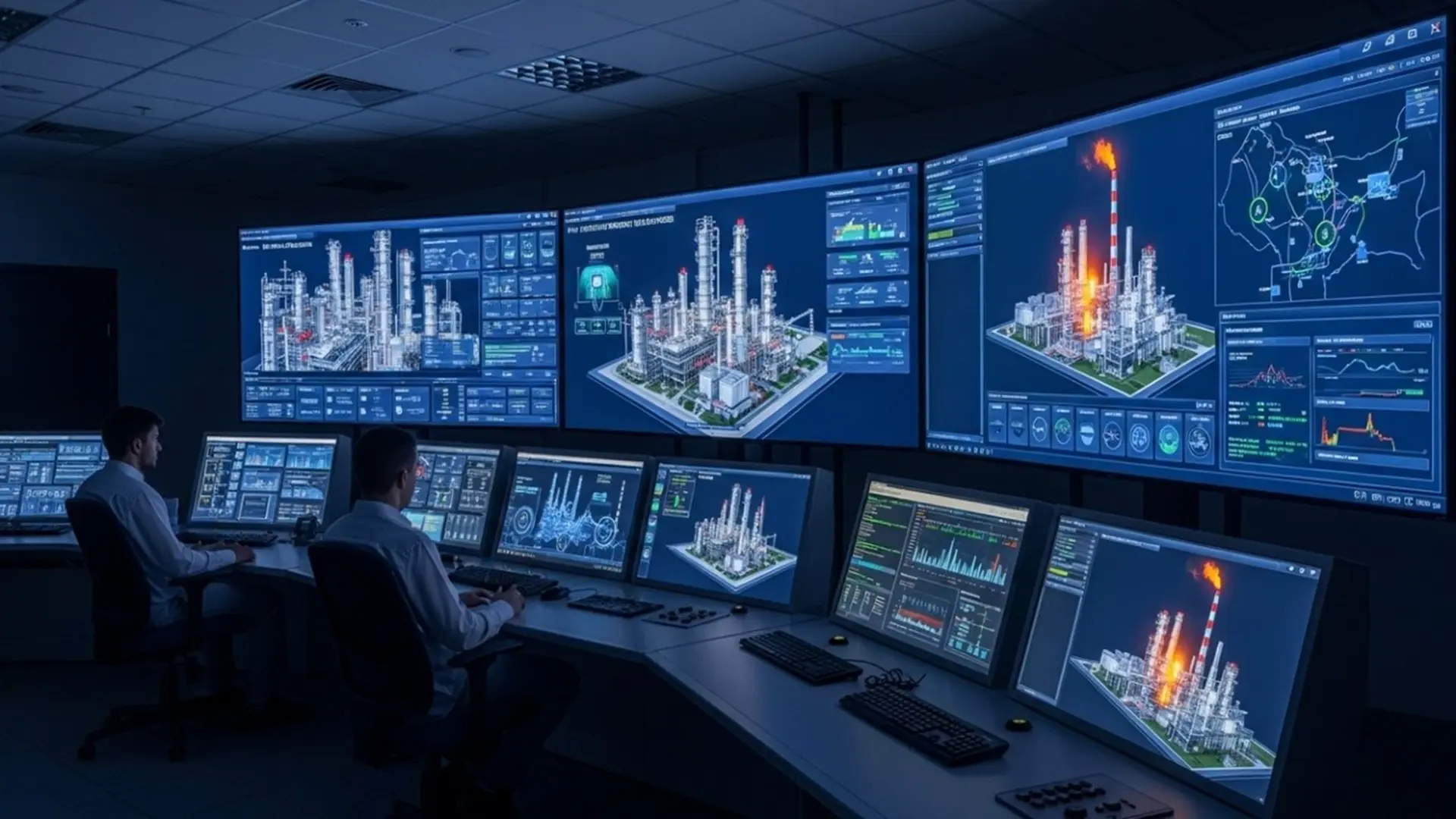
A Digital Twin consists of a dynamic digital model that replicates the physical asset and its operational behavior. In legacy plants, it is used to validate loads, simulate thermal transients, evaluate functionality, and anticipate bottlenecks. It does not replace inspections or risk based inspection but improves inference and reduces decision risk during restart. In the USA, adoption is modular and progressive; in LATAM, implementation is typically focused on critical units.
Environmental and regulatory
Reactivating aging refineries not only requires restoring integrity and functionality, but also complying with environmental frameworks that have evolved significantly over the past decades. Requirements related to fugitive emissions, flare performance, fuel quality, drainage, secondary containment, waste management, and vapor recovery systems are more demanding today than at the time many legacy refineries were designed.
In the USA, EPA standards, LDAR programs, and fuel specs condition the restart sequence and justify environmental CAPEX to enable compliance. In LATAM, environmental compliance is more heterogeneous and depends on national regulations and market pressure (fuel import/export). Documentation uncertainty typical of brownfields complicates reconstruction of prior environmental performance, making restart dependent on targeted inspection and functional verification.
Flare availability, fugitive emissions monitoring, and fuel spec compatibility become critical enablers. The environmental component is fundamentally a technical, economic, and reputational issue with implications for dispatch capability and market access.
Fugitive emissions, flare, and LDAR
Fugitive emissions and flare performance are critical areas in aging refineries. Class A leaks, joints, valves, seals, and rotating equipment require LDAR (Leak Detection and Repair) programs to operate under EPA standards in the USA and AMPP technical references for industrial corrosion. The flare must meet capacity, stability, inerting, and emissions limits. Its unavailability is a restart showstopper. In LATAM, LDAR implementation is variable and often reactive, increasing environmental and availability risk.
New fuel standards in refining
Fuel specifications have changed significantly over the past 20 years. In the USA and Europe, reductions in sulfur content for diesel and gasoline, and constraints on volatility and aromatic content affect compatibility, coatings, and seals in tanks and terminals. In LATAM, pressure to import clean products forces compliance with international fuel specs even when legacy refineries were designed under different standards. These discrepancies may require modernizing coatings, upgrading seals, or reconfiguring terminals before restart.
API and AMPP standards
API and AMPP standards provide the technical framework for inspection, integrity, corrosion, and risk in aging refineries. API defines methodologies for inspection, mechanical integrity, and damage assessment, while AMPP (formerly NACE) provides standards for corrosion, coatings, and protection systems. In brownfield restart scenarios, the challenge is not only to apply standards, but to prioritize them under documentary uncertainty and CAPEX–OPEX constraints. In the USA, these standards condition compliance and technical liability; in LATAM, they are often used as technical references to justify repair, replacement, or controlled run-to-failure strategies.
API 510, 570, 579/FFS, 581, and 653
API 510 addresses pressure vessels, API 570 piping and inspection, API 653 tanks, API 579/FFS fitness-for-service, and API 581 quantitative risk (risk based inspection). During restart, these standards support Remaining Life assessment, functionality evaluation, and CAPEX–OPEX prioritization. Their application structures decision-making in aging assets with limited documentation.
AMPP standards for industrial corrosion
AMPP integrates former NACE and SSPC standards for corrosion, coatings, cathodic protection, and mitigation. In aging refineries, they provide methodologies for evaluating CUI, coatings, fireproofing, atmospheric corrosion, and tank protection. Their application reduces risk dispersion and guides repairs prior to restart.
Industrial cases and lessons learned
Brownfield restart attempts over the past two decades provide useful references for understanding how aging refineries can return to operation under different levels of CAPEX, risk, and modernization. While successful restarts are not abundant, documented cases in LATAM and the Middle East demonstrate that operational return is viable when the balance between integrity, functionality, environmental compliance, and availability is actively managed.
These experiences reveal common patterns: pressure for clean fuels, operational reconfiguration, staged investment, mixed CAPEX–OPEX strategies, and participation of specialized contractors or external audits. In brownfield restart scenarios, success depends not only on mechanical integrity, but also on system energy capacity, commissioning sequence, and the management of documentary uncertainty.
Industrial lessons show that decisive variables are not always technical, but decisional and operational: risk windows, commissioning order, utilities criticality, and compatibility with fuel specs.
Successful restart cases in LATAM and the Middle East
In LATAM, successful restart cases have been observed in atmospheric and vacuum distillation units through prioritized repair campaigns, contractor support, partial modernization of control systems, and rehabilitation of flare and utilities. In the Middle East, selected restarts relied on staged CAPEX, early digitalization, and third-party audits.
In both regions, the decision was not to rebuild the entire refinery, but to reactivate critical segments and expand operation as availability improved and information asymmetrical declined. Mechanical integrity and RBI driven prioritization shaped early decisions, especially in systems where documentation gaps prevented deterministic inspection planning. Partial modernization of control, flare, and utilities served as a bridge between immediate operability and long-term return.
Factors that defined restart viability
Successful restart cases share five common factors: (1) sufficient mechanical integrity in thermal and process equipment; (2) availability of utilities (steam, nitrogen, power, and flare); (3) minimum environmental compliance for dispatch and operation; (4) staged startup sequences with controlled load ramps; and (5) CAPEX–OPEX decision making under availability pressure. The absence of any of these factors tends to produce early failures, rework, or aborted startups.
In LATAM, viability depends on deep repairs, temporary solutions, and adjusted operation; in the Middle East, viability depends more on staged CAPEX, digitalization, and contractor integration with turnaround knowledge. The overarching industrial lesson is that restart is a decision and risk management problem, not merely an integrity problem.
Conclusions
Reactivating an aging refinery after decades without major maintenance is not an exercise in “getting equipment running again,” but a complex industrial decision where integrity, functionality, environment, talent, CAPEX–OPEX, and market timing all intersect.
Experience in LATAM and the Middle East shows that viable restarts are not the most ambitious ones, but those that manage uncertainty best: they diagnose before starting, prioritize utilities, tanks, and flare systems, and accept that risk based inspection and fitness-for-service will be iterative as the plant returns to operation.
The underlying lesson is clear: a brownfield restart is not solely a technical problem; it is a risk management problem in which mechanical integrity, risk based inspection, and selective modernization determine availability, environmental compliance, and economic viability. RBI governs prioritization under uncertainty, while modernization aligns brownfield assets with contemporary operational and regulatory expectations. The commissioning sequence, the quality of the initial diagnosis, the availability of steam, nitrogen, and tankage, minimum environmental compliance, and the ability to make CAPEX–OPEX decisions under pressure define success far more than any list of repairs.
For integrity, maintenance, and management teams, the practical path can be summarized in five steps: (1) do not authorize any startup without a comprehensive asset diagnosis; (2) treat utilities, flare, and tanks as enablers, not as “support services”; (3) use RBI, API 579/FFS, and API 581 as tools to reconstruct uncertainty, not as paperwork; (4) balance CAPEX–OPEX through Minimum Viable Refinery Restart strategies; and (5) close the talent gap by leveraging contractors, auditors, and digitalization. Only then does a restart cease to be a gamble and become a managed decision.
References
- American Petroleum Institute. (2020). API Recommended Practice 580: Risk-Based Inspection (3rd ed.). API Publishing.
- American Petroleum Institute. (2022). API Recommended Practice 581: Risk-Based Inspection Technology (3rd ed.). API Publishing.
- AMPP/NACE International. (2015). NACE SP0198: Control of Corrosion Under Thermal Insulation and Fireproofing Materials. Materials Performance Series.
- Kaley, L. (2025). “Transitioning from Semi-Quantitative to Fully Quantitative RBI Models.” Inspectioneering Journal, 31(2), 22–34.
- International Energy Agency (IEA). (2023). Refining and Energy Transition: Operational and CAPEX Outlook 2023–2030. IEA Publications.
Frequently Asked Questions (FAQs)
What is a brownfield restart in refining?
A brownfield restart refers to the reactivation of aging refining assets that already exist and have defined layout, utilities, and infrastructure constraints. Unlike greenfield projects, brownfield restarts focus on restoring integrity, functionality, utilities, and environmental compliance with selective CAPEX rather than full re-engineering.
Why do aging refineries require Risk-Based Inspection (RBI) during restart?
RBI allows operators to classify damage mechanisms, probability of failure, and consequences, prioritizing inspection and modernization actions under uncertainty. In brownfield environments with fragmented documentation, RBI becomes an iterative decision tool rather than a deterministic model.
What factors determine CAPEX vs OPEX decisions in refinery reactivation?
Key drivers include environmental compliance, availability pressure, Remaining Life, Remaining Functionality, spare-part obsolescence, utilities capacity, and market fuel specifications. USA cases favor CAPEX due to compliance; LATAM favors OPEX due to deferred CAPEX.
How does the energy transition affect brownfield refinery restarts?
The energy transition demands cleaner fuels, lower emissions, digitalization, and stronger environmental compliance. This pressure reshapes modernization priorities, alters fuel spec compatibility, and forces refineries to justify restart economics more rigorously.
What are the main technical risks during refinery restart after decades idle?
Risks include accelerated corrosion, CUI, degraded fireproofing, sulfidation, naphthenic corrosion, utilities unavailability, fuel spec incompatibility, loss of senior talent, incomplete documentation, and structural degradation. Utilities, tanks, and flare systems often define restart viability.