
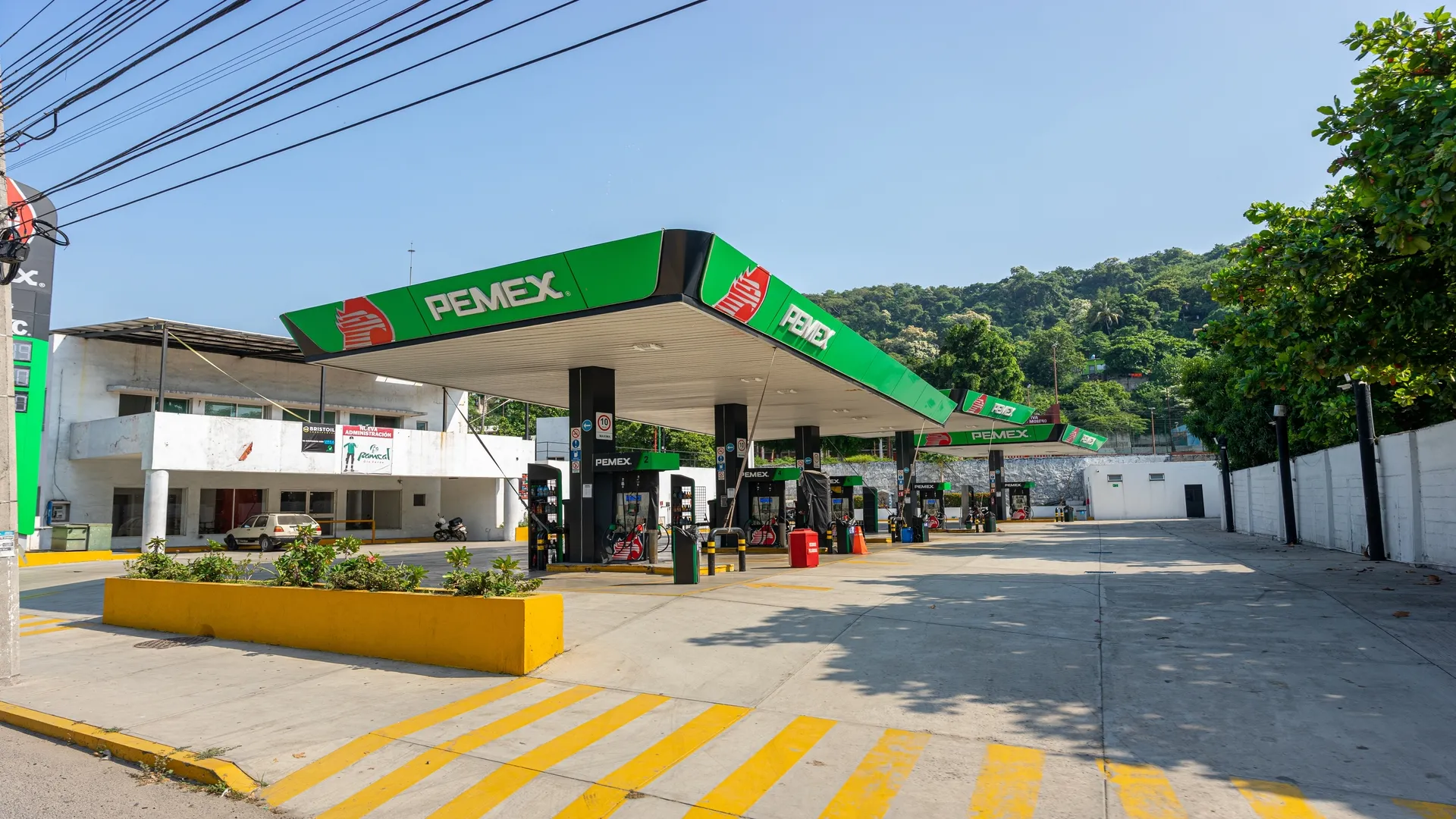
Fuel production in Mexico reached its highest point in a decade, and with it has begun to shake the delicate energy balance between the country and the United States. With its refineries working at peak performance, Mexico has cut its gasoline and diesel imports to levels not seen since 2008, which is directly impacting U.S. refineries, historically its main suppliers.
Pemex has managed to keep its 6 refineries in operation, adding the growing operation of the Olmeca plant at Dos Bocas, which is beginning to consolidate after almost 4 years of failures and adjustments. In December alone, Dos Bocas reached 77.5% of its installed capacity, marking its best performance since its opening.
Direct impact in the U.S.
While Mexico strengthens its energy self-sufficiency, US refineries suffer the consequences, with companies such as Valero Energy, Marathon Petroleum and ExxonMobil seeing their exports to the south fall, at a time when domestic inventories are soaring. US gasoline stocks have risen to levels not seen since the pandemic, and diesel stocks are the highest in 2 years.
In October, Mexico imported only 726,000 barrels per day of gasoline and diesel, according to the U.S. Energy Information Administration, a significant drop from previous years. This decline, far from being a one-off, appears to be a trend.
The role of Dos Bocas and Tula
The start-up of the coker unit at the Tula refinery has made it possible to process residual fuel oil, transforming it into fuels of greater commercial value. This facility also processes waste from Salamanca, increasing its production capacity.
Both refineries are at the center of the Mexican government’s strategy to achieve greater energy sovereignty. For now, Pemex is expected to keep its plants operating at full capacity at least until Easter, another peak demand for road travel.
Heavy crude oil, another piece of the energy conflict
Beyond processed fuel, USA depends on Mexican and Canadian heavy crude oil for its own refineries, which are designed for that type of oil. The drop in Mexican crude oil exports means less raw material and less market for its refined products, both threats to the country’s industry.
U.S. refineries need heavy crude, and the United States is rapidly losing Mexican and Canadian oil. Venezuela’s oil cannot fill the gaps as quickly.
John Padilla, director of the consulting firm IPD Latin America.
Can Mexico sustain this streak?
Despite the current momentum, the question on many minds is whether Pemex will be able to maintain these production levels without interruptions. Mexican refineries operate equipment that has been subjected to decades of wear and tear, and the continuous pressure increases the risk of failure. risk of failure..
In fact, fires were recently reported in Dos Bocas and Salina Cruz, a reminder that infrastructure remains vulnerable. Nevertheless, Mexico is moving into a new energy phase, and this development could redefine the bilateral fuel relationship.
Source: Bloomberg
Photo: Shutterstock