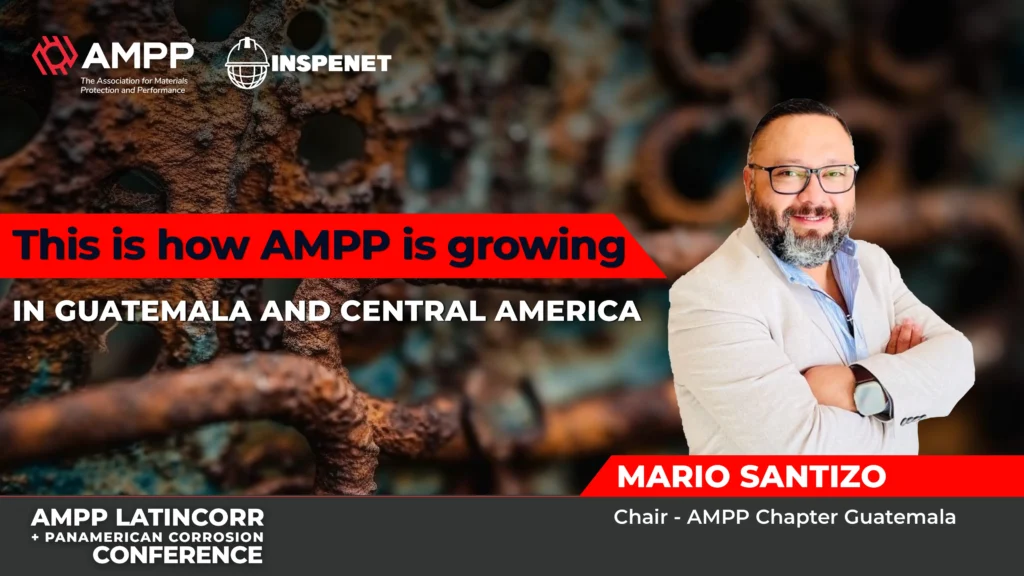
The president of the AMPP Guatemala chapter, Mario Santizo, highlighted during the AMPP LATINCORR event in Panama the urgent role of technology, professional training and regional cooperation in the face of the silent impact of corrosion in Latin America.
In the Latin American industrial context, corrosion is not an isolated technical problem: it is a threat with direct economic and social effects. Mario Santizo pointed out that this degradation of materials affects everything from energy facilities to the daily life of citizens, for example, by increasing the cost of fuels due to the deterioration of infrastructures.
"Anyone who acquires an asset wants to protect it. From a vehicle to an industrial plant, all materials tend to return to their natural state. That's where corrosion comes in."
Santizo explained.
Protecting assets translates into protecting the investment, so prevention and maintenance must be an essential part of any industrial management strategy.
One of the important points Santizo addressed was the role of nanotechnology and artificial intelligence in the fight against corrosion. Although Guatemala is in the early stages of adopting these technologies, their potential is clear.
"We must be clear about the objective: to protect the asset. And for that we have to use the best tools."
Said Mario Santizo.
At events like AMPP LATINCORR, professionals have access to innovations developed by global companies that can be adapted to Latin American conditions. AI can predict material behavior, while nanotechnology optimizes coatings and protection solutions.
The joint edition of AMPP and LATINCORR brought together representatives from 24 countries, creating an important space for sharing knowledge and strengthening professional networks. For Santizo, this synergy represents a concrete opportunity for Central America and other regions to access best practices.
"It was impressive to see the turnout. It gives us a lot of satisfaction to know that we share the same objectives: efficiency, productivity, technical knowledge."
Mario commented.
These types of meetings not only strengthen current professionals, but also motivate new generations to get involved.
The Guatemala chapter of AMPP, founded just over a year ago, is an example of the growing interest in the region. Its rapid growth responds to a shared need: to unify efforts to face the challenges of corrosion in Latin America with a solid technical base.
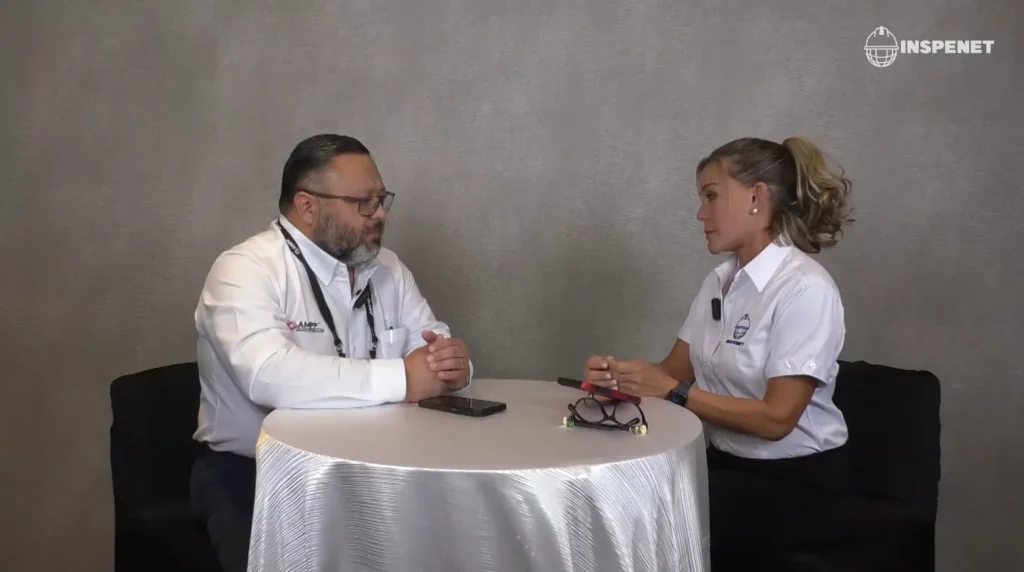
One of the priorities for the Guatemalan chapter is to bring technical information to engineering students. Santizo pointed out that although there are many engineers in the country, there is a need to involve young people from their training stage.
"We want them to be affiliated and informed. There is a lot to do and the next step is to reach out to universities, talk to students and integrate these issues from the beginning."
Santizo stated.
Creating a culture of prevention from the academy is crucial to sustain the development of the sector in the long term.
In Santizo's words, in a world saturated with information, it is difficult to get professionals to pay attention to technical issues that are essential for the development of their work.
Thanks to social networks and events such as AMPP LATINCORR, it is now easier to communicate the importance of these issues. But the challenge remains to build an active technical community, informed and committed to the care of industrial assets.
"Our challenge is to get more professionals to join this collective effort. Sharing and professionalizing is what will allow us to grow as a region."
Santizo concluded.
For more content about LatinCORR 2025, please visit our YouTube channel and our LinkedIn profile.
Source: Inspenet.