From Shenyang to Panama, sales engineer Wang Wei represented VH-MARINETECH in its first participation in the SLOM 2025 event. Recognized as the largest manufacturer of rubber floating hoses in China, the company came to represent adaptability and technology applied in high-demand solutions for offshore and mining operations.
During the interview, Wang Wei shared how VH-MARINETECH's technical approach has allowed them to collaborate with global players such as Petrobras and mining companies in Chile, through products specifically designed to withstand extreme environmental conditions.
The design process begins with a detailed analysis of the operating environment. "We request precise information about the mooring system, the shape of the system, and the intended use," explained Wang Wei. Based on this data, the technical team develops customized configurations for the entire line of hoses, for both floating and subsea applications.
The company offers single and double jacket structures, tailored to the expected functionality and also to variables such as pressure, seabed movement, dynamic fatigue, and currents.
One of the most notable developments shared by the engineer was the design of new rubber compounds. In cold areas, such as some mining regions, the formulation of the rubber and metal components was optimized to withstand low temperatures. In hot climates, such as Sanya (southern China), they modified the outer structure of the hose to prevent heat deterioration.
Another frequent challenge in offshore operations is the adhesion of marine organisms to the outer cover. To address this problem, VH-MARINETECH created a rubber compound with greater resistance to adhering fauna, avoiding weight gain and the risk of the hoses sinking.
The company works under the guidelines of the GMPHOM standard, which is required for the design and production of hoses for loading and unloading operations at sea. Each product undergoes specific torsion, bending, pressure, and hydrodynamic analysis tests before being approved.
"Compliance with these tests is essential before any delivery. It gives us the confidence that the product will perform even in hostile environments," said Wang Wei.
The GMPHOM 2009 standard (Guidelines for the Manufacturing, Testing, and Performance of Loading and Discharge Hoses for Offshore Moorings) is a technical regulation developed by the OCIMF (Oil Companies International Marine Forum), which establishes the design, manufacturing, and testing requirements that hoses used in offshore mooring and hydrocarbon discharge operations must meet.
Its guidelines include pressure, flexion, fatigue, hydrodynamic resistance, and durability tests under demanding environmental conditions. This standard is widely accepted by large companies in the energy sector and ensures that equipment meets the highest levels of safety and performance.
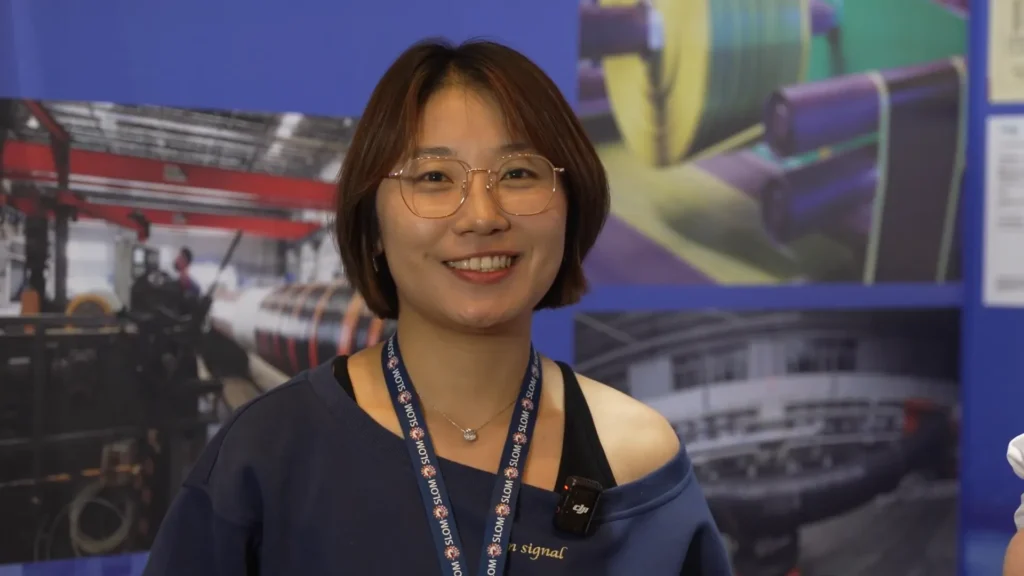
Although they do not currently integrate digital technologies such as sensors or remote monitoring, VH-MARINETECH incorporates software analysis in the design phase, especially to model the dynamic behavior of hoses in real conditions.
In addition, they have developed their own leak detection system for double-shell models, prioritizing safety in offshore unloading processes, where environmental and operational risks are high.
With customers in Brazil, Chile, and a recent presence in Panama, VH-MARINETECH's expansion strategy aims to consolidate its position as a leading supplier in Latin America, with its participation in SLOM 2025 being the start of achieving a greater regional presence. Wang Wei confirmed that they will attend the event annually with the aim of strengthening commercial relationships and sector visibility.
For more content on SLOM 2025, visit our LinkedIn profile.
Source: Inspenet.