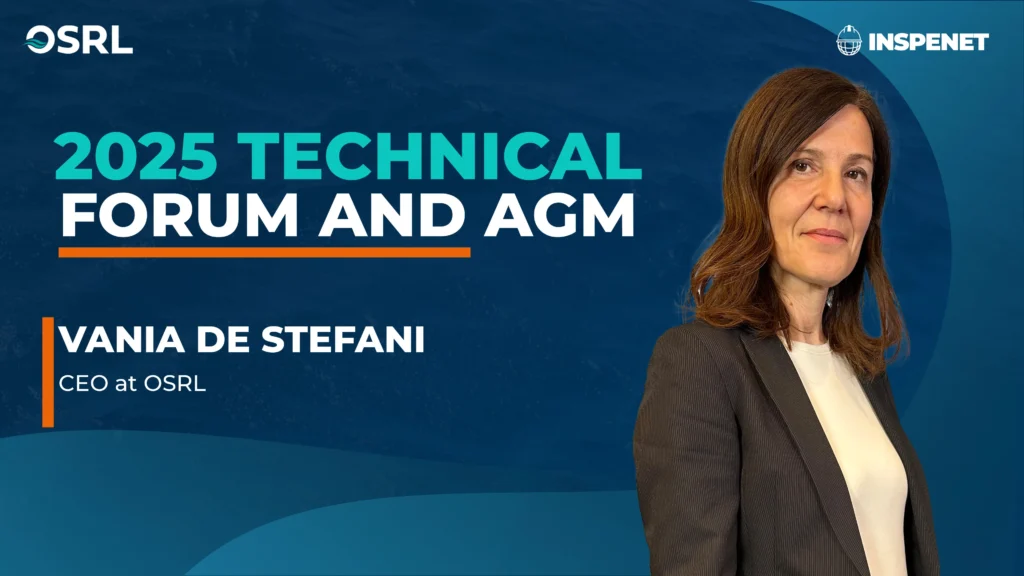
Returning to Houston, the global energy cradle, holds special value for Vania de Stefani. From the OSRL 2025 forum, the CEO of Oil Spill Response Limited (OSRL) offered an honest look at the present and future of environmental emergency response at a pivotal time for technology in the oil industry and the transformation of the energy sector.
With more than two decades of international experience, De Stefani leads a UK-based organization that has grown from a local initiative to a global operational preparedness network. In an interview, he highlighted the role of technology in the oil industry, the importance of pre-incident partnerships and OSRL's commitment to a modern, agile vision.
OSRL was born in 1984 in response to a massive spill in the Channel Islands, which severely affected the Cornwall coast. Initially promoted by BP, the organization grew after participating in emergencies such as the Exxon Valdez in 1989, and was consolidated through alliances in Singapore, the Caribbean and the United States.
This growth was not only operational; the company positioned itself as a technical voice with the capacity to interact with regulators around the world. Its cooperative structure, financed by operators in the energy sector, allows it to offer a global response capacity with a single call.
De Stefani stresses that today's incident response cannot be simply reactive.
"Now we talk about proactivity: we use drones, artificial intelligence, predictive tools and underwater techniques to act in advance."
Vania De Stefani explained.
This technological transformation is part of OSRL's strategy. The company participates in R&D initiatives, collaborates with industry partners to develop new solutions and already integrates technologies such as trajectory modeling and remote monitoring into its operational tools.
"We are creating a new toolbox for a world that demands to act faster and with greater precision."
De Stefani noted.
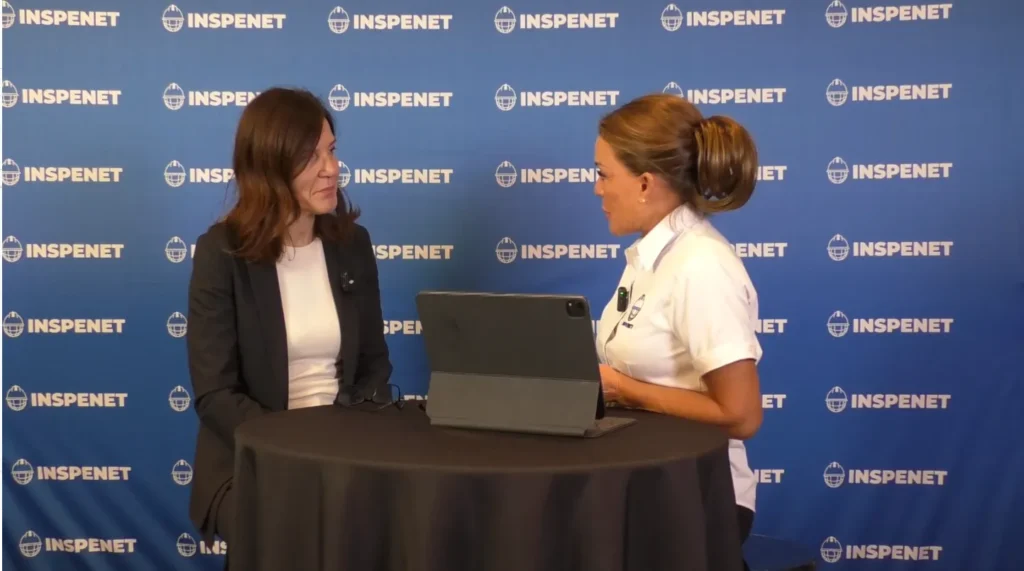
OSRL's response capacity relies on its extensive network of partnerships, including operators, governments, environmental NGOs, customs authorities and scientific centers. But, according to De Stefani, the important thing is not to have contacts, but for those relationships to be built "in peacetime", i.e. before an emergency occurs.
Her role as CEO goes beyond internal management; it is, as she herself acknowledges, a permanent task of connecting and exercising these relationships. "Having alliances is not enough, you have to activate them, keep them alive and ready to operate at any time," she said.
This approach also translates into standards that OSRL demands from its team and also from its partners. Safety and collaboration are built into contracts and procedures, reinforcing the robustness of its multinational deployments.
Operational readiness is constant and based on a robust competency framework. Each team member must be available, trained and cleared to deploy anywhere in the world.
In addition, OSRL invests in its teams working together before an emergency, collaborative exercises allow personnel from different regions to get to know each other, align and function as a unit. "We're not just a technical team. We are a cohesive and ready operational force," De Stefani said.
Although technology in the oil industry is advancing rapidly, there are challenges that are not solved by innovation, one of the main ones being de-globalization. Border restrictions, changes in local regulations and customs barriers make it difficult to deploy personnel and equipment in real time.
De Stefani also warned about the energy diversification. While some regions adopt new sources and regulatory frameworks, others maintain different trajectories, this fragmentation complicates the creation of global standards and requires a fine-tuned geopolitical reading.
For more content about OSRL 2025, please visit our LinkedIn profile.
Source: Inspenet.