During the NISTM 2025 event, Bryan Duke, Director of Global Business Development and Training at MFE Enterprises, shared his perspective on the current challenges and opportunities in tank inspection. With more than 30 years of experience and operations in different regions of the world, the company keeps the operator experience as a priority, even in an industry increasingly exposed to automation and the use of artificial intelligence.
Founded in 1994, MFE Enterprises began its history with a clear objective: to improve the way storage tank floors are inspected. Today, the company has evolved into an international group with operations in the United States, Canada, Mexico, Dubai and Egypt, while maintaining its essence as a family business.
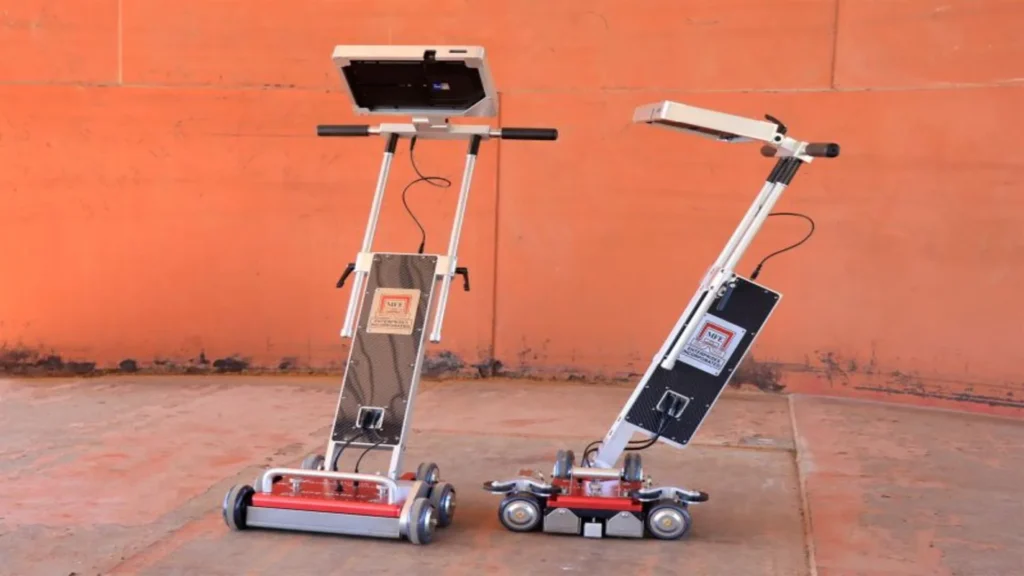
MFE specializes in non-destructive inspection (NDT) technologies, particularly in the application of the magnetic flux leakage (MFL) method, and in the manufacture of solutions such as the MFE Mark IV, a tank floor scanner used to detect API 653-compliant defects.
During the interview, Bryan Duke explained that the Mark IV is used on aboveground storage tanks. The inspection process involves emptying, cleaning and preparing the tank and then scanning the bottom with the device, which identifies defects and compromised areas, followed by ultrasonic testing to validate the findings.
This procedure helps to ensure the structural integrity of the tank, contributes directly to environmental protection and to the preservation of the stored products, often fuels or critical chemicals.
Although the inspection industry is moving toward digitization, Duke is clear: human judgment is still essential.
"We have customers who use artificial intelligence to process the data generated by the scanner, but the equipment is still operated manually."
Bryan commented.
This hybrid approach allows you to take advantage of automated analysis without losing the accuracy provided by a trained operator.
"The machine produces data, but it is the inspector who makes decisions based on his or her experience and training. That remains irreplaceable."
Duke stated.
For MFE, technical knowledge is not replaced by algorithms.
"This is already our fourth model since 1994, we have been asked many times if we can automate the process, but that involves additional costs and loss of human control."
Duke explained.
In this sense, having trained inspectors in the field, analyzing the information directly from the machine, ensures more accurate decisions and greater reliability in the diagnosis of the tank's condition.
One of the biggest challenges facing the sector, according to Duke, is the lack of continuous training. It is common to find operators who were trained years ago and now train others without updating their knowledge, which creates a gap in inspection quality and, consequently, in operational safety.
That's why MFE also offers official training in API 653 NXG, an intensive 40-hour course that enables technicians to operate the equipment with full regulatory knowledge. "Once properly trained, inspectors find the machine is excellent and easy to use," Duke said.
One of the most interesting points of the interview was how MFE contrasts with its competitors. "While other companies are large corporations, we are still family-owned, if someone needs a part, I go to the warehouse myself, pack it up and ship it," Duke related.
This level of direct engagement, even in a company with global reach, is a distinguishing feature that has cemented MFE's reputation in the marketplace. Companies such as DJA, HMT, Akron and TechCore already use its inspection technology, demonstrating its acceptance in highly technical and regulated environments.
MFE Enterprises has positioned itself as a leader in tank inspection through an effective combination of robust technology, personalized customer service and commitment to technical training. Its presence at NISTM 2025 reaffirms that leadership and conveys a clear message: innovation is important, but human expertise remains the deciding factor in this industry.
For more content about NISTM 2025, please visit our LinkedIn profile.
Source: Inspenet.