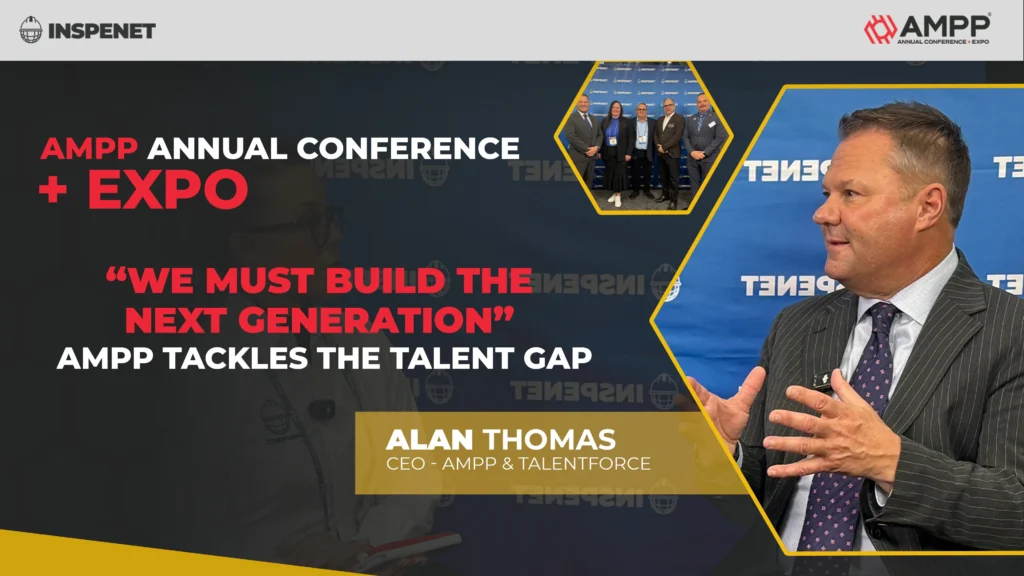
During the AMPP Annual Conference + Expo 2026, Alan Thomas, CEO of AMPP (Association for Materials Protection and Performance), presented the organization's roadmap for one of the sector's greatest challenges: the lack of qualified professionals. In a context marked by industrial transformation and regulatory pressure, the TalentForce initiative emerges as a structural response to a problem that goes beyond the labor market.
AMPP has established itself as a global reference in materials protection, corrosion control, and industrial coatings. The organization operates in more than 150 countries and has a network of over 40,000 members distributed across multiple local chapters.
Furthermore, its activity focuses on the development of technical standards that allow scientific research to be transferred to the industrial environment. These standards are crucial for ensuring the safety and performance of critical infrastructure, especially in sectors like energy.
On the other hand, AMPP maintains a close relationship with regulatory bodies, especially in the United States, where it actively participates in initiatives linked to pipeline safety. This work also extends to other markets such as India, where its standards contribute to improving natural gas infrastructure.
In this context, Thomas highlighted the importance of standards as a tool for bringing technical knowledge to the market. Through its committees, AMPP develops regulatory frameworks based on scientific data that improve operational safety.
Additionally, the organization works on regulatory initiatives such as the PIPES Act in the United States, collaborating with midstream stakeholders to strengthen safety in hydrocarbon transportation. This approach positions AMPP as a key player at the intersection of industry and regulation.
In this way, standards not only establish best practices but also facilitate the adoption of more efficient technologies and processes in different regions of the world.
One of the most relevant changes in the company strategy is its evolution toward a transnational model. Currently, the organization has a presence in 154 countries and more than 180 chapters, although many of them operate under centralized structures.
Given this situation, the board of directors has defined a new strategic line based on decentralization. The goal is to provide regional chapters with greater autonomy and adapt to the specific needs of each market.
Likewise, the company seeks to establish centers of excellence in important regions such as Latin America or India. This approach allows for the development of solutions more aligned with local contexts and improves the organization's operational efficiency.
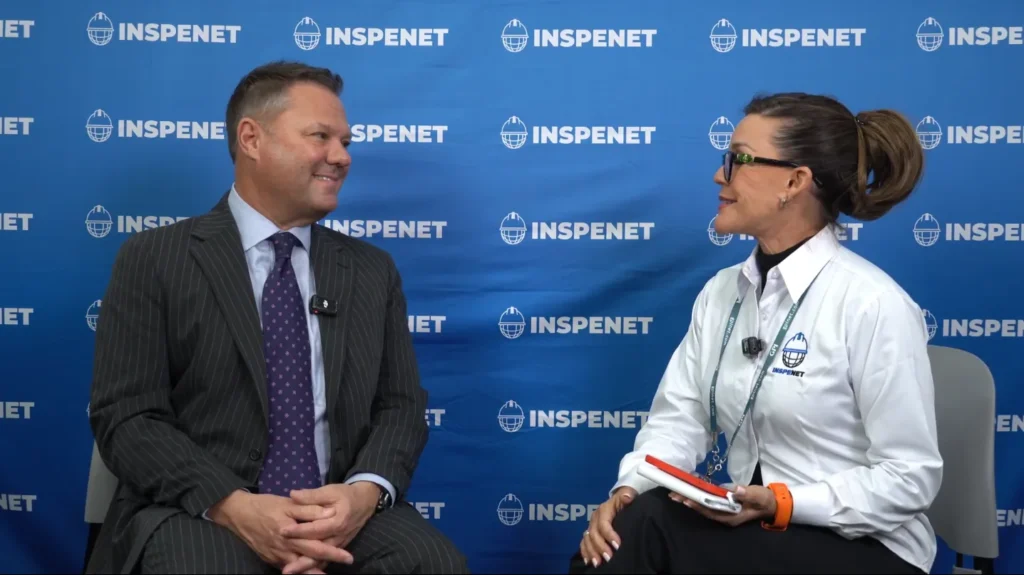
However, the most critical challenge identified by Alan Thomas is the talent shortage in the sector; as he explained, the industry faces a wave of retirements in the coming years without a sufficient base of new professionals to replace them.
Furthermore, the problem has a structural origin. It is not just a lack of interest in technical careers, but a global population decline. Falling birth rates are reducing the number of people available to enter the workforce.
Added to this situation is the long training process; preparing a qualified professional can take between eight and fifteen years, representing a significant investment for both companies and economies.
Therefore, the sector needs to accelerate training processes and attract talent at earlier stages.
In this scenario, TalentForce is presented as one of AMPP's main strategic bets. As Thomas explained, this initiative represents a significant part of the organization's future strategy.
Unlike traditional programs, TalentForce is conceived as an independent entity aimed at identifying and meeting real market needs. Its goal is to create multiple pathways into the profession, beyond the university setting.
Likewise, the initiative promotes technical training and access to specialized programs, including industry events and professional certifications. This helps reduce training times and facilitates the onboarding of new profiles.
Another pillar of TalentForce is funding; AMPP seeks to expand the reach of existing scholarships and direct resources toward different levels of training. In this way, it aims to build a more inclusive ecosystem adapted to current industry demands.
Finally, the company has also identified the need to strengthen its role in the field of innovation. According to Thomas, the organizations that gave rise to AMPP, such as NACE and SSPC, marked important milestones in the sector's technological development.
Currently, the context offers new opportunities thanks to the advancement of science and technology applied to materials. Therefore, the organization seeks to regain its capacity to lead the development of technical solutions.
Ultimately, Alan Thomas's intervention at AMPP highlights that the future of the sector depends on a combination of global strategy, regulatory development, and talent management. Within this framework, TalentForce is positioned as a key tool to ensure industry continuity in an environment marked by demographic and technological changes.
For more content about AMPP 2026, please visit our LinkedIn profile.
Source: Inspenet.