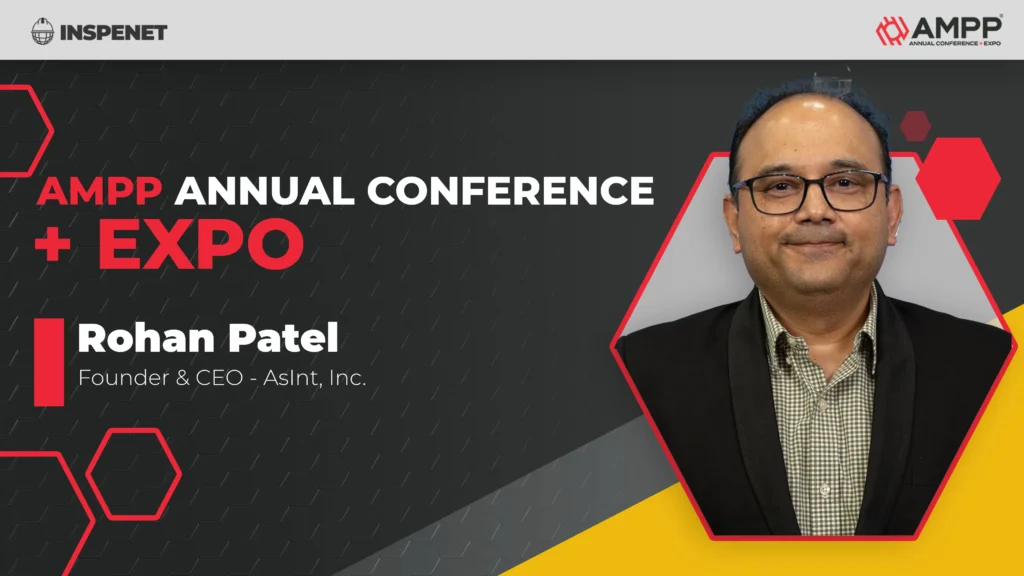
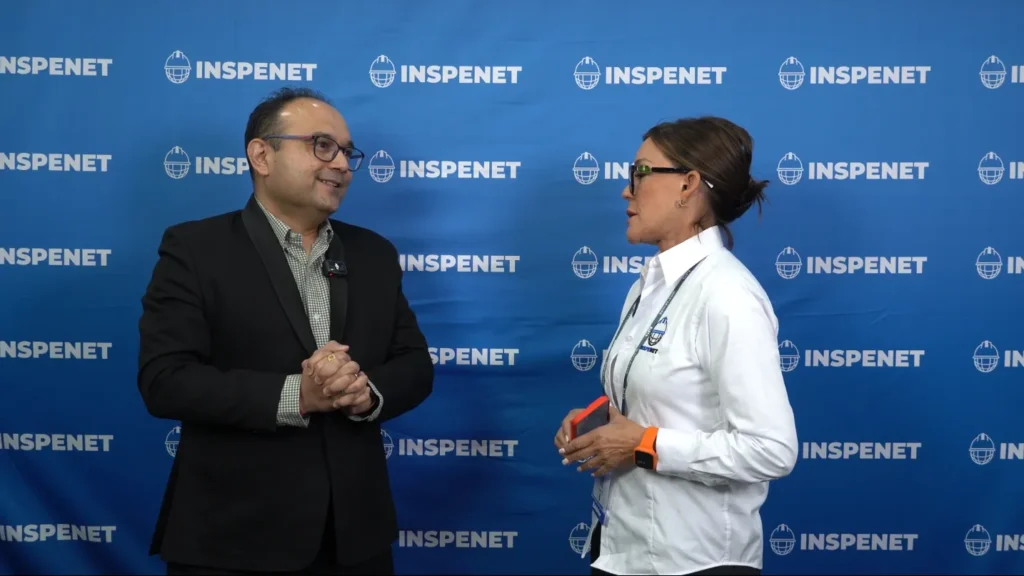
At the AMPP Annual Conference + Expo 2026, Rohan Patel, Founder & CEO of AsInt, explained how the company is addressing one of the industrial sector's major challenges: turning inspection data into clear operational decisions. Drawing on his experience in oil and gas and other industrial sectors, Patel explained how risk-based inspection is evolving through the integration of data, processes, and digital tools.
AsInt defines itself as a technology company focused on asset integrity in the digital age. Its activities cover sectors such as oil and gas, petrochemicals, specialty chemicals, pharmaceuticals, and semiconductors, where critical asset management requires precision and traceability.
Likewise, the company develops solutions that follow industrial standards and allow organizations to modernize their systems. This approach is supported by digital transformation projects, especially in SAP environments, where many companies are migrating from traditional versions to S/4HANA.
In this way, AsInt places data at the center of all operations, building applications that function as layers over an architecture based on structured information.
One of the main problems industrial companies face is system fragmentation. Traditionally, platforms such as EAM, ERP, and APM operate separately, which creates inconsistencies and makes decision-making difficult.
In this regard, Rohan Patel highlighted that many organizations manage multiple processes without a direct connection between them. This lack of integration limits the value of risk-based inspection, as data does not flow efficiently to operational areas.
Furthermore, the lack of data consistency directly impacts maintenance planning and cost management. As a result, decisions may be based on incomplete or outdated information.
Given this scenario, AsInt proposes an architecture based on master data. According to Patel, all their applications are "master data driven," meaning they operate on a solid foundation of centralized information.
Specifically, the company develops native applications within the SAP ecosystem, eliminating the need for external connectors. This integration allows direct access to key data such as work orders, notifications, and costs.
Likewise, this approach facilitates a unified view of assets and their operating conditions. By working on a structured data lake, applications can maintain consistency and accuracy across large volumes of information.
Therefore, integration not only improves technical efficiency but also enables more coherent decision-making across the entire organization.
At the core of AsInt's proposal is the evolution of risk-based inspection. Traditionally, RBI models focus on analysis and planning but are not always connected to execution.
However, AsInt introduces an adaptable risk model that allows different standards such as API 580 or API 581 to be applied across multiple industries. This approach expands the scope of RBI beyond oil and gas.
Next, the platform integrates inspection data, CML information, and damage mechanisms within a complete workflow. This allows for moving from risk assessment to the generation of concrete actions.
In fact, the system is not limited to identifying problems. It also connects with processes such as notification generation, work order creation, and cost planning. Thus, organizations can close the loop between analysis and execution.
Artificial intelligence is playing an increasingly relevant role in AsInt's solutions. Although the sector is still exploring its adoption, the company has already integrated AI capabilities into several of its applications.
For example, one of the features allows damage mechanisms to be automatically applied according to standards such as API 571. This reduces reliance on manual processes and improves consistency in assessment.
Additionally, AsInt has developed image recognition tools that allow inspectors to capture photos in the field and obtain information about potential damage. This capability facilitates faster and better-informed decisions.
Likewise, AI contributes to improving team productivity by providing tools that support their daily work without replacing their expertise.
Although oil and gas remains AsInt's primary market, the company is expanding its presence into other sectors. In particular, industries such as pharmaceuticals and semiconductors are showing a growing demand for advanced asset integrity solutions.
In this context, the experience accumulated by the founding team allows solutions to be adapted to different industrial environments. The adaptable risk model facilitates this expansion by being able to adjust to different standards and needs.
Thus, AsInt reinforces its position as a technology provider capable of operating in multiple sectors without losing specialization.
Finally, AsInt's proposal focuses on connecting all elements of the asset lifecycle. From data capture to maintenance execution, the company seeks to eliminate barriers and improve operational consistency.
In the words of Rohan Patel, the goal is to go beyond identifying problems and focus on what actions should be taken next. This vision turns risk-based inspection into a practical tool for daily management.
Thus, the combination of data, SAP integration, and artificial intelligence capabilities defines an approach that responds to the current needs of the industrial sector.
For more content about AMPP 2026, please visit our LinkedIn profile.
Source: Inspenet.