Industrial safety is becoming established as one of the key pillars in the transformation of the energy and industrial sector. During the AMPP Annual Conference + Expo 2026, Romeu Sciotta, CEO of Rysax, explained how technologies such as artificial intelligence, digital twin, and virtual reality are changing the way companies train their workers and optimize their operations.
Rysax positions itself as a technology company focused on improving industrial safety and operational efficiency through advanced digital tools. The company, the result of integrating previous capabilities, has developed solutions that combine artificial intelligence, simulation, and digital twins to address today’s challenges in the sector.
In this context, Sciotta explained that the main goal is to enable organizations to carry out their tasks more safely, faster, and with fewer resources. The company also operates out of Houston and has a presence in Latin America, which allows it to understand different industrial realities and adapt its solutions to each market.
On the other hand, Rysax’s approach is based on closing the gap between technological progress and its real-world implementation in heavy industry. According to the executive, many of the tools are already available, but they are still not fully integrated into production processes.
One of the most relevant pillars is the use of virtual reality to improve industrial safety in training processes. Rysax has developed simulators that replicate real work scenarios, allowing operators to train without being exposed to risks.
In Sciotta’s words, this technology works similarly to a flight simulator; in this way, workers can practice complex tasks such as confined-space interventions, working at height, or operating specialized machinery in a controlled environment.
In addition, this approach helps raise the quality of professionals before they go into the field. By facing realistic situations in a virtual environment, employees gain hands-on experience without compromising their physical integrity or that of their colleagues.
Likewise, this methodology responds to a growing need in the industry, where industrial safety demands increasingly higher standards and more effective training processes.
Another key challenge identified by Rysax is the slow pace of technology adoption in heavy industry. Although tools such as artificial intelligence are part of everyday life, their implementation in industrial environments remains limited.
In this regard, Sciotta noted that many organizations still perceive these technologies as complex or difficult to integrate. However, the reality today is that there are accessible solutions designed to make adoption easier.
Thus, the challenge lies not only in technological development, but in companies’ ability to incorporate these tools into their processes. The transition to more digitalized environments requires a cultural shift, as well as investment and training.
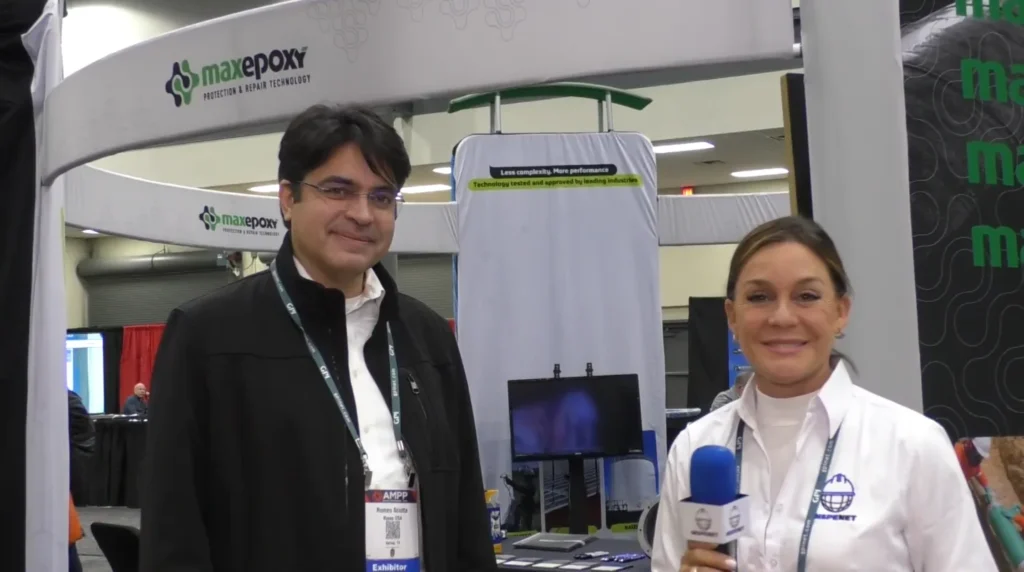
Regarding talent, Sciotta pointed out that many companies face difficulties hiring qualified personnel. High turnover and the retirement of experienced workers worsen this situation, making it necessary to speed up training processes.
In this scenario, simulation technologies are emerging as a crucial tool to reduce the learning curve. Thanks to these systems, it is possible to prepare new employees in less time and with greater accuracy.
On the other hand, industrial safety remains a critical factor; companies seek to ensure their workers are properly trained before performing high-risk tasks. At this point, digitalization makes it possible to set new standards in training and performance evaluation.
When it comes to efficiency, another major focus is reducing downtime in industrial operations. Maintenance shutdowns represent a significant cost for companies, so optimizing these processes is essential.
In this area, Rysax uses technologies such as the digital twin to improve the planning and execution of inspections and maintenance. These tools make it possible to simulate scenarios, anticipate problems, and speed up decision-making.
As a result, organizations can reduce downtime and improve operational performance. Likewise, integrating these solutions contributes to more efficient management of available resources.
Finally, cost reduction emerges as a cross-cutting objective. By enabling workers to perform their tasks faster and more accurately, companies can optimize their operations without compromising industrial safety.
In conclusion, Rysax’s proposal reflects a clear trend in the sector: integrating advanced technologies to improve industrial safety, training, and efficiency. Through solutions based on artificial intelligence, virtual reality, and digital twin, the company aims to support organizations in their transformation process.
With operations in different markets and a results-driven approach, Rysax positions itself as a relevant player in the industry’s evolution toward safer, more digitalized environments.
For more content about AMPP 2026, please visit our LinkedIn profile.
Source: Inspenet.